Discover Tokyo through a personal 5-day journey shaped by small surprises, local encounters, and moments that don’t always make it into guidebooks. This is a reflection of what it feels like to move through Japan’s capital, from the rush of its busiest streets to the quiet pockets that sit just a few turns away.
If you are planning your first visit or simply looking for ideas to shape your time in the city, you’ll find suggestions here for places to explore, things to try, and ways to experience Tokyo at your own pace. The contrast between tradition and modern life shows up everywhere, often in ways you don’t expect. Follow along for a simple, honest look at five days in Tokyo, with personal impressions and travel ideas that might help you plan your own trip without overthinking it.
Ueno
After flying from Taipei to Tokyo, we decided to make Ueno our base for the five days. We liked the idea of staying somewhere well connected without paying the premium you can find in Tokyo’s busiest districts. Ueno has a relaxed feel, with easy access to major train lines, Ueno Park and plenty of places to eat. We considered everything from budget hotels and simple guesthouses to more luxurious stays, but eventually chose Nohga Hotel. It felt like a good middle ground: stylish without being overly formal, comfortable without pushing into Tokyo’s highest price bracket. With Ueno Station nearby, getting around the city was also refreshingly straightforward.
Tokyo accommodation can make a serious dent in your travel budget, especially if you want a central location or a more stylish hotel. Prices vary widely, but even fairly simple rooms can feel expensive. We quickly realised that choosing where to stay would be one of the biggest decisions for our trip. Here are some of the hotels that we considered before choosing Nohga hotel.
High-end Hotels
- &Here TOKYO UENO – A more spacious, upscale option with a residential feel.
- MIMARU Tokyo Ueno Okachimachi – Particularly appealing for families or longer stays, with apartment-style rooms.
Mid-range
- Mitsui Garden Hotel Ueno – A polished choice very close to Ueno Station, with the convenience you’d want from a Tokyo base.
- hotel MONday Premium Ueno Okachimachi – A good step up from the basic business-hotel experience without going fully luxury.
- NOHGA HOTEL UENO TOKYO – The one we chose, and a particularly nice middle ground between design, comfort and location.
More affordable
- hotel sardonyx ueno – A straightforward option when keeping accommodation costs down matters.
- KOKO HOTEL Ueno Station – Useful if proximity to the station is a priority while staying within a tighter budget.
- ICI Hotel Ueno Shin Okachimachi – Another value-focused option in the wider Ueno area.
TeamLabs Borderless
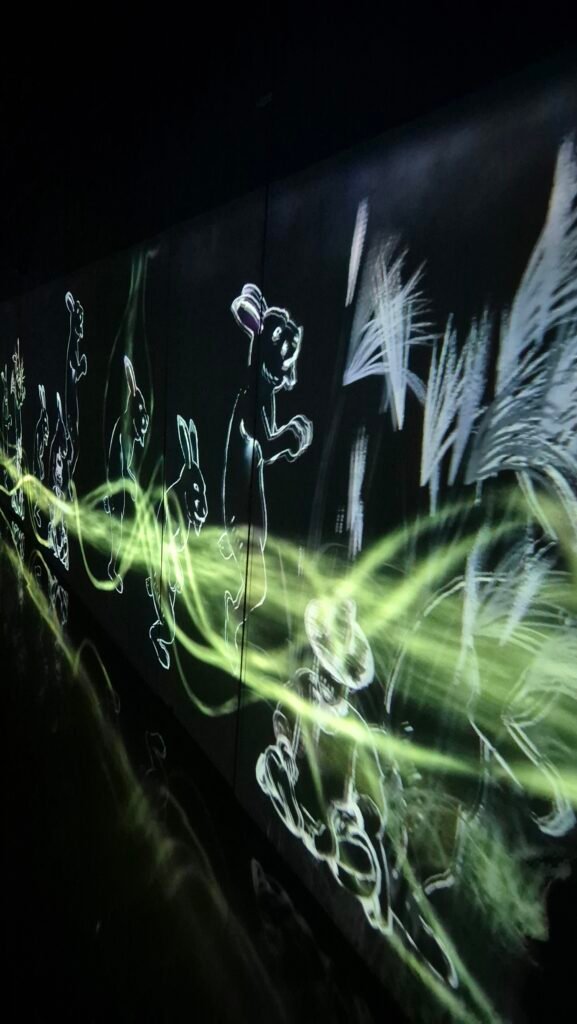
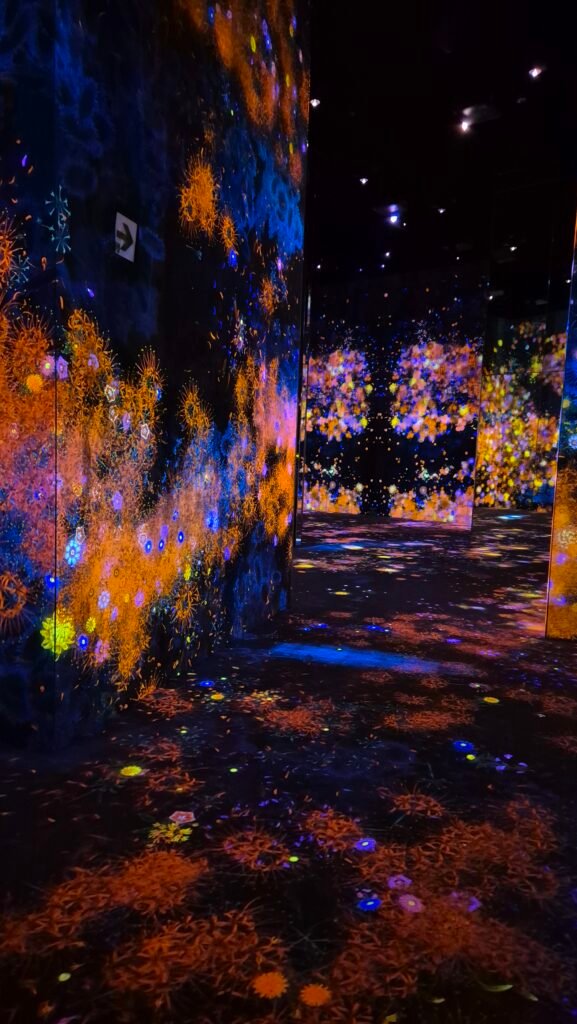
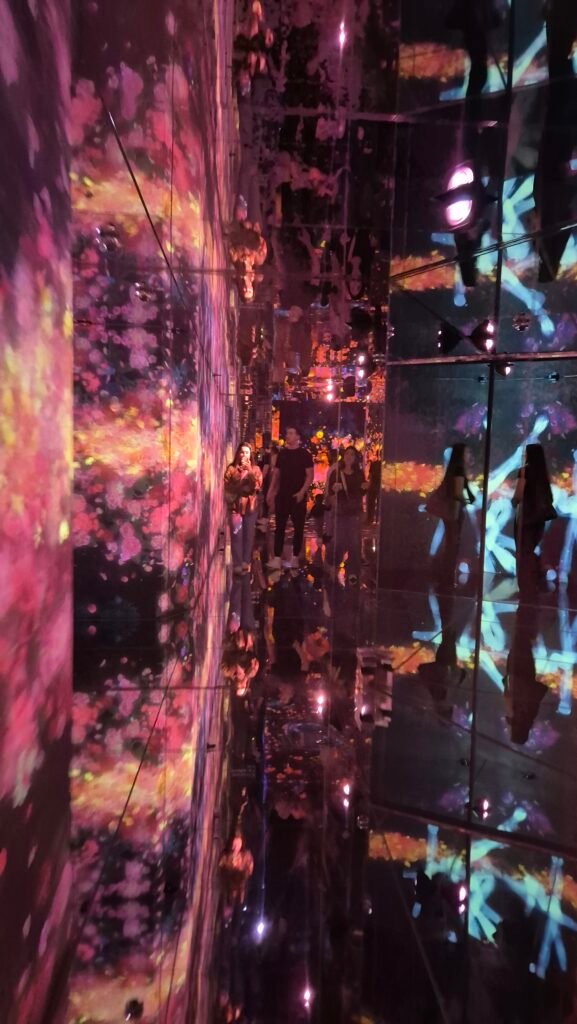
The first thing we had booked after arriving in Tokyo was TeamLab Borderless, with our entry time at 6pm. It felt like a slightly unusual way to begin the trip, but we were excited to see what it was actually like. Once inside, we quickly realised this wasn’t somewhere we could simply walk around and tick off rooms. There was no set route, so we wandered wherever the lights and artwork caught our attention. The digital installations moved across walls and floors, changing as we interacted with them. Going at 6pm also worked well for us because it gave us time to settle into Tokyo first. After a long travel day, stepping into this completely immersive world felt like a great introduction to the city.
TeamLab Borderless is difficult to describe without making it sound like something from another world. Inside, there are no obvious routes to follow, so we simply wandered and let each room reveal itself. Digital artwork spills across walls and floors, changing as people move through the space. Some areas feel calm and almost dreamlike, while others are far more immersive and unpredictable. What I liked most was the sense that the experience wasn’t completely fixed. The artwork responds to its surroundings, making each visit feel slightly different. It is also one of those Tokyo attractions where photographs only capture a fraction of what it actually feels like to be there. If you enjoy art, technology or simply experiencing something completely different, TeamLab Borderless is worth making time for.
Getting to TeamLab Borderless from Ueno was fairly straightforward. We took the Tokyo Metro Hibiya Line from Ueno Station to Kamiyacho Station, which took around 20 minutes. From there, we walked for about 10–15 minutes to Azabudai Hills. We allowed around 30 minutes altogether, which gave us plenty of time to arrive without rushing before our 6pm entry.
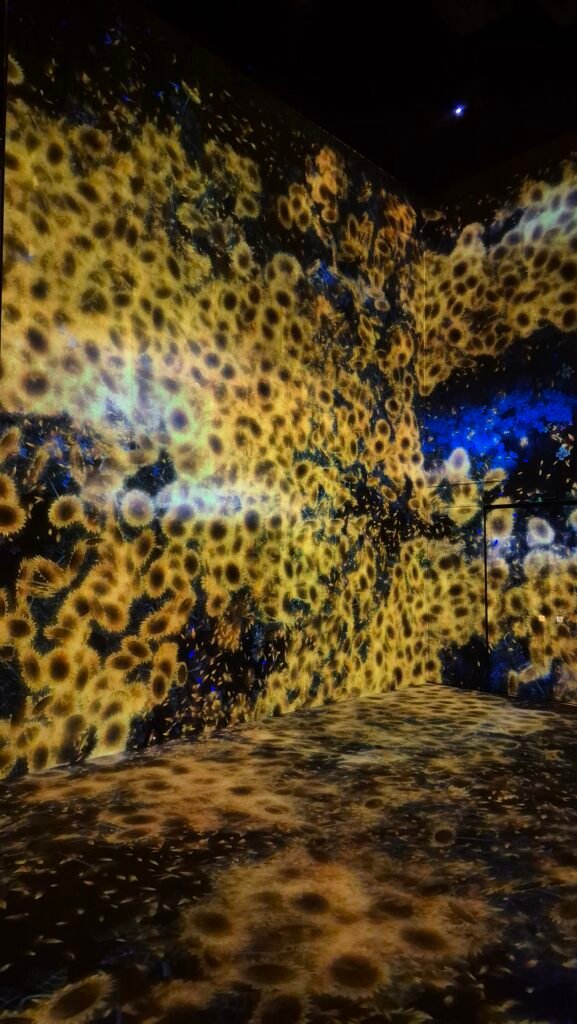
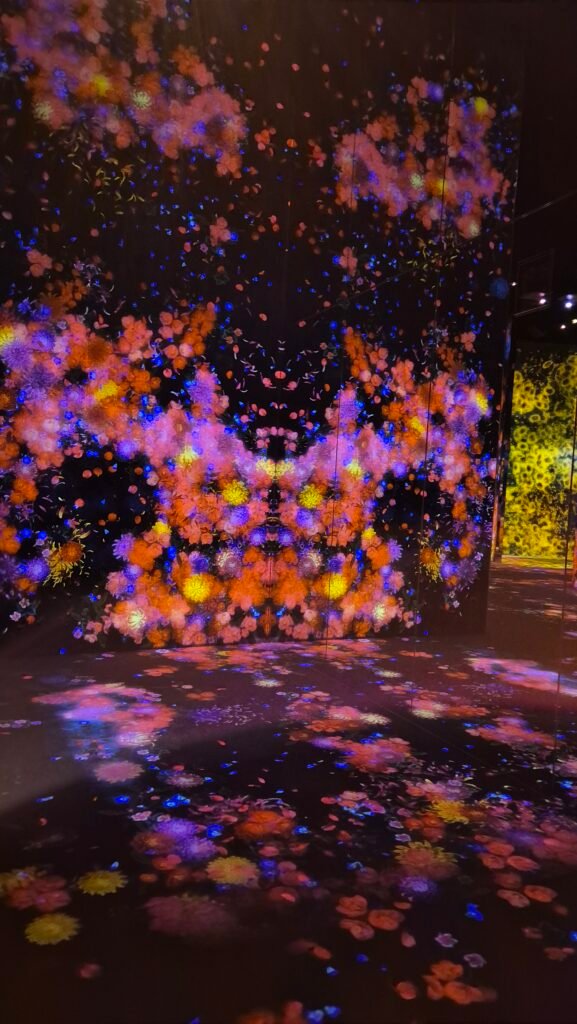
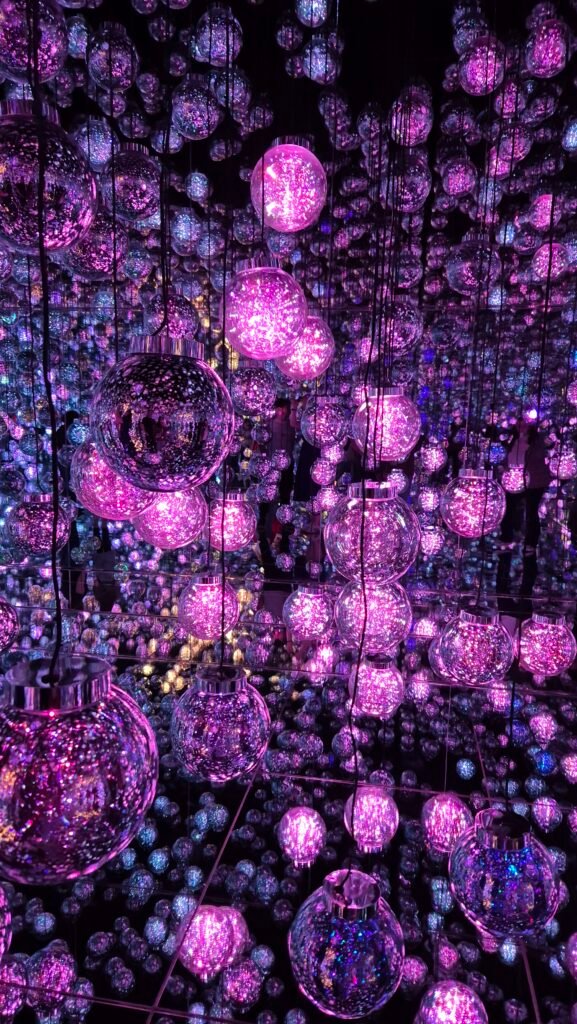
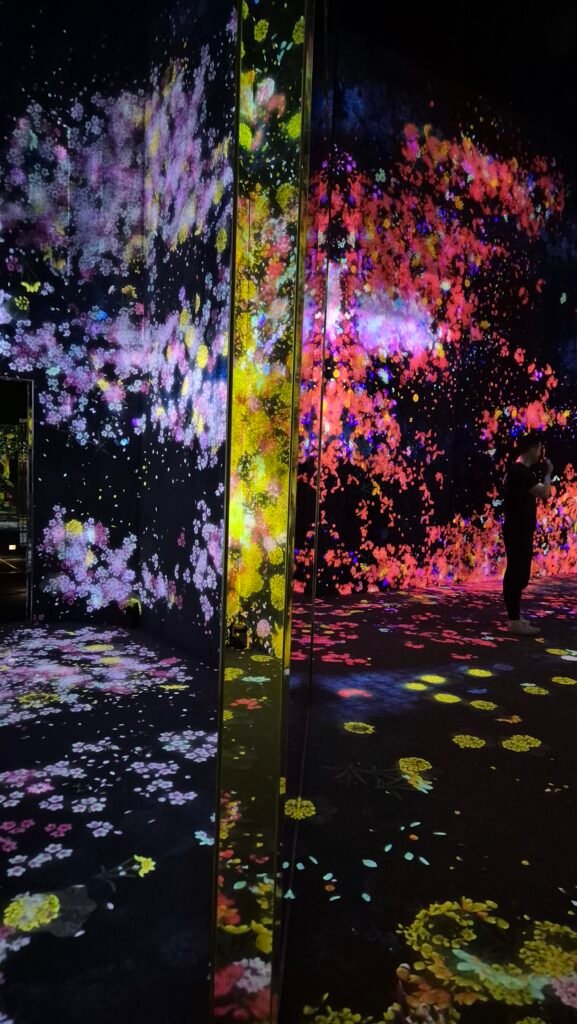
We spent a few hours wandering through the different rooms, never really knowing what we would find next. Just when I thought I had seen everything, the whole experience seemed to change again. It was completely absorbing and unlike anything I had experienced before. Honestly, it was one of the best experiences of my life. There’s no map as such, you are supposed to just get lost and wander. It was so unique and fulfilling, I would 100% recommend this experience.
Booking TeamLab Borderless
If you’re planning to visit TeamLab Borderless, I’d recommend booking ahead rather than leaving it until you arrive. Tickets are date and time specific and can sell out, particularly for popular entry times. We booked our 6pm slot in advance, which meant we could simply turn up and enjoy the experience without worrying about availability. Tickets can be booked through the official TeamLab website, where you can also check current prices and available times. Book TeamLab Borderless tickets – Official Website
Ueno Park
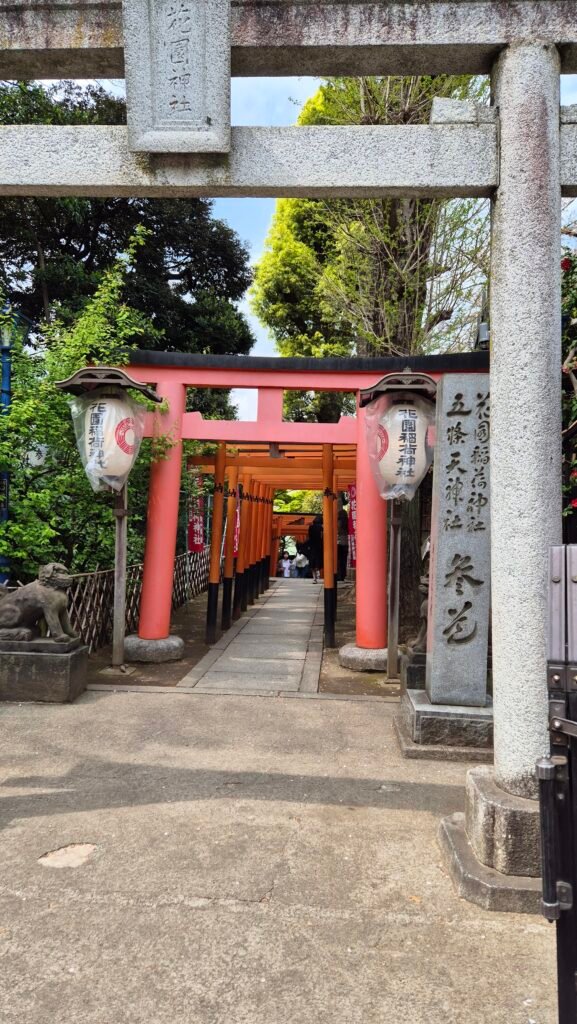
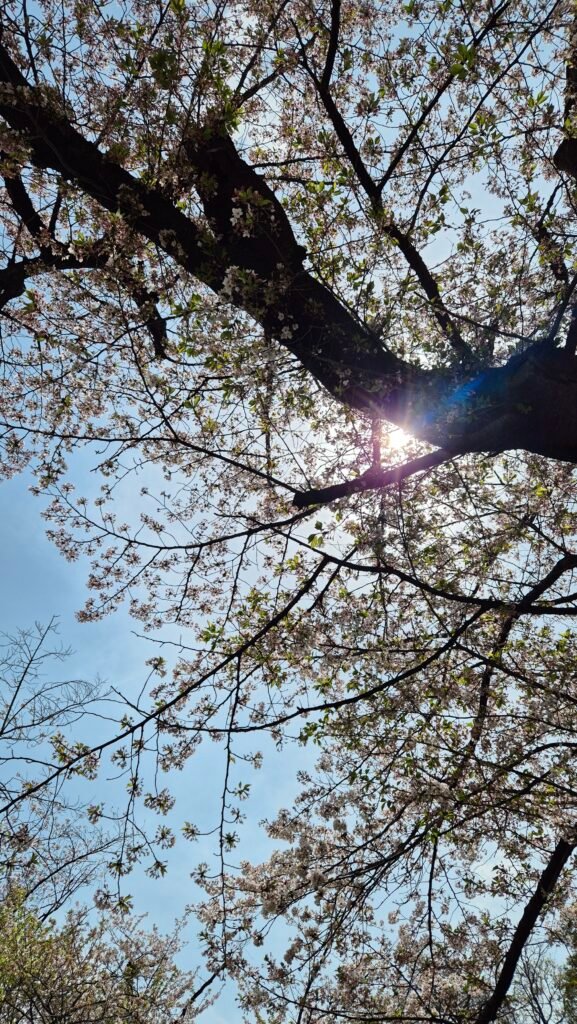
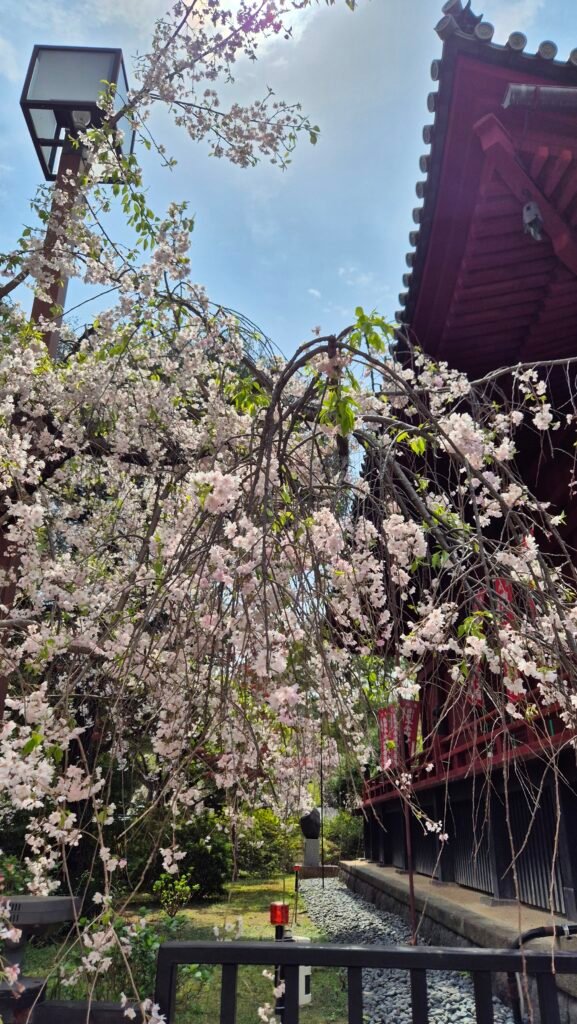
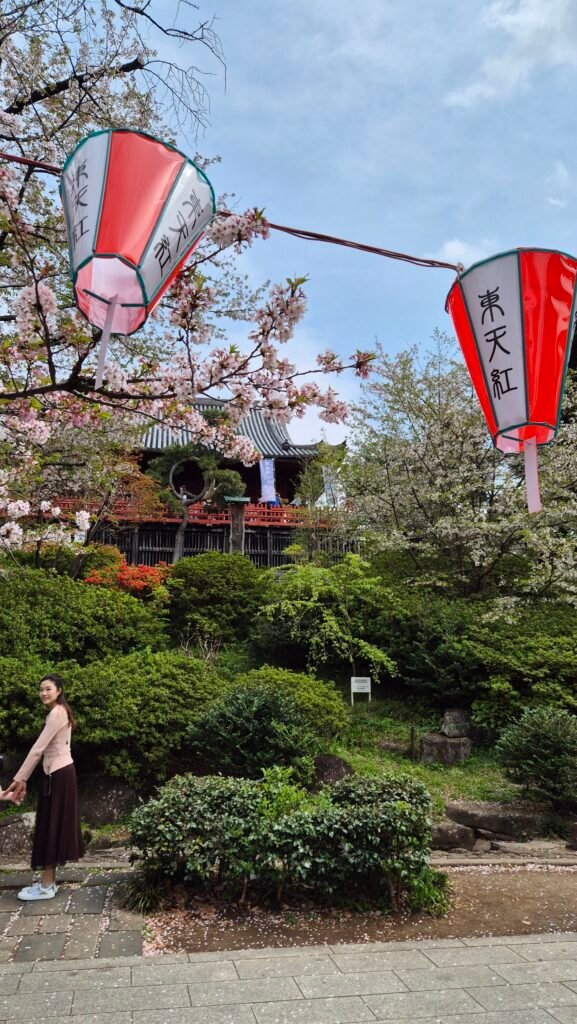
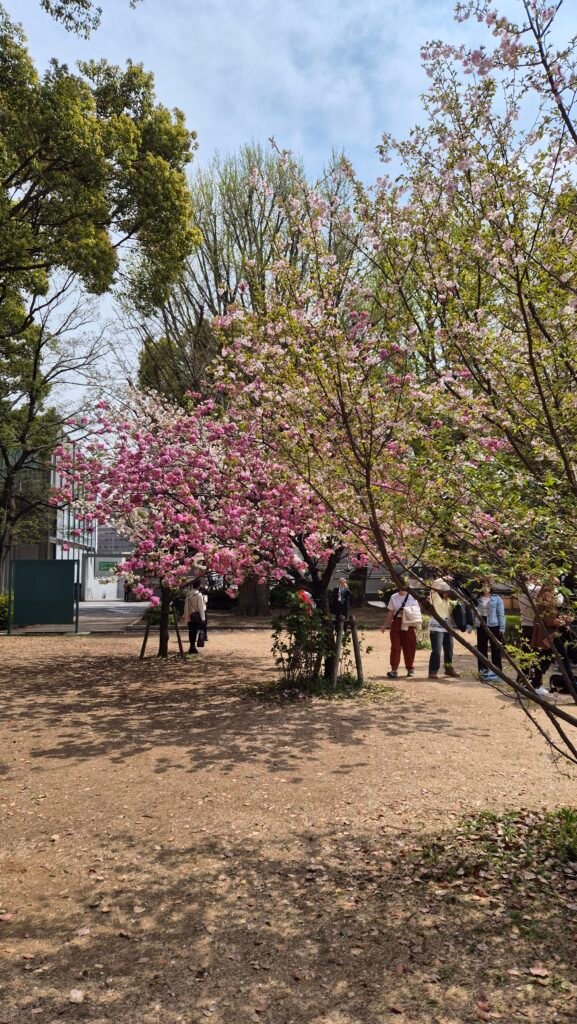
The following morning, we headed into Ueno Park, and April had delivered exactly what we had hoped for. The cherry blossoms were in full swing, with the trees covered in soft shades of pink and white. Ueno is one of Tokyo’s best-known places for hanami, and it was easy to see why as we wandered beneath the blossom-filled branches.
There is something difficult to explain about seeing sakura in Japan. The flowers are delicate and surprisingly fleeting, with the peak lasting only a short time. That seemed to make everyone appreciate them even more. People gathered beneath the trees, taking photographs or simply sitting and enjoying the moment.
For us, it was one of those mornings where we had nowhere particular to be. We just walked through the gardens, stopped whenever something caught our attention and enjoyed being surrounded by the blossoms. After seeing so many photographs of Japan covered in cherry flowers, finally standing underneath them felt genuinely special. It was one of the moments from the trip that I knew I would remember long after we had left Tokyo.
Senso-Ji Temple
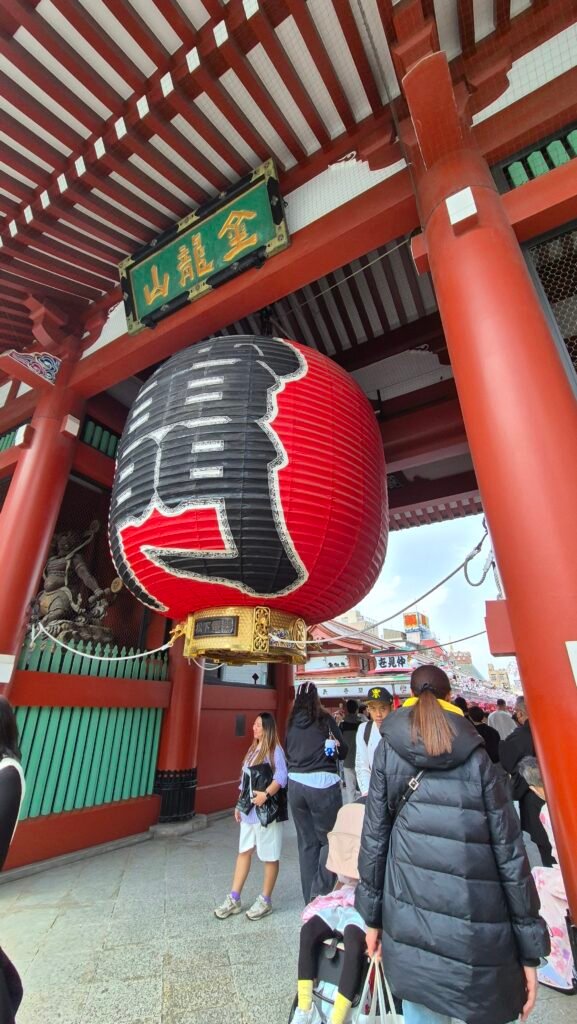
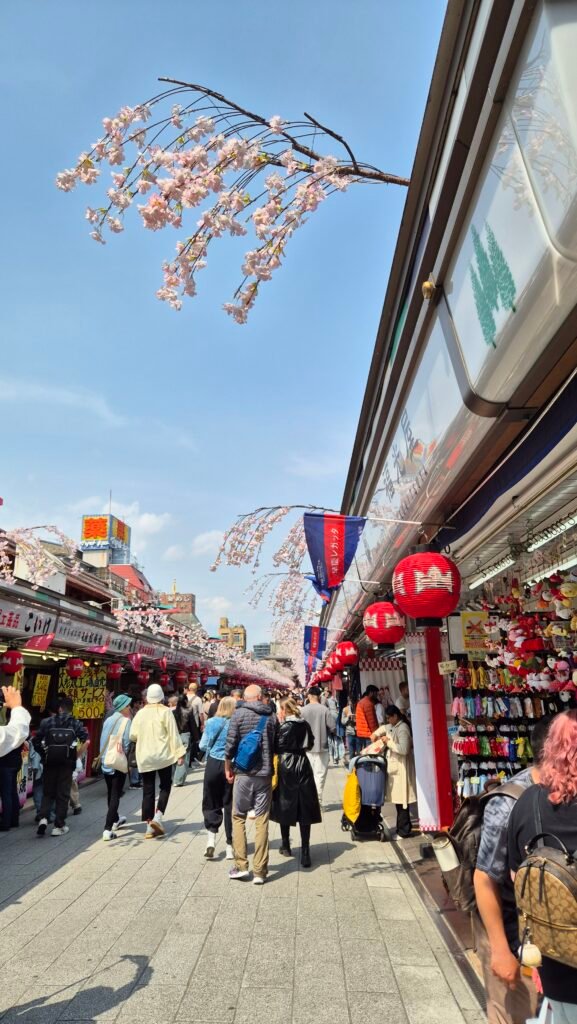
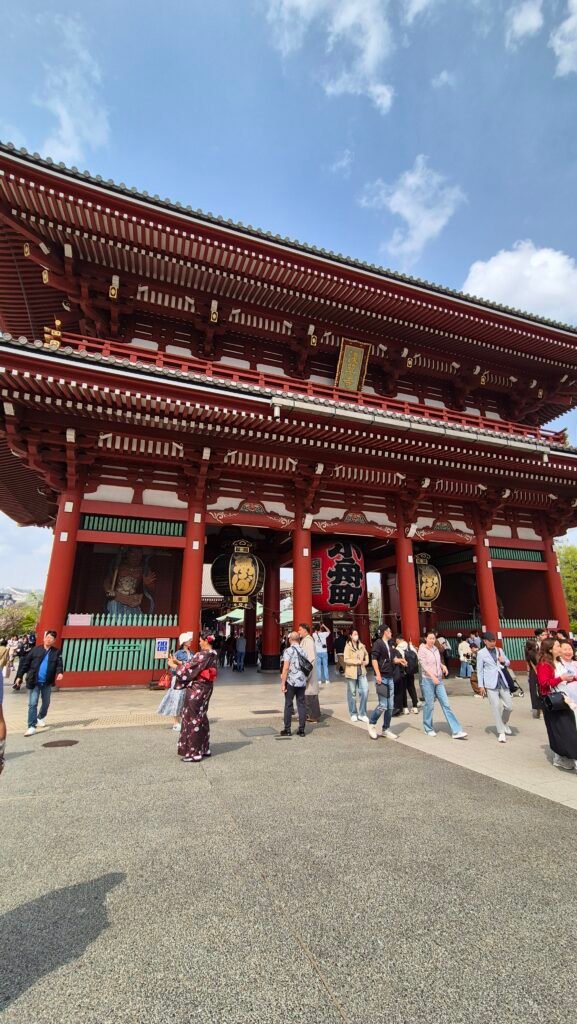
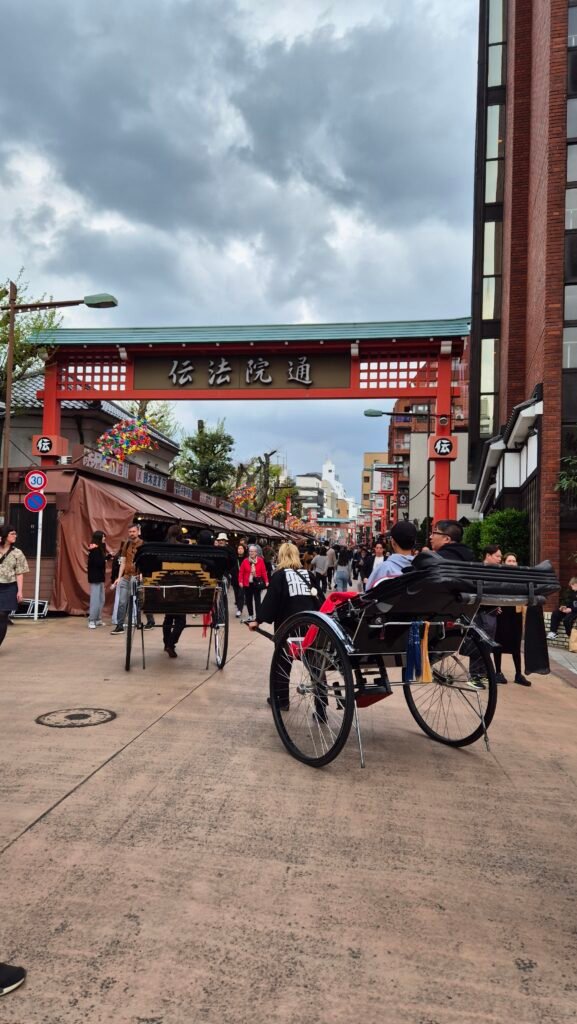
After spending the morning around Ueno Park, we headed over to Sensoji in Asakusa. I had seen plenty of photographs of the temple before our trip, but arriving in person felt completely different. We approached through the enormous Kaminarimon Gate before making our way along Nakamise Street, the lively shopping street that runs towards the temple.
This part was just as enjoyable as seeing Sensoji itself. The street is lined with around 90 small shops, selling everything from traditional souvenirs and Japanese crafts to sweets and local snacks. We took our time wandering between the stalls, stopping to look at things that caught our attention rather than heading straight for the temple.
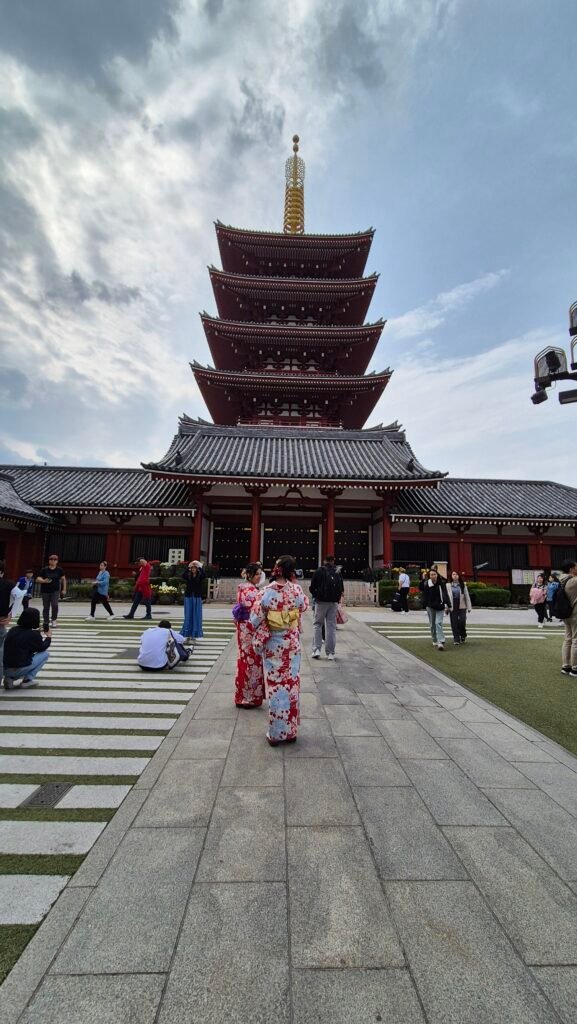
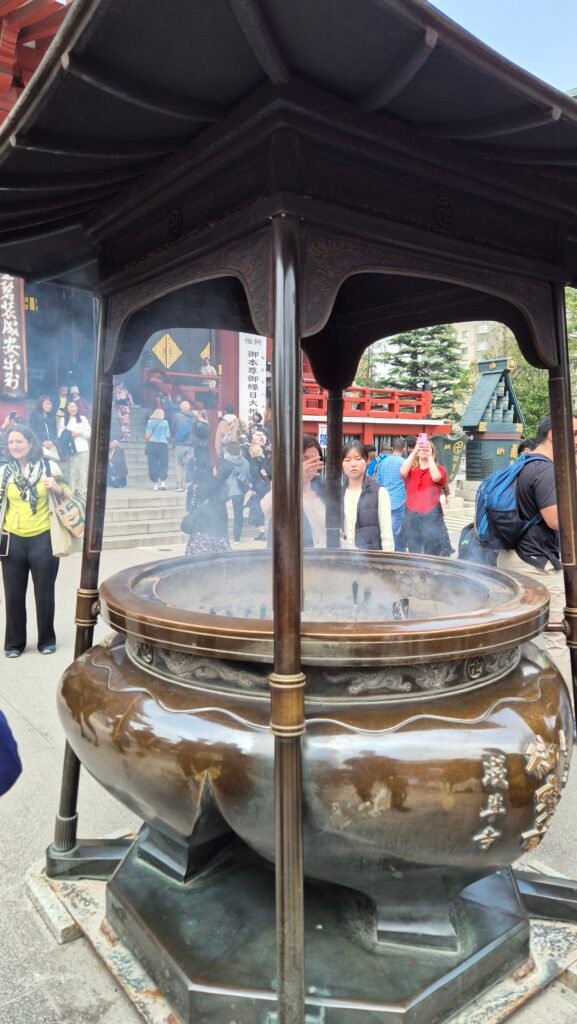
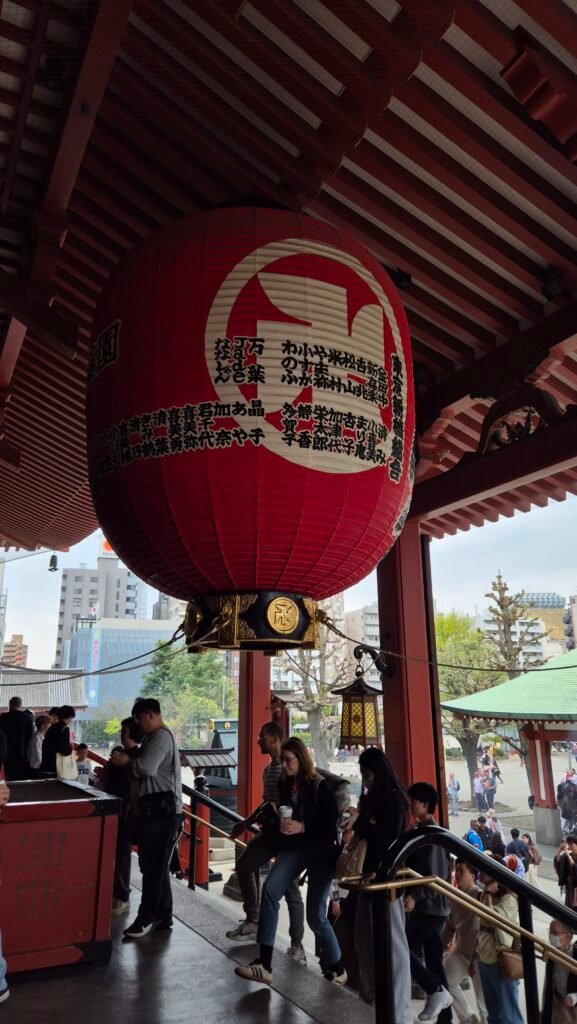
As we reached the end of the street, Sensoji suddenly came into view. The five-storey pagoda stood beside the main hall, while incense drifted through the crowds. After the colourful bustle of Nakamise Street, entering the temple grounds felt like a natural change of pace.
What I enjoyed most was how much there was to see before we even reached the temple itself. The walk through Nakamise made the whole experience feel like part sightseeing and part exploration, with something interesting around almost every corner.
Asakusa & Udon Noodles
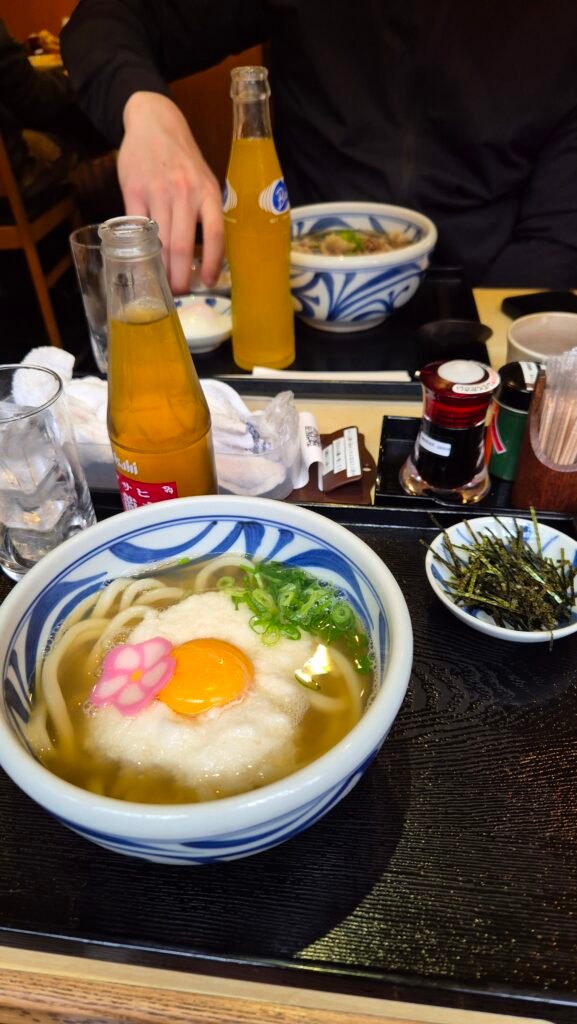
After exploring Sensoji, we stopped for some udon at Kanouya, which is tucked away in the streets of Asakusa, close to Nakamise Street and Denboin Street. It was the perfect place to stop for a quick lunch before continuing towards Skytree. The udon was simple, comforting and exactly what we needed after a morning of walking. Once we had eaten, we wandered around the surrounding shopping streets for a little while, looking through the small shops and stalls selling Japanese snacks, souvenirs and traditional goods. I really liked this part of Asakusa because it felt less about ticking off sights and more about taking our time and seeing what we came across. From here, we were perfectly placed to continue our walk towards the river and eventually Tokyo Skytree.
Tokyo Sky Tower
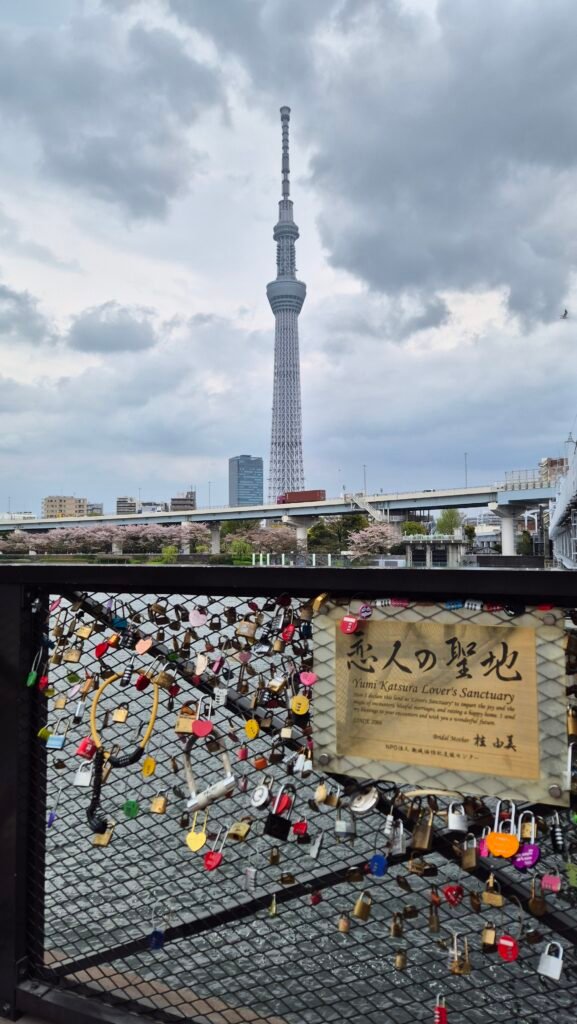
From Senso-ji, we continued towards Tokyo Skytree on foot. Rather than taking the quickest route, we followed the Sumida River towards the Sumida River Walk, which connects the Asakusa area with Tokyo Skytree Town. The walk crosses the river beside the railway bridge, giving us some great views across the water. This stretch is also known as the Yumi Katsura Lovers’ Sanctuary, and we stopped to look at the rows of love locks attached along the railings, each one marking a small moment or memory left behind by couples visiting Tokyo.
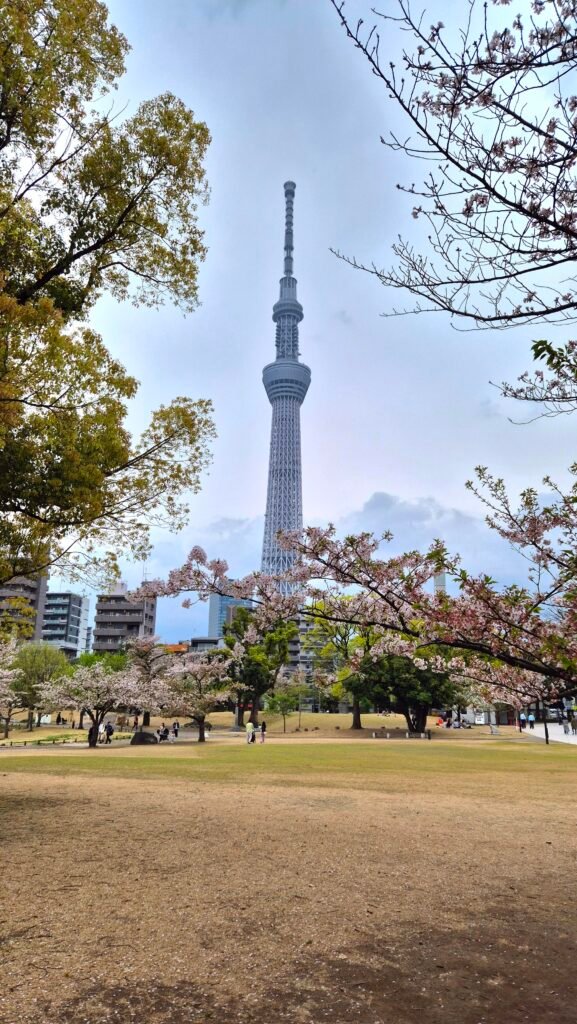
As we continued, Tokyo Skytree kept appearing between the trees and buildings, getting bigger with every few minutes of walking. We then wandered through Sumida Park, which was particularly beautiful in April with the cherry blossoms still in bloom. Having the huge tower rising above the pink blossom made for some of my favourite views of Skytree during the trip.
The whole walk felt much more enjoyable than simply travelling there by train. We were able to take in the river, enjoy the spring weather and see the tower from different angles before reaching Tokyo Skytree Town. It was an easy route and definitely one I would recommend if you have the time.
We didn’t go up the Tokyo Skytree but we did walk around the base and go in the shopping centre.
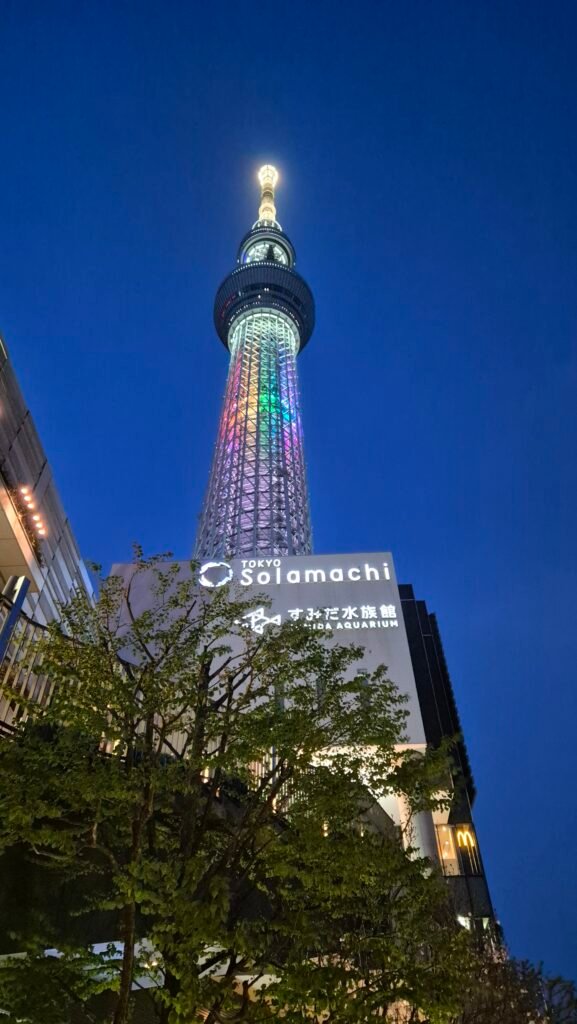
Tokyo Skytree – Tickets & Prices
When we reached Tokyo Skytree, we considered going up to the observation decks, but in the end decided to admire the tower from ground level. If you do want to visit, tickets can be booked online through the official Tokyo Skytree website, with dates opening around two months in advance. Booking online is recommended as tickets can sell out during busy periods, and online prices are cheaper than buying at the ticket counter.
At the moment, adult tickets start from ¥1,800 for the Tembo Deck at 350 metres, or ¥3,000 for access to both the Tembo Deck and Tembo Galleria at 450 metres. Children aged 6–14 start from ¥900 and ¥1,500 respectively. Prices vary depending on the date.
Book Tokyo Skytree tickets – Official website
For us, after a full day of exploring, we decided that we were happy seeing Skytree from below. It was impressive enough from street level, particularly after watching it gradually appear during our walk from Sensoji.
Mount Fuji Day Trip
Our Mount Fuji day trip had actually been organised for us in Taiwan before we travelled to Japan. There were six of us, so we had a private six-seater minibus and driver for the day. We travelled to Japan with family and the majority speak Mandarin, so the minibus was organised in Taiwan and we had a Mandarin speaking driver for our Fuji Minibus trip.
The whole day was arranged in advance, including our transport and driver, which made things incredibly easy once we arrived in Tokyo. The total cost was TWD 13,900 for the six of us, working out at around TWD 2,317 per person. Looking back, we thought this was fantastic value for a private vehicle and driver for the entire day.
If you’re planning something similar, it may be worth checking with travel agencies in your home country before travelling, as they may be able to arrange private Japanese tours at competitive prices. I’d also recommend asking for a fully itemised quote so you know exactly what is included.
Oshino Hakkai
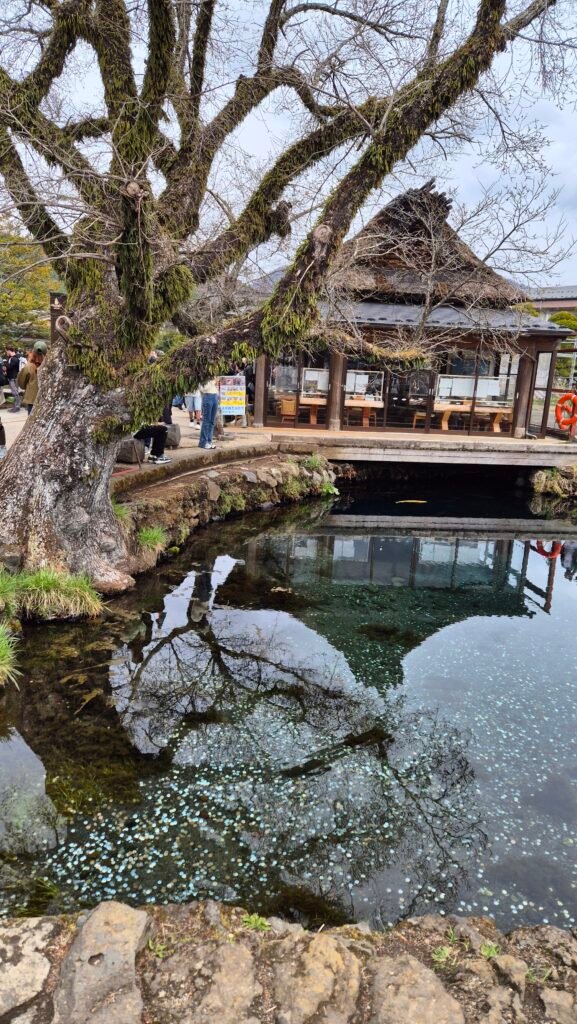
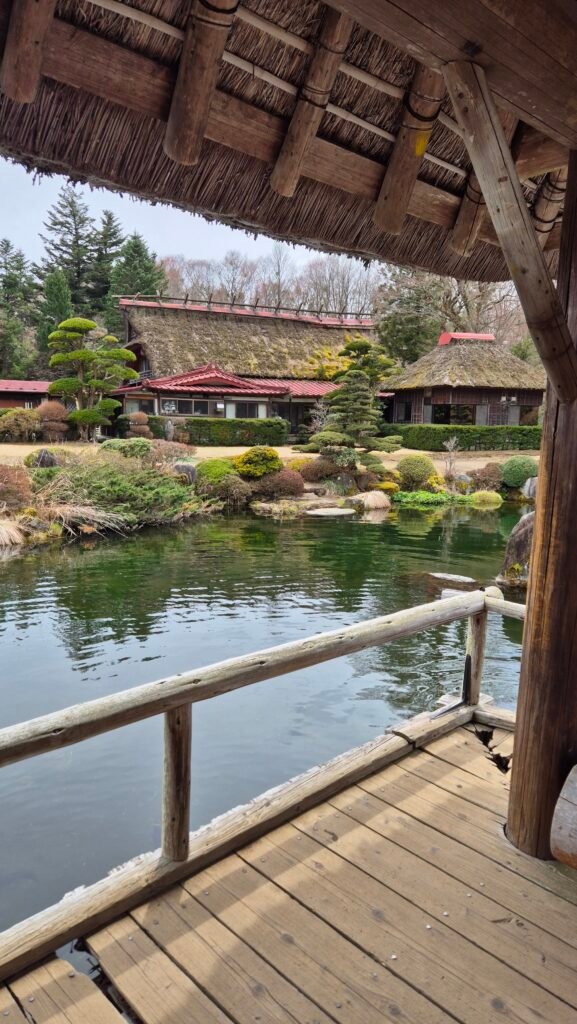
Oshino Hakkai was one of our stops on our Mount Fuji day trip, and it felt completely different from the busy streets of Tokyo. Located between Lake Kawaguchiko and Lake Yamanakako, this small village is famous for its eight clear spring ponds. The water comes from snowmelt on Mount Fuji, filtering slowly through layers of volcanic rock before reaching the ponds.
Walking around the area, we found traditional thatched-roof buildings, little bridges and water wheels, with Mount Fuji providing an incredible backdrop when the clouds allowed us to see it. There are also stalls selling local snacks, souvenirs and drinks, so it is easy to spend some time wandering around rather than simply looking at the ponds.
The water itself was unbelievably clear, and some of the ponds had fish swimming beneath the surface. It was a lovely place to slow down for a while and enjoy a more traditional side of Japan. For me, the combination of the ponds, old-style buildings and views towards Mount Fuji made Oshino Hakkai a really memorable stop.
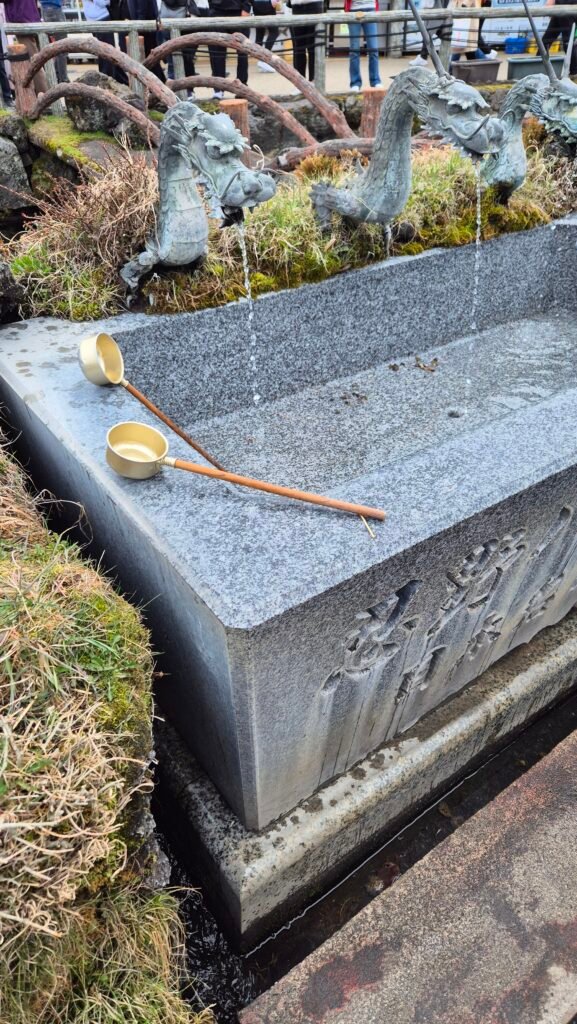
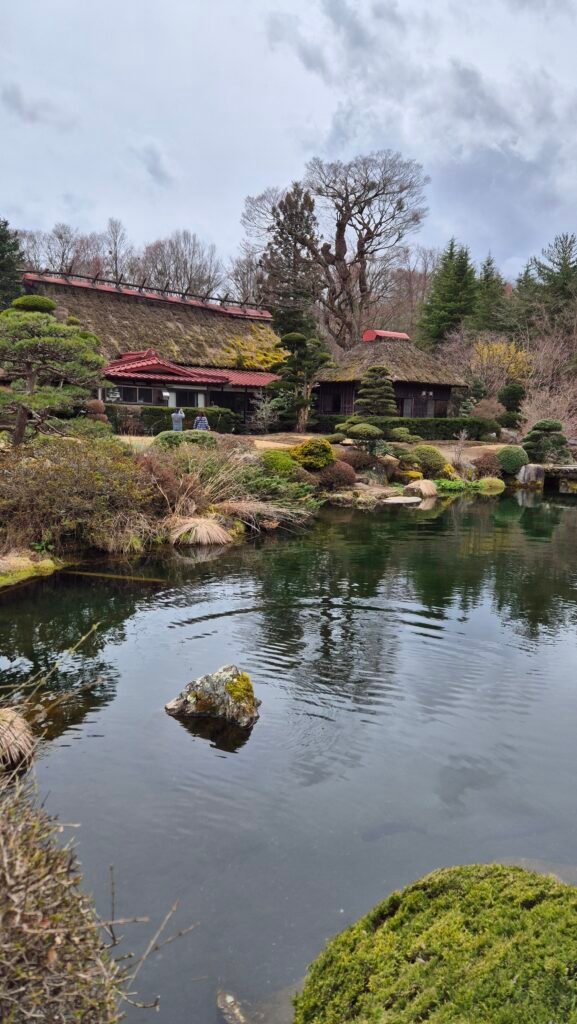
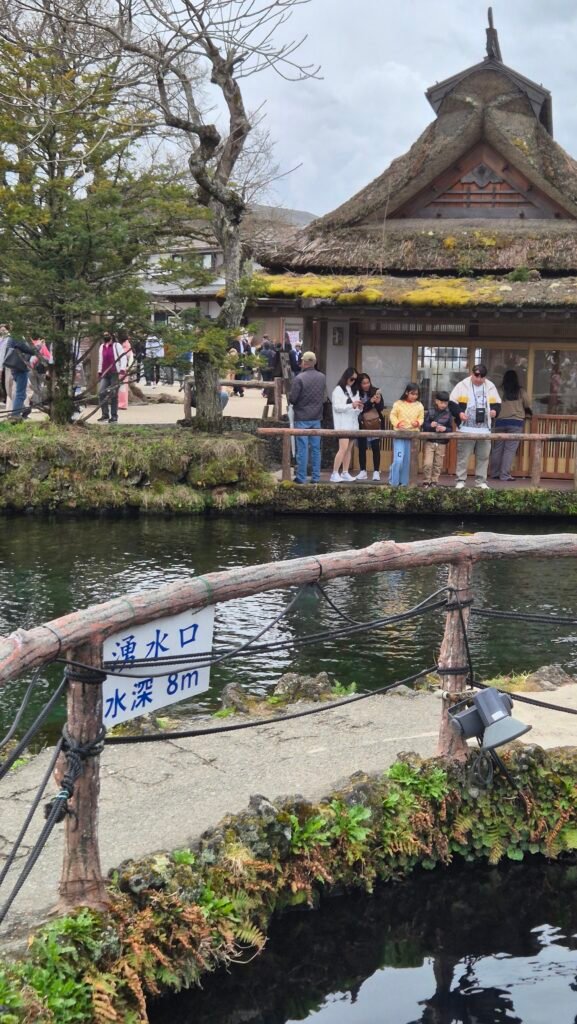
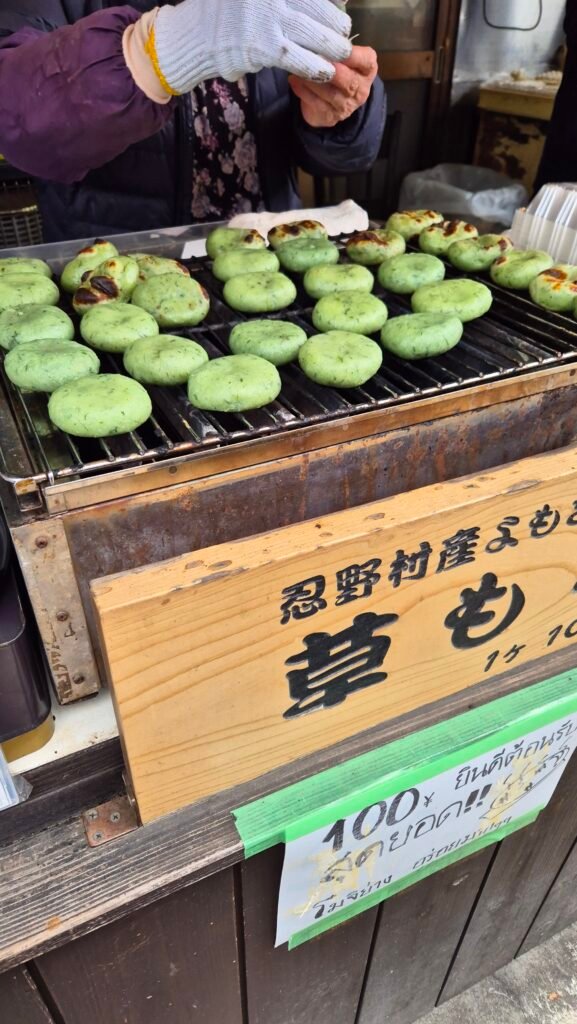
One of our favourite little discoveries at Oshino Hakkai was the kusa mochi, a traditional Japanese rice cake made with locally grown mugwort. The green colour comes from the yomogi, which gives the mochi a gentle herbal flavour, while the inside is usually filled with sweet red bean paste.
We spotted them being sold from the little street stalls around the village and couldn’t resist trying one. Some were served warm and freshly grilled, which gave them a lovely slightly crisp outside while remaining soft and chewy inside. They were absolutely delicious and, honestly, I wish we had bought more. It was one of those simple snacks that ended up being one of our favourite food discoveries of the trip.
Kagami ‘Mirror’ Pond
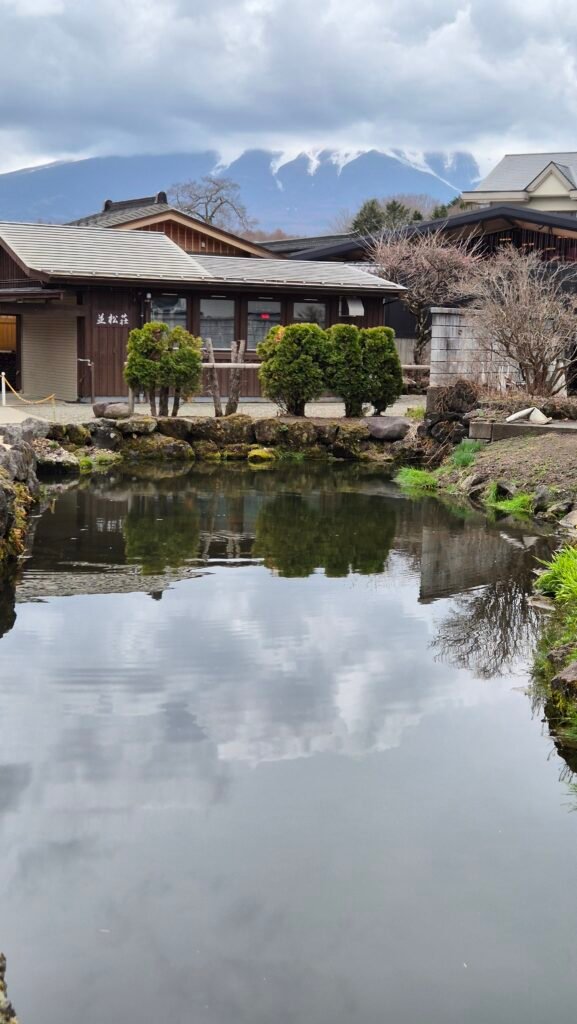
Our first glimpse of Mount Fuji came in a place we really weren’t expecting. The weather had been cloudy all morning, and we had already accepted that Fuji might stay hidden for the entire day. Then, while wandering around Oshino Hakkai, we looked into one of the pools and suddenly saw its reflection in the water. It was only a partial glimpse through the clouds, but after expecting nothing, it felt quite magical. The famous Kagami Pond, whose name means “Mirror Pond”, is particularly known for reflecting Mount Fuji on calm, clear days. Ours wasn’t the perfect postcard view, but somehow that made it even more exciting. We had finally seen Fuji.
Lake Yamanaka
Our next stop was Lake Yamanaka, the largest of the Fuji Five Lakes and the one closest to Mount Fuji. The lake sits at almost 1,000 metres above sea level, with Mount Fuji rising dramatically beyond the water. On a clear day, this is supposed to be an incredible place to see the mountain reflected across the lake, with several viewpoints around the shoreline offering beautiful views.
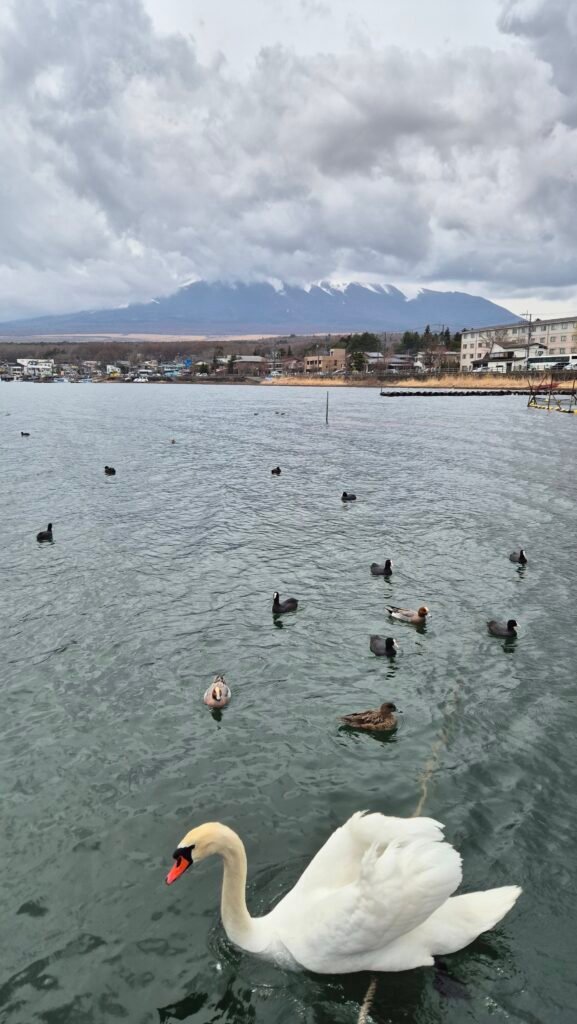
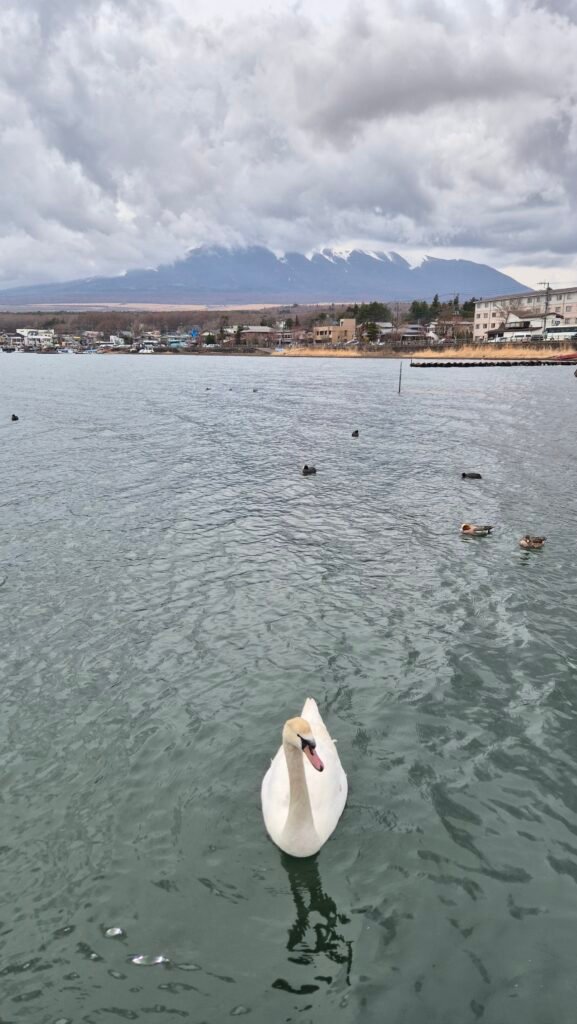
Unfortunately, we weren’t quite that lucky. The weather had followed us throughout the day, with thick cloud sitting over Mount Fuji and hiding most of the mountain from view. We could make out parts of the landscape, but the impressive Fuji backdrop we had been hoping for remained hidden.
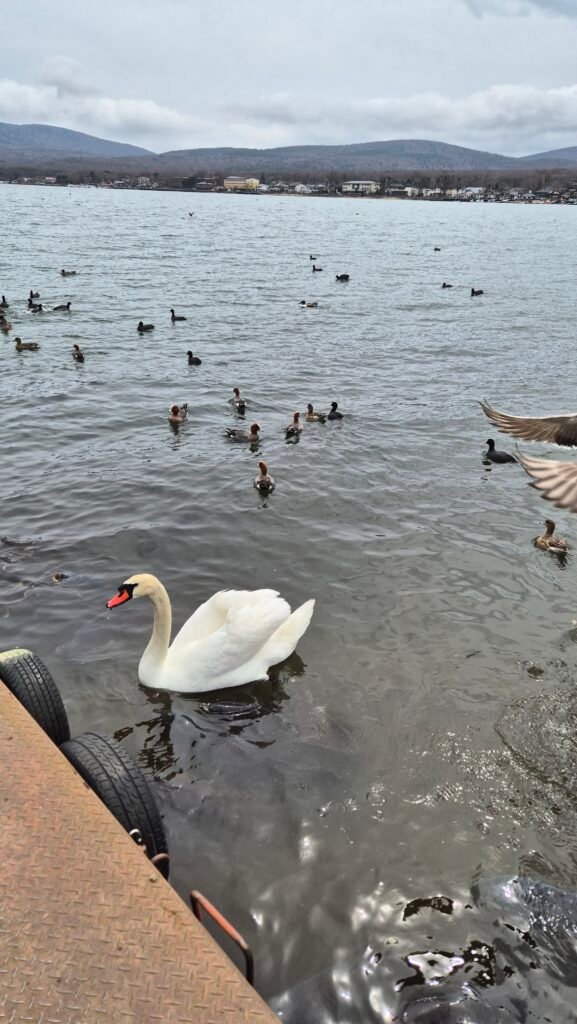
Instead, we spent some time watching the swans and ducks moving across the lake. They seemed completely uninterested in the weather and carried on as though they had nowhere else to be. It was actually a lovely way to spend some time by the water, even if Fuji wasn’t cooperating. We had come hoping for the perfect mountain view, but sometimes travelling means making the most of what is actually in front of you.
Hotokura Funari Kawaguchiko
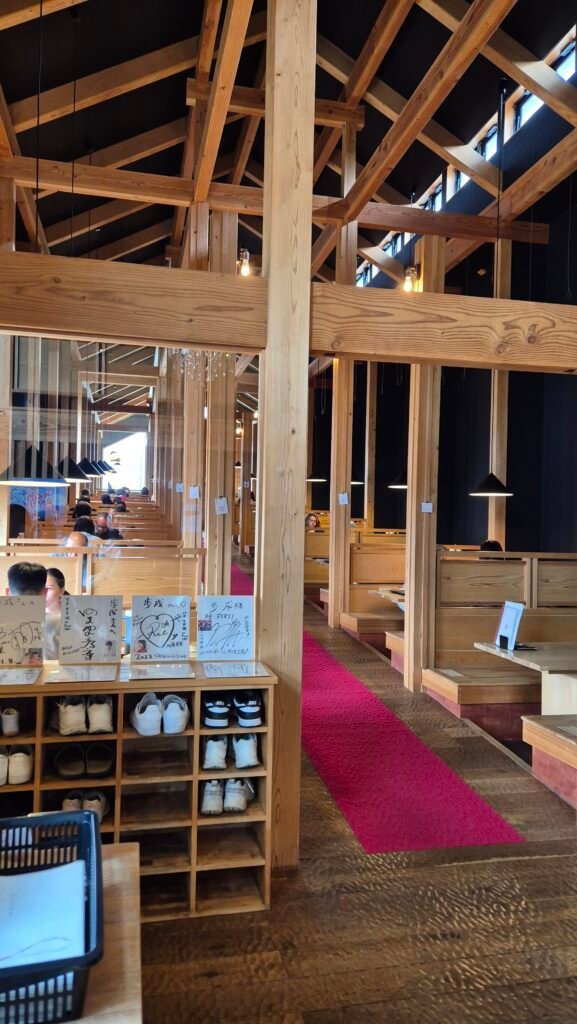
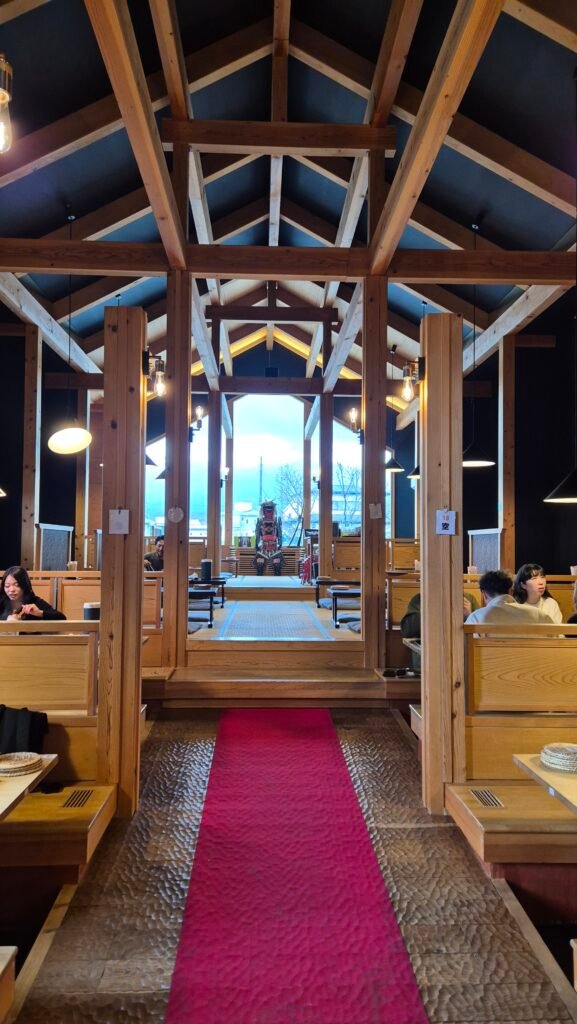
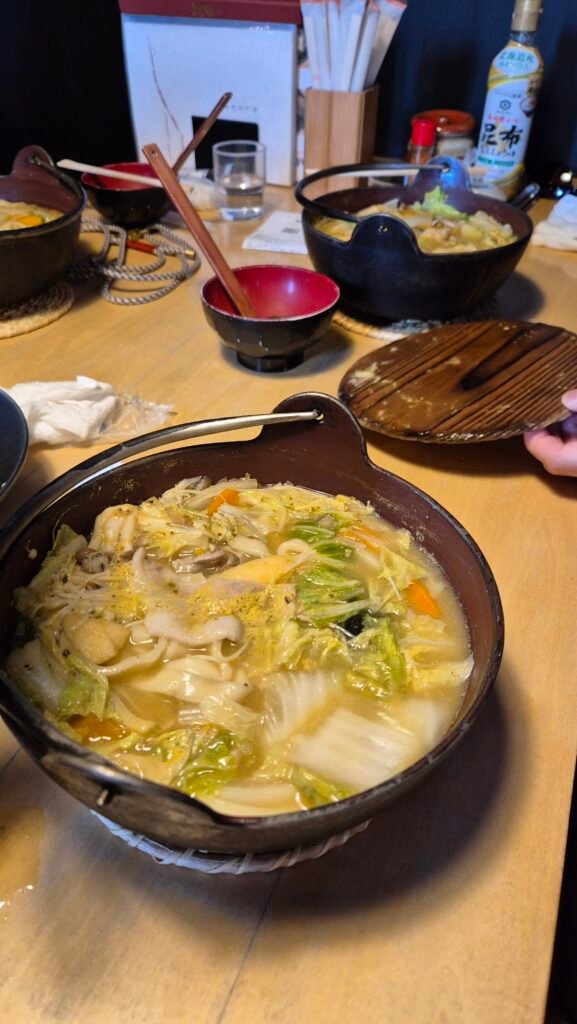
We stopped at Hotokura Funari Kawaguchiko for a proper taste of local Japanese food. The restaurant specialises in hoto, a hearty regional noodle dish from Yamanashi. We ate in a traditional setting and loved the warm, rustic feel. The thick noodles came in a rich miso broth with plenty of vegetables. It was exactly what we needed after a busy morning exploring around Mount Fuji. The portions were generous, and the whole meal felt comforting and very authentic.
Oishi Park
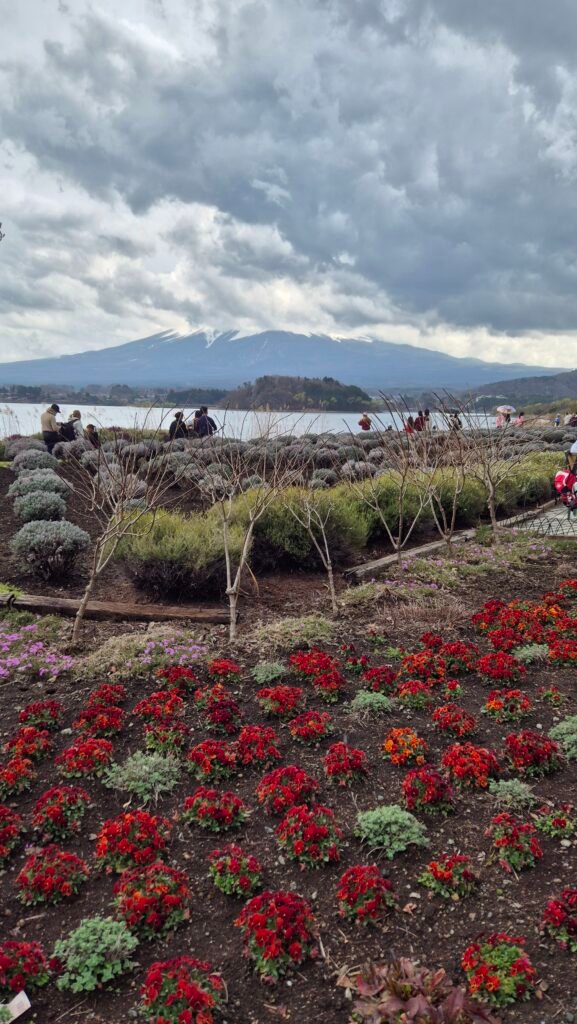
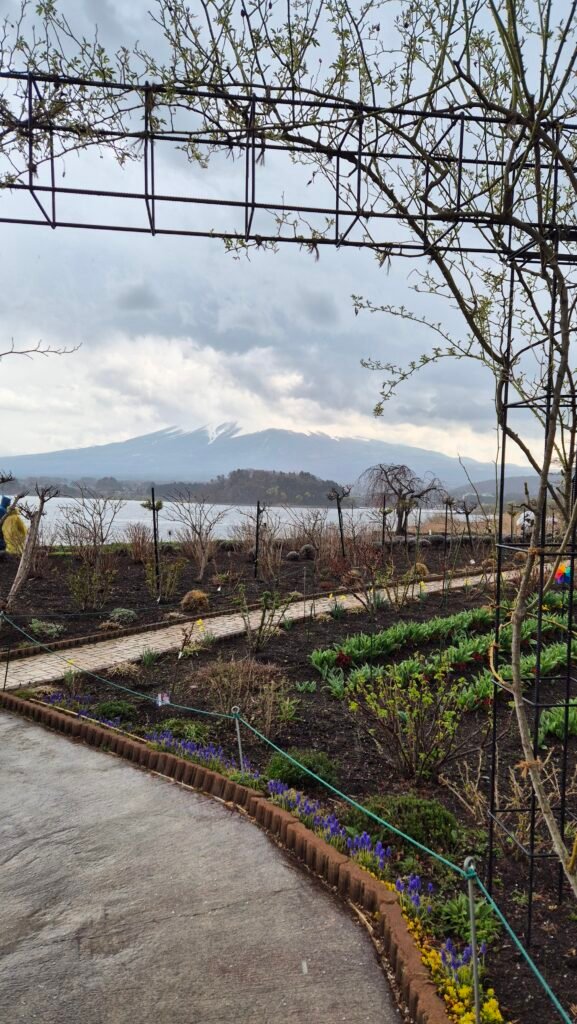
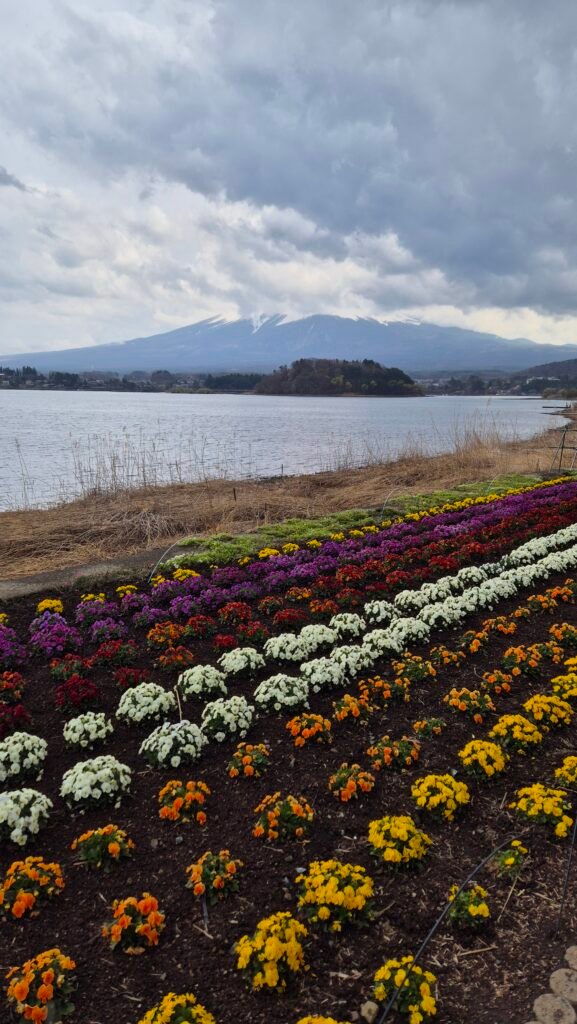
Our next stop was Oishi Park on the northern shore of Lake Kawaguchiko. The park has a beautiful flower promenade that stretches along the lakeside. It offers views across the water towards Mount Fuji. The flower path features different blooms throughout the year.
We had hoped for another great view of Fuji, but the weather had other ideas. Thick clouds covered the mountain again, leaving us with very little to see. We still enjoyed walking along the promenade and taking in the colourful flower beds.
Then the heavens opened and we suddenly found ourselves caught in a torrential downpour. We tried to shelter, but the rain came down so heavily that we soon gave up. We laughed our way through it and made a quick dash back towards the bus.
Oishi Park must look incredible on a clear day. The combination of flowers, lake and Mount Fuji creates the classic Fuji Five Lakes view. We just happened to visit on one of those days when Fuji refused to show itself. Despite the weather, the flower promenade still gave us a lovely glimpse of the area’s natural beauty.
Akihabara District
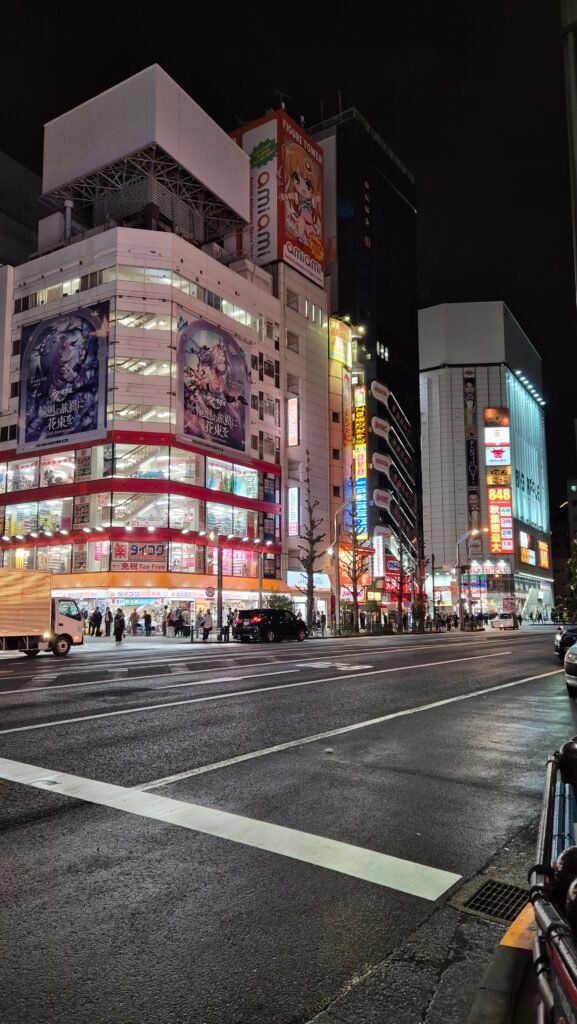
We headed to Akihabara one evening to see the district after dark. The whole area felt completely different from the quieter parts of Tokyo we had explored earlier. Bright signs lit up the streets, while colourful anime adverts covered the buildings around us.
Akihabara is famous for electronics, anime, manga and gaming. We wandered through the main streets and ducked into a few shops along the way. Some stores packed several floors with figures, games, collectibles and gadgets.
We also spotted plenty of arcades, with the sounds of games spilling onto the streets. You can spend hours playing claw machines, trying retro games or exploring the huge gaming centres.
Even if anime and gaming aren’t really your thing, Akihabara makes an interesting evening walk. The neon, crowds and sheer amount of things happening around you create a very different side of Tokyo. We didn’t have a particular plan. We simply wandered around and enjoyed taking it all in.
Meiji Shrine
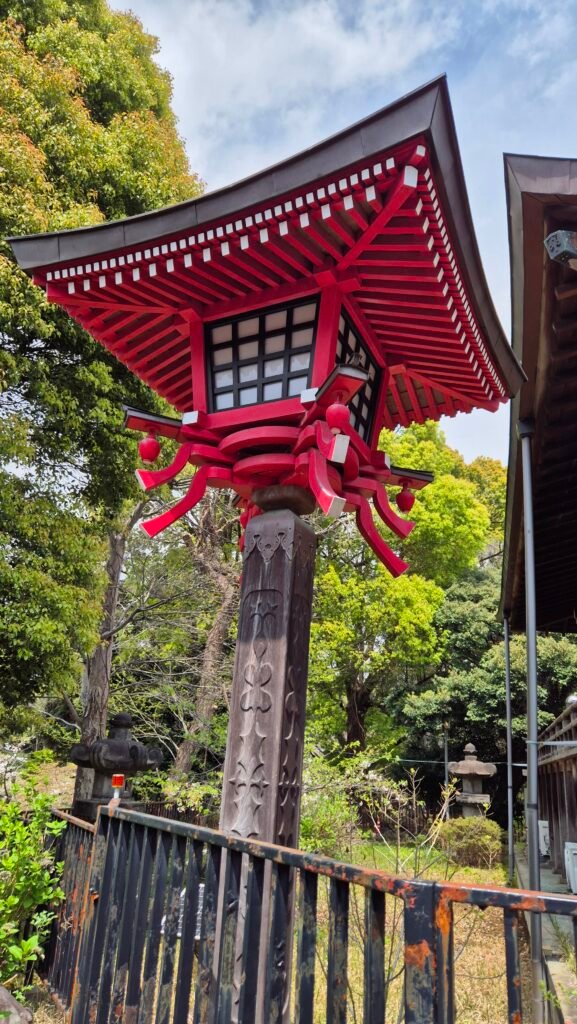
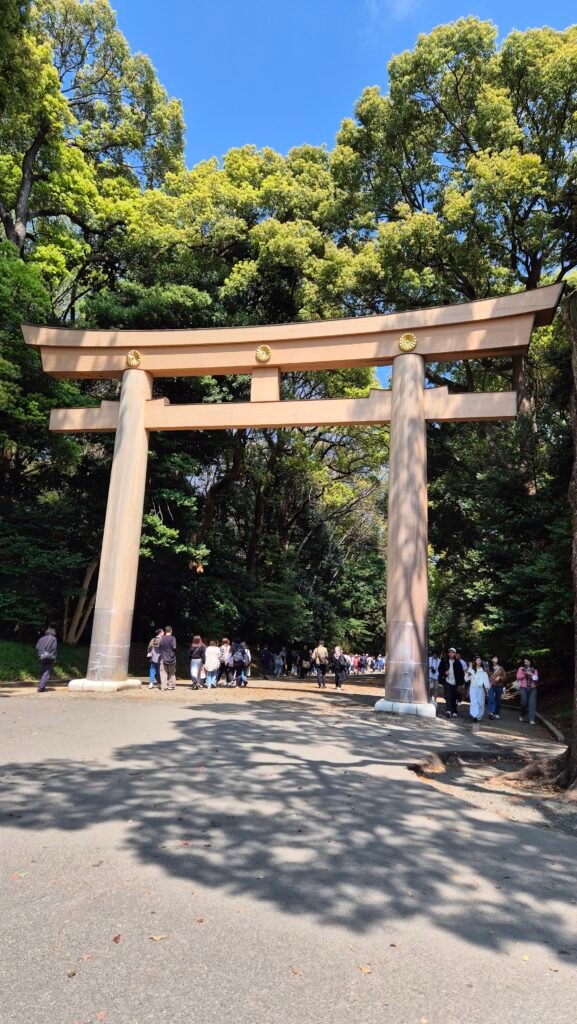
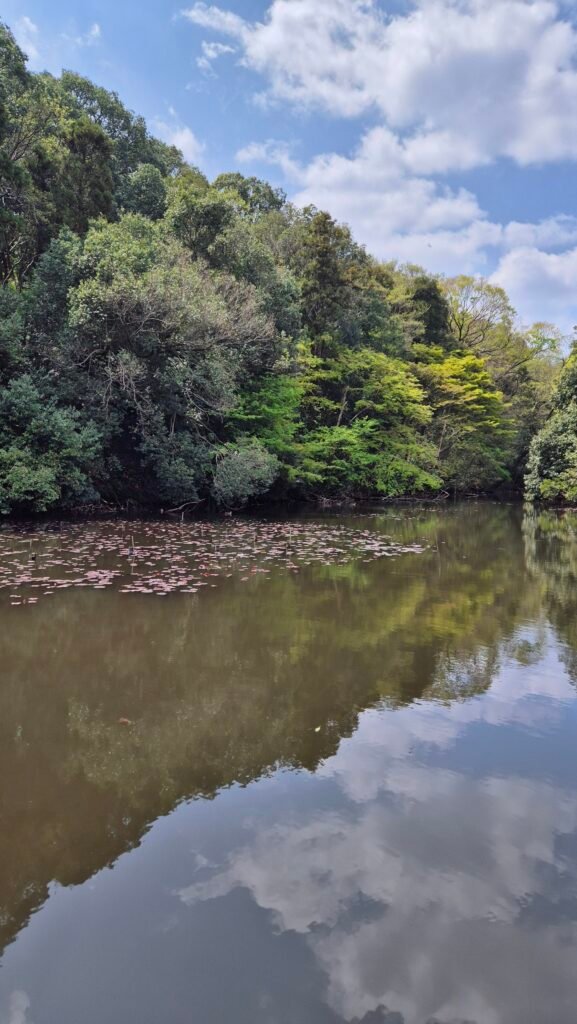
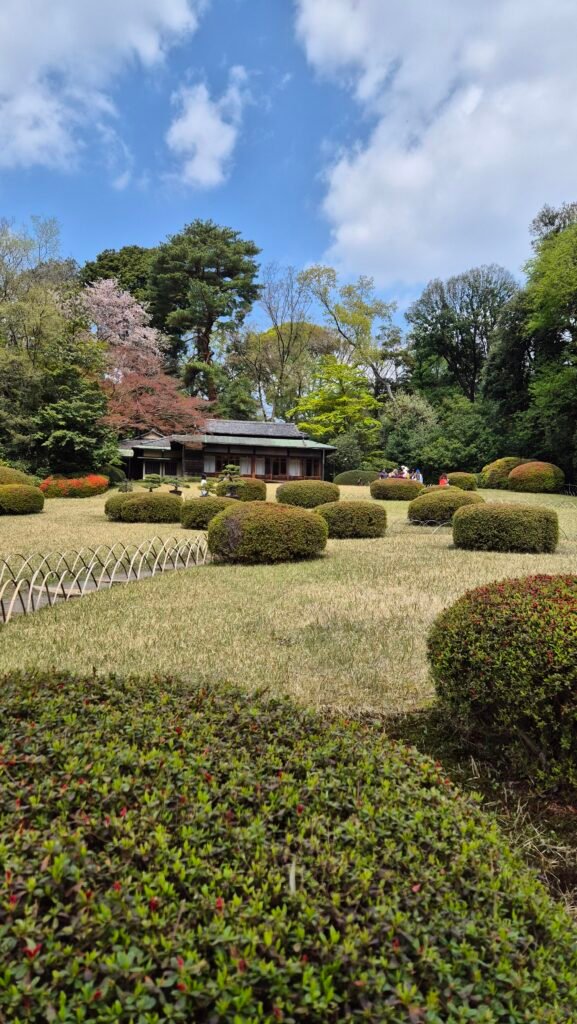
The next day, we headed to Meiji Shrine and found a completely different side of Tokyo. The entrance starts near Harajuku Station, yet the city quickly disappears behind the trees. A huge torii gate marks the start of the long forested approach. More than 100,000 trees create this peaceful woodland around the shrine.
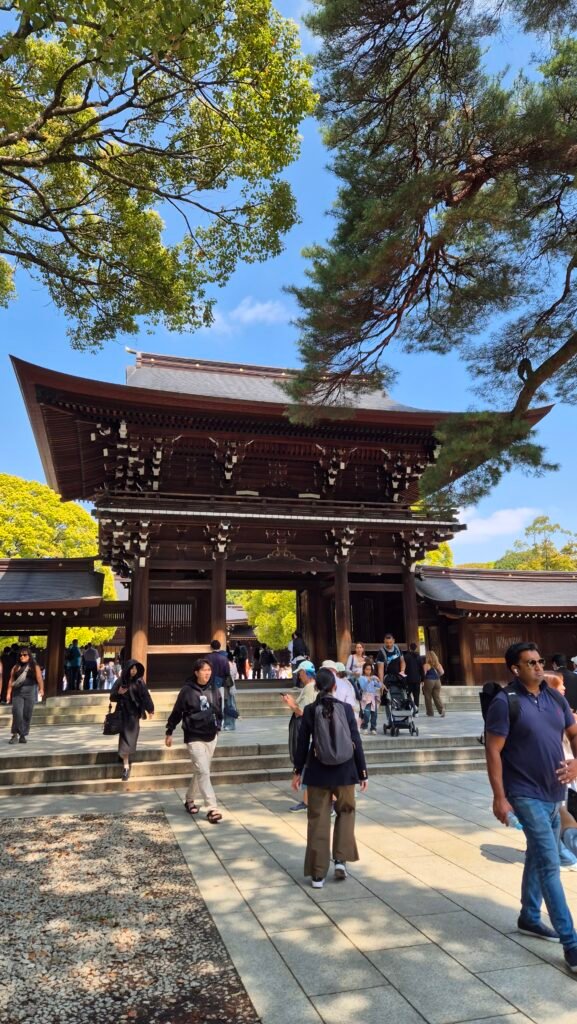
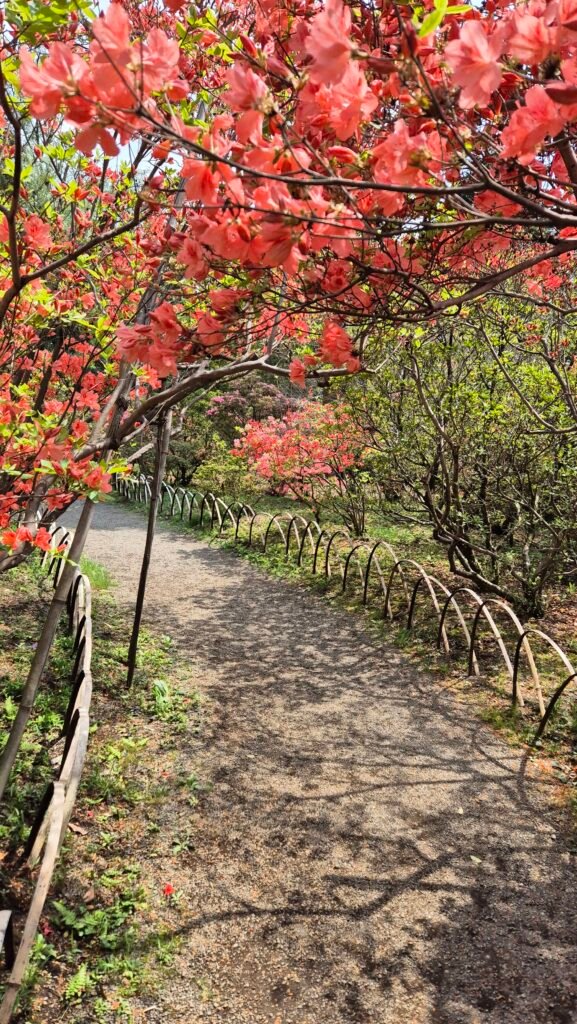
The walk towards the shrine felt beautiful and surprisingly quiet. Towering trees lined the wide gravel paths and gave us plenty of shade. We passed several impressive gates before reaching the main shrine buildings. The large wooden gates looked particularly striking against the surrounding greenery.
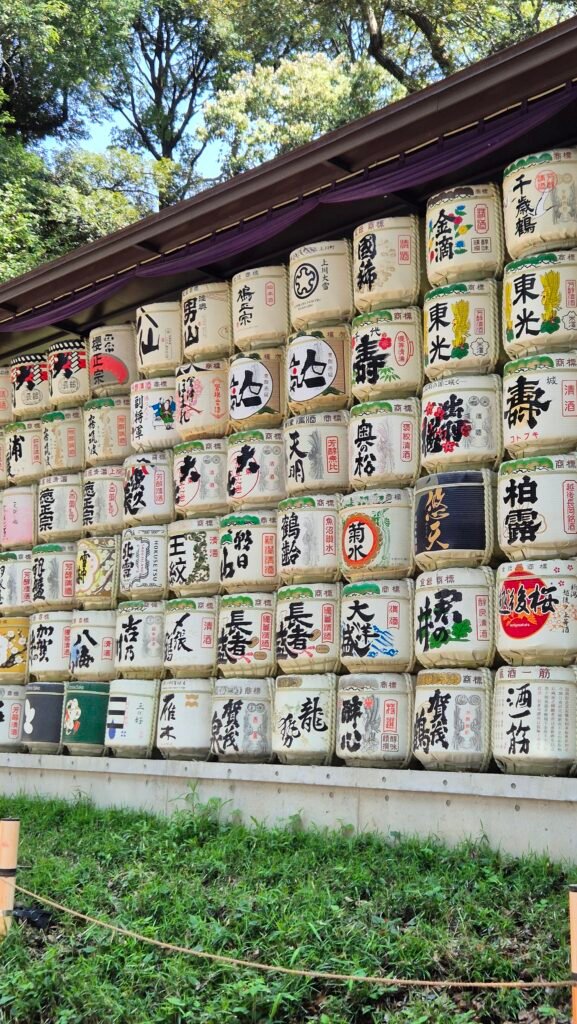
At the shrine, we watched visitors follow traditional Shinto customs. You can wash your hands at the purification fountain before approaching the main shrine. Visitors can also make a prayer, buy an amulet or write their wishes on an ema tablet.
The surrounding grounds offer plenty more to explore. Yoyogi Park sits beside the shrine and makes an easy addition to your visit. You can also visit the Meiji Jingu Museum or explore the Inner Garden. The garden includes ponds, woodland paths and the famous Kiyomasa’s Well. It costs ¥500 to enter the Inner Garden.
For us, the forest walk and beautiful gates made the visit special. Meiji Shrine gave us a peaceful break from Tokyo’s constant energy.
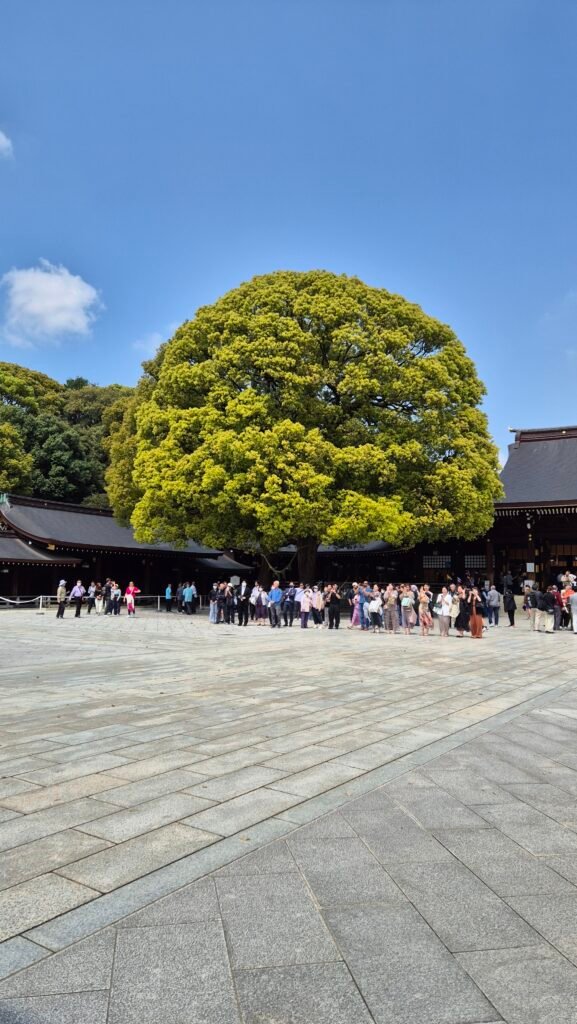
One thing that really stood out to us at Meiji Shrine was a huge tree standing at the heart of the shrine grounds. We both stopped when we saw it. It was easily the most beautiful tree we had seen during our trip.
Harajuku
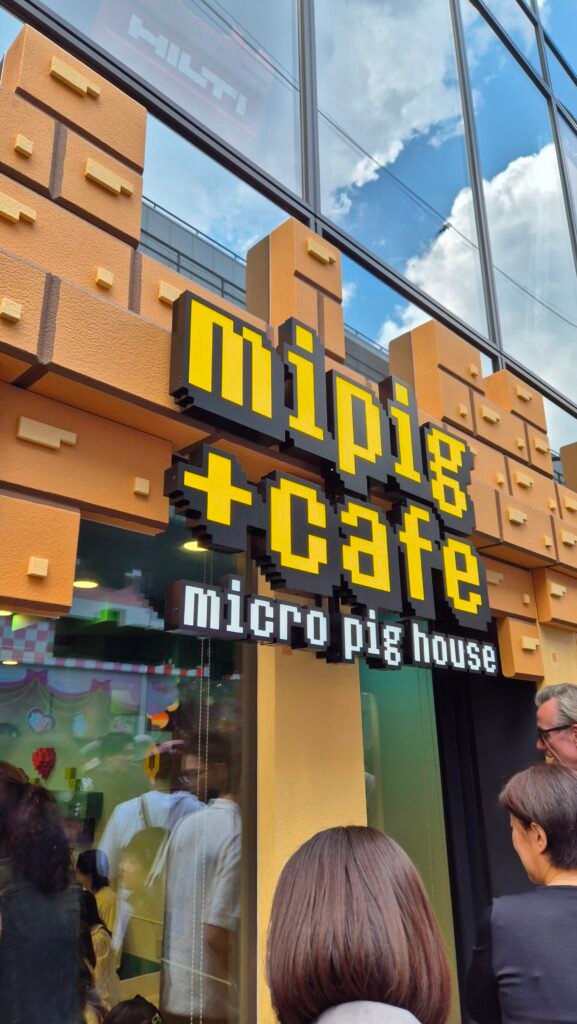
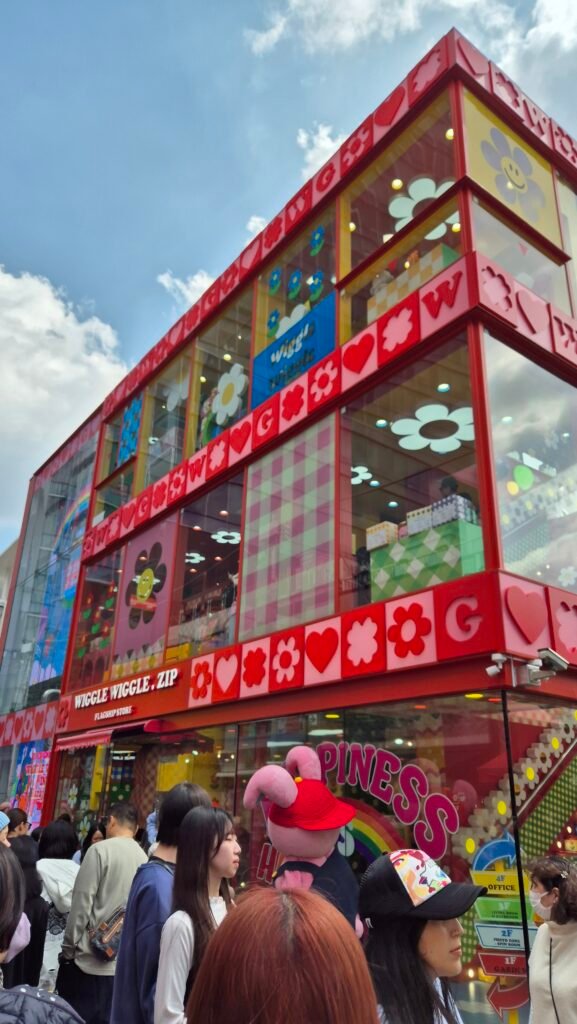
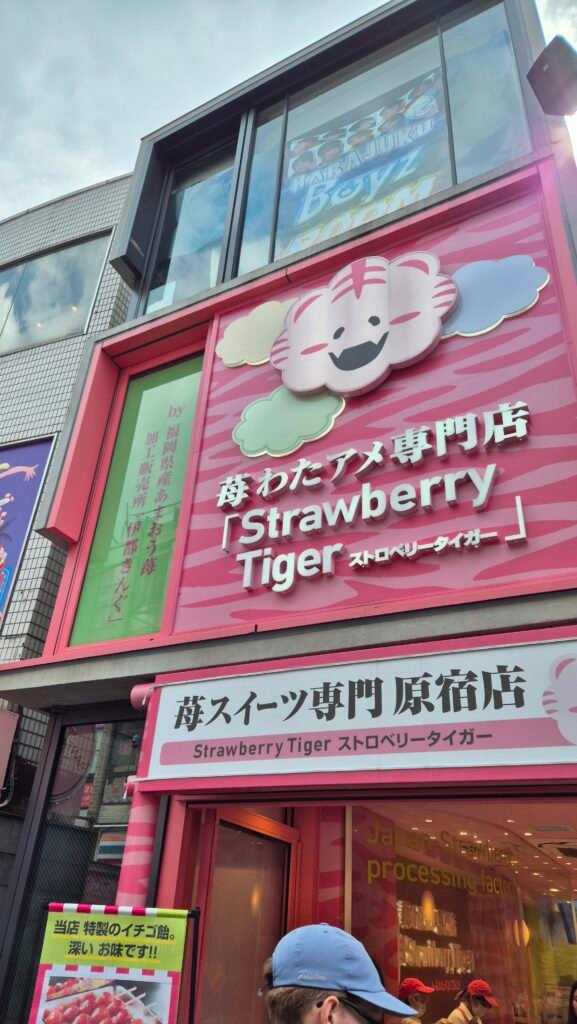
We spent some time exploring Harajuku, one of Tokyo’s most colourful and energetic neighbourhoods. The area felt completely different from the traditional side of the city we had seen earlier. Bright shopfronts, quirky fashion and little food stalls filled the streets around us.
Our main stop was Takeshita Street, the famous pedestrian shopping street that runs from Harajuku Station. We wandered through the crowds, browsing the shops and taking in all the unusual displays. You can find everything from vintage clothing and cosmetics to character goods and Japanese snacks.
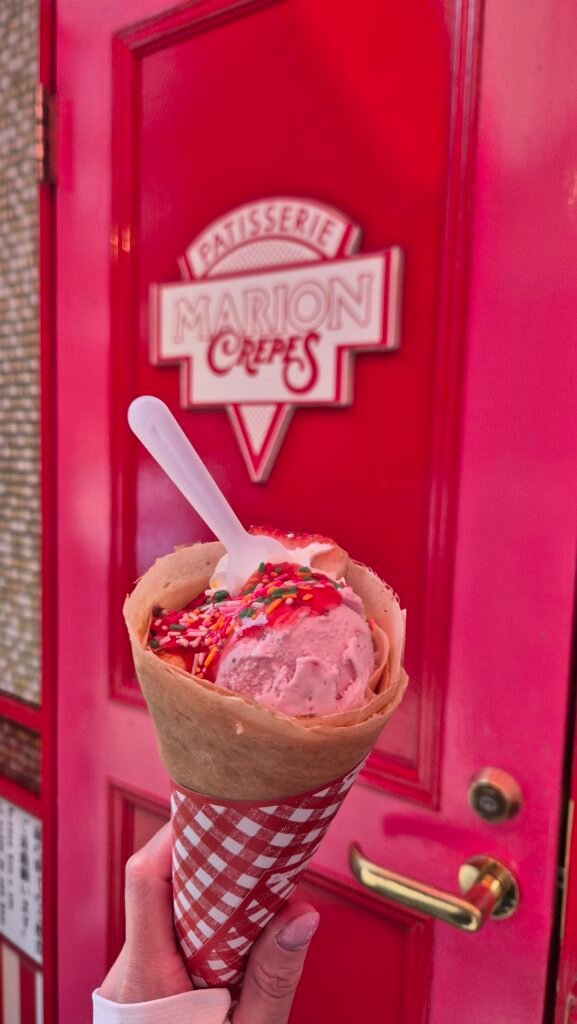
Of course, we had to try a famous Harajuku crepe. We stopped at Marion Crepes, which originated in Harajuku and has become closely associated with Takeshita Street. Marion Crêpes Takeshita Street The menu offers a huge range of sweet crepes, packed with combinations of fruit, cream, chocolate and other treats.
We enjoyed simply wandering without a plan and seeing what caught our attention. Harajuku has a youthful energy that makes exploring it part of the experience. It can get extremely busy, but that adds to the atmosphere rather than taking away from it.
Shibuya Sky Tower
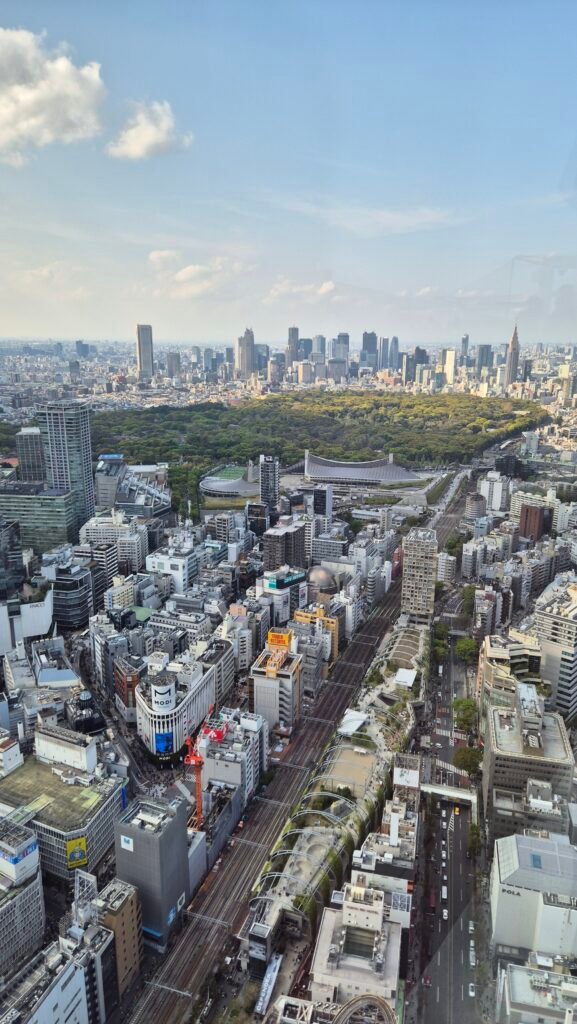
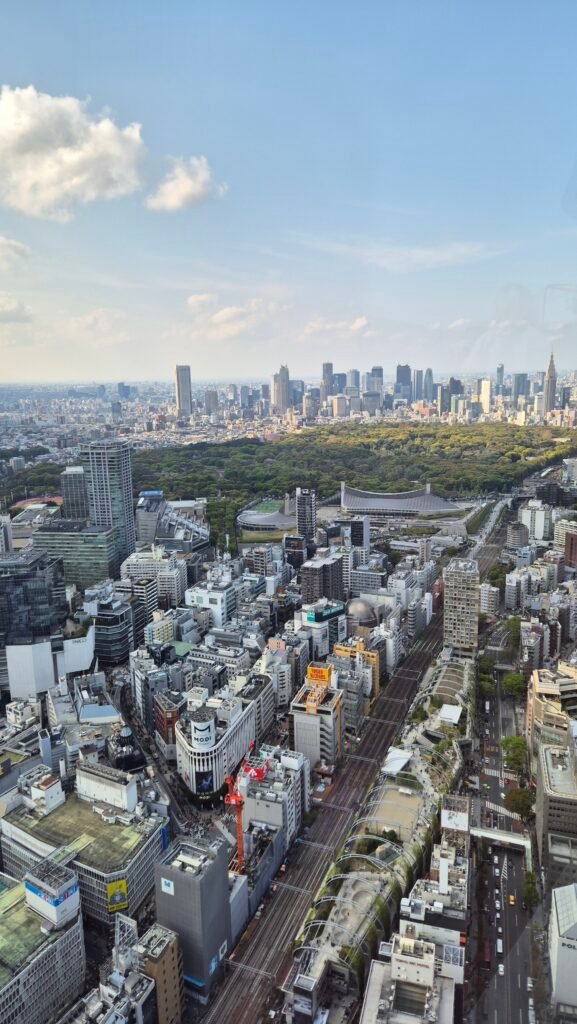
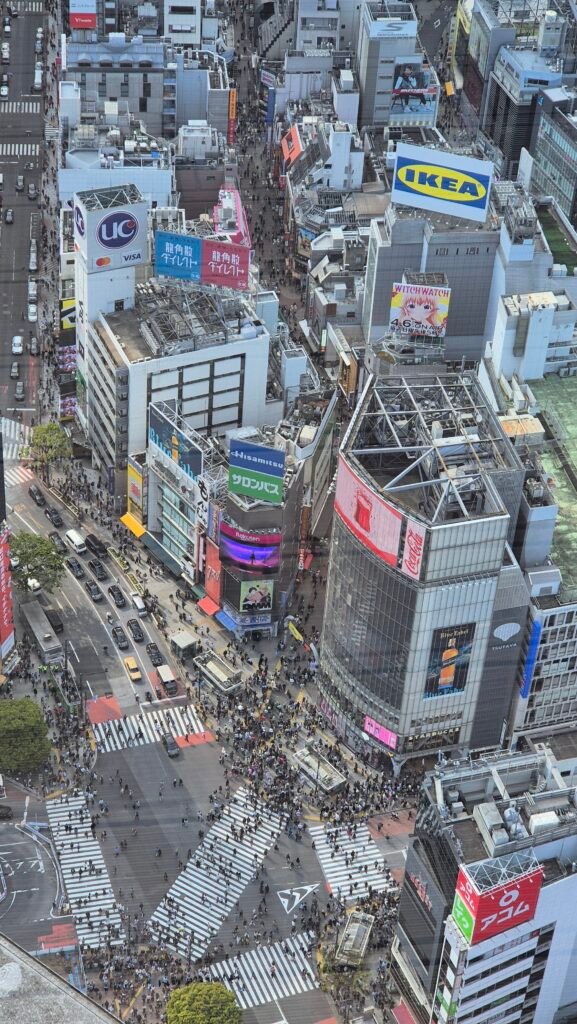
SHIBUYA SKY was easily my favourite experience of our entire trip. Getting the tickets, however, was an experience in itself!
We visited on 12 April, and I spent weeks researching exactly how the ticket releases worked. Finding clear information wasn’t easy, so I want to explain it here for anyone planning a visit. Tickets for our date became available at midnight Japan time, so I worked out exactly when that was in the UK. I kept checking the booking pages beforehand and waited for our date to appear.
When the tickets finally opened, I was ready. I booked six tickets through Klook on 28 March, but getting the time I wanted proved much harder. I desperately wanted sunset tickets, but they kept disappearing before I could secure six together. I watched the times change to unavailable right in front of me. It was incredibly stressful!
In the end, I managed to get six tickets for around 2pm. It wasn’t the time I wanted, but I decided to take them rather than risk missing out completely.
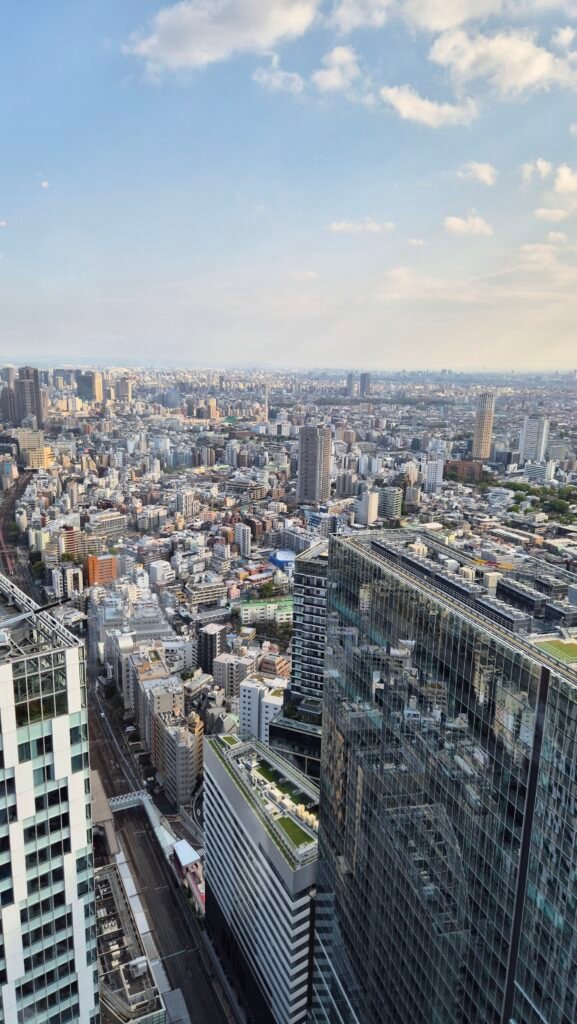
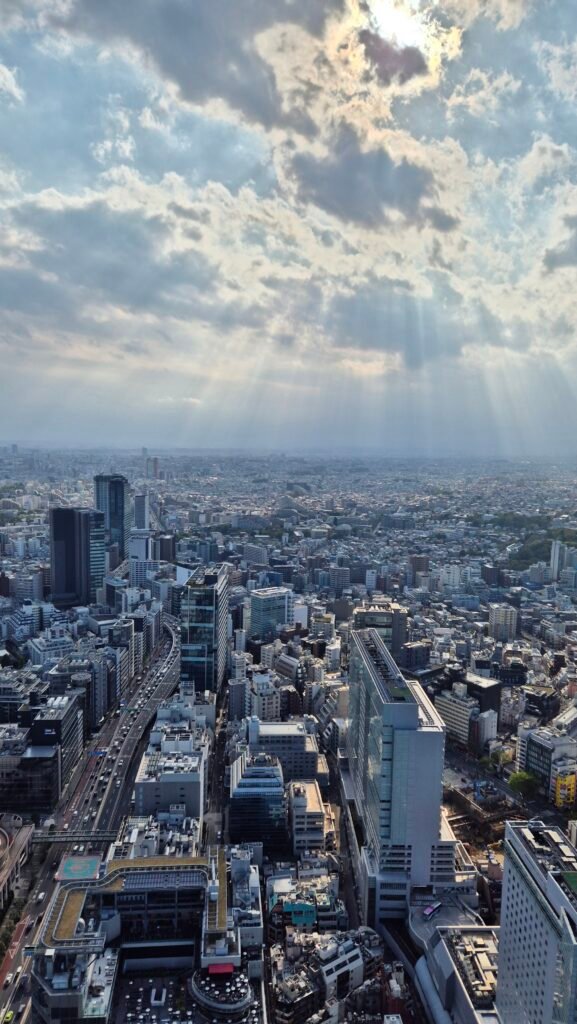
Thankfully, you can stay inside SHIBUYA SKY for as long as you like once you’ve entered. That meant we could enjoy the views without rushing. The rooftop SKY STAGE sits 229 metres above Tokyo and offers incredible 360-degree views.
The views completely blew us away. Shibuya Crossing looked tiny below us, while Tokyo stretched endlessly across the horizon. We wandered around the rooftop, took loads of photographs and simply enjoyed being up there.
The indoor SKY GALLERY offers another perspective, with huge windows overlooking the city.
In the end, our 2pm tickets worked out perfectly. We didn’t get the sunset I had hoped for, but the experience still became my favourite part of the entire trip.
My biggest tip is to research the release time carefully and be ready at midnight Japan time. If sunset tickets disappear, don’t panic. Grab whatever time you can and enjoy it.
Tokyo Metropolitan Government Building Light Show
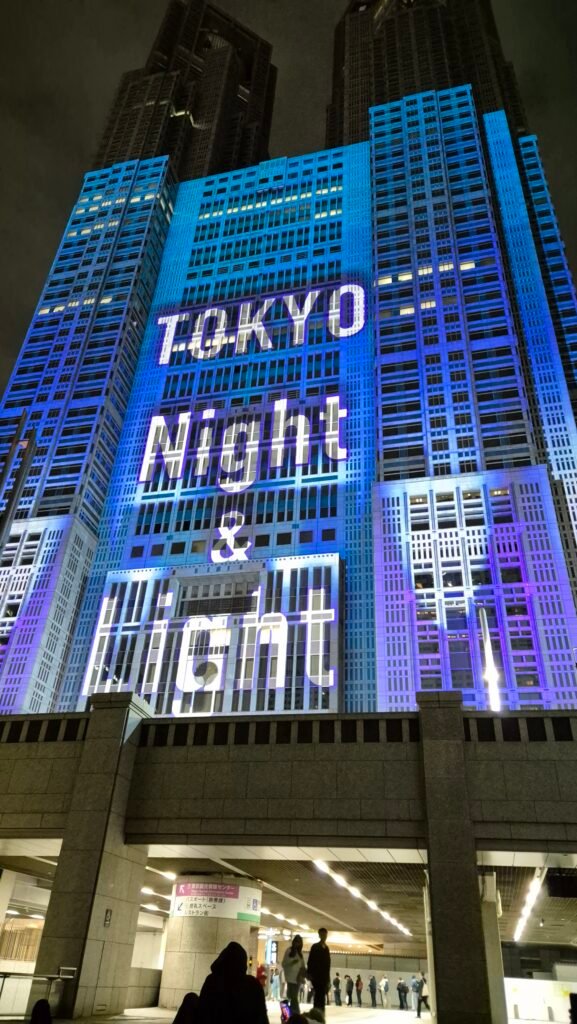
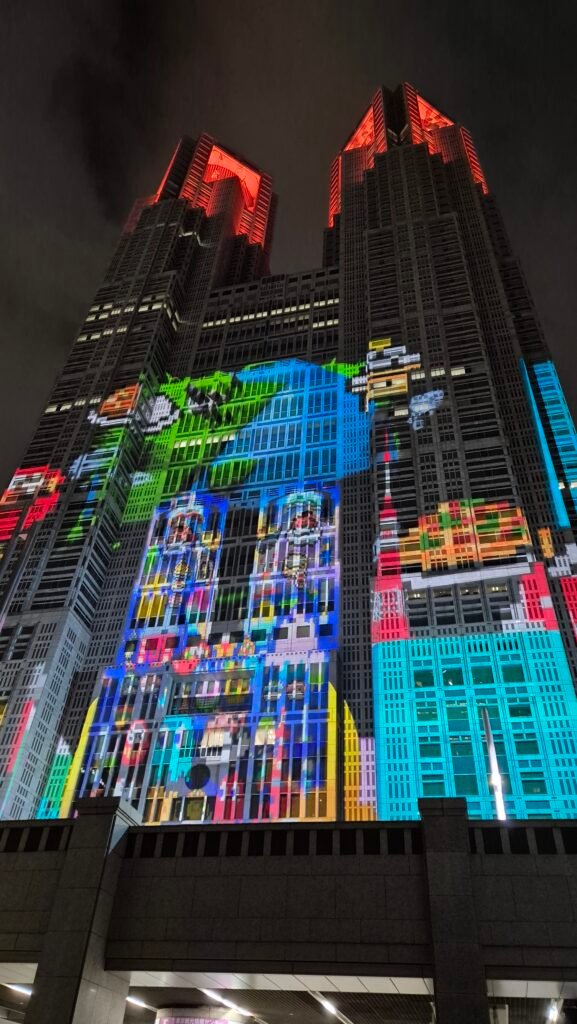
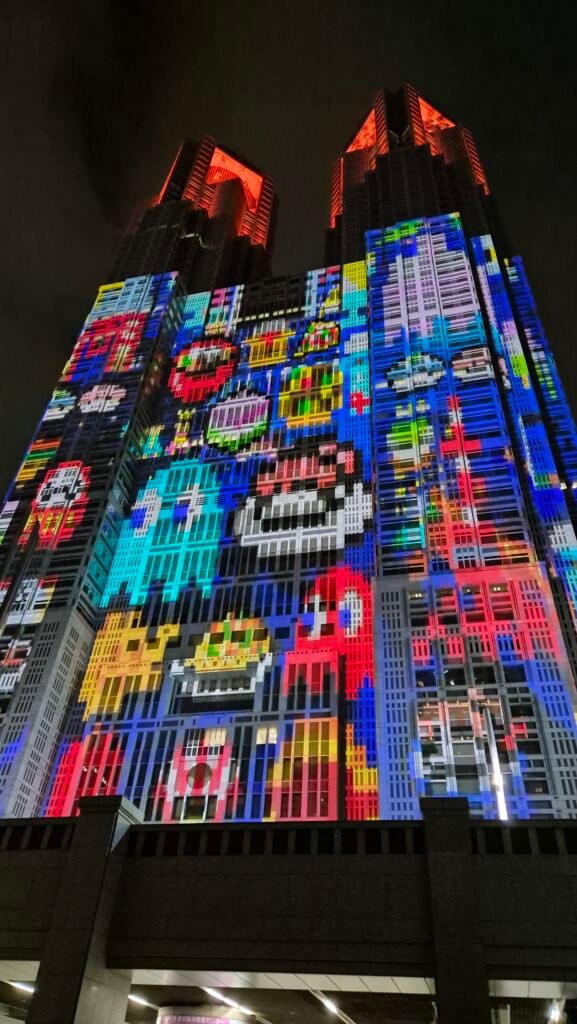
One evening, we headed to the Tokyo Metropolitan Government Building in Shinjuku to see its incredible light show. The building becomes a giant screen for colourful projection mapping, with music and animations covering the enormous facade. It holds a Guinness World Record for the largest permanent architectural projection-mapped display.
Getting there was really easy from central Tokyo. We took the Toei Oedo Line to Tochomae Station, which sits almost directly beside the building. You can also walk from Shinjuku Station West Exit in around ten minutes. Nishi-Shinjuku Station takes around five minutes on foot.
The show takes place after dark, with screenings running at different times depending on the season and programme. When we visited, we checked the evening schedule before heading over. I would definitely check the official timetable on the day, as the times and projections can change.
The best part is that the show is free, so you don’t need to book a ticket for the regular projection mapping. Find a good spot around the Tokyo Metropolitan Government Citizens’ Plaza and look up at the building.
We loved seeing such a huge building transformed by light. It made a great evening stop and cost us absolutely nothing. If you’re already exploring Shinjuku, it’s well worth adding to your plans.
Our Tokyo Adventure
Our five days in Tokyo gave us a brilliant mix of food, culture, nature and unforgettable experiences. We based ourselves in Ueno and explored everything from cherry blossoms in Ueno Park to the traditional beauty of Sensoji Temple. We wandered through Harajuku, Akihabara and Shibuya, discovering colourful streets, incredible food and plenty of surprises along the way. TeamLab Borderless completely blew us away, while SHIBUYA SKY became my favourite experience of the trip. We also ventured beyond Tokyo for our Mount Fuji day trip, despite the clouds and torrential rain. Tokyo constantly surprised us, and five days barely felt long enough.