Osaka, Kyoto and Nara had been on my travel list for a long time, so I was really excited to finally experience them for myself. I had seen plenty of photos of the temples, streets and famous landmarks, but as always, seeing everything in person was something completely different.
What I loved most was how different each place felt. Osaka was lively, friendly and full of incredible food, while Kyoto had that lovely mix of traditional streets, beautiful temples and quiet corners. Then there was Nara, where wandering around the parks and meeting its famously friendly deer made for a completely different experience.
There was so much to see and do that it was hard to know where to start. From eating our way through Osaka to exploring Kyoto’s temples and discovering Nara’s history, this trip gave me a great taste of Japan. And, honestly, I enjoyed every minute of it.
Check out my Tokyo Itinerary too.
Namba
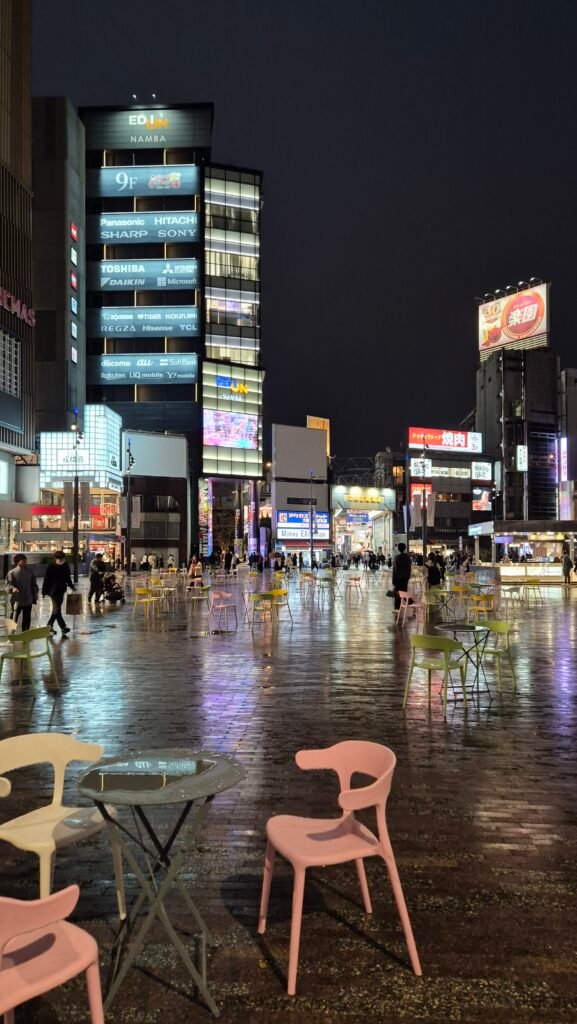
We stayed at Fairfield by Marriott Osaka Namba, in the Motomachi area of Namba. We found the location really convenient. It was close enough to walk into the main Namba and Dotonbori areas, but far enough away from the busiest streets that it felt a little calmer when we came back at the end of the day.
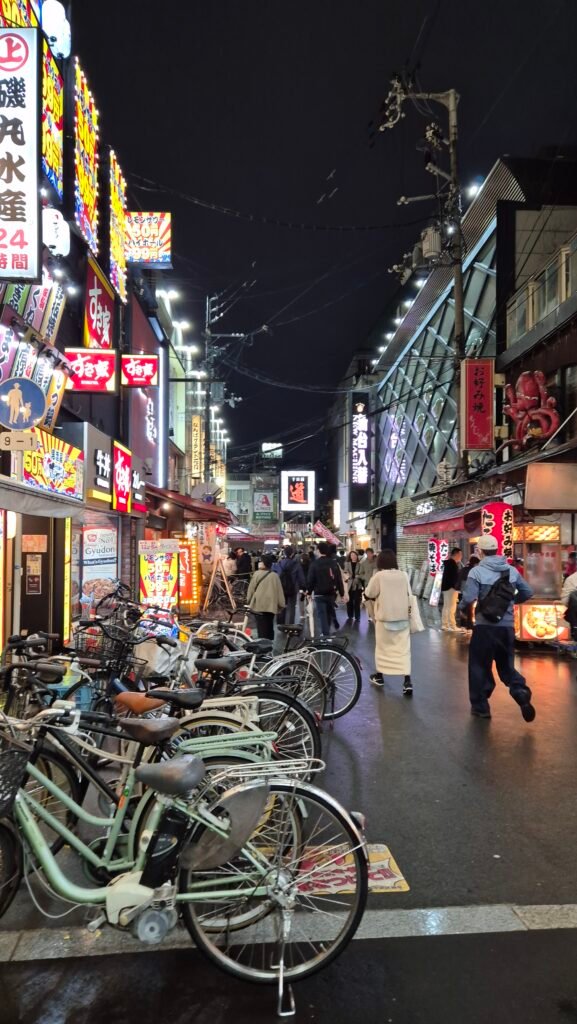
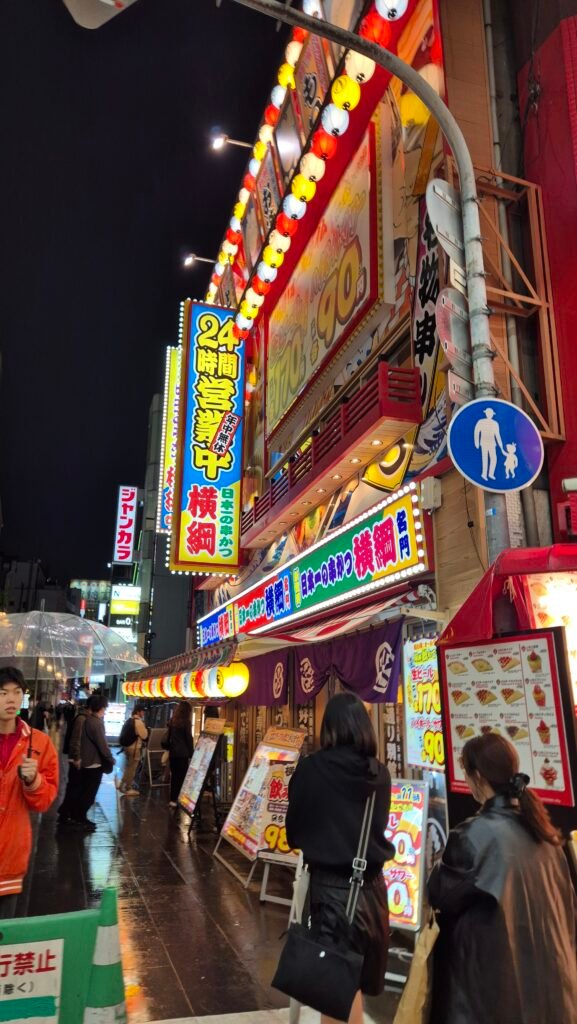
One of the best things about staying around Namba is simply having so much within easy reach. Dotonbori, with its bright signs, restaurants and famous canal, is nearby, while Namba’s shopping streets and food spots give you plenty of options for an evening out. Namba is also a major transport hub, making it particularly useful for day trips to places such as Kyoto and Nara.
For us, it worked really well as a base: convenient, lively when we wanted it to be, and easy to get around from.
Other hotels in Namba
If you’re considering staying in the area, here are a few alternatives at different price levels. Prices in Osaka can vary considerably depending on the season, so I’d treat these as rough categories rather than fixed price bands.
High-end
- Swissôtel Nankai Osaka – One of the best-located luxury options, sitting directly above Nankai Namba Station. It’s particularly handy for airport connections and travelling onwards to Kyoto or Nara.
- Centara Grand Hotel Osaka – A newer luxury option in the Namba area, with a more contemporary feel.
Mid-range
- Hotel Monterey Grasmere Osaka – A good central choice with a slightly different character, and it’s directly connected to Namba Station.
- Cross Hotel Osaka – A stylish option if being close to Dotonbori, restaurants and shopping is high on your list.
Lower-priced / good-value
- APA Hotel Namba-ekihigashi – A practical choice if you’re mainly looking for somewhere convenient to sleep while spending most of your time exploring.
- Il Cuore Hotel Namba – Another straightforward, centrally located option that can work well for travellers looking to keep accommodation costs down.
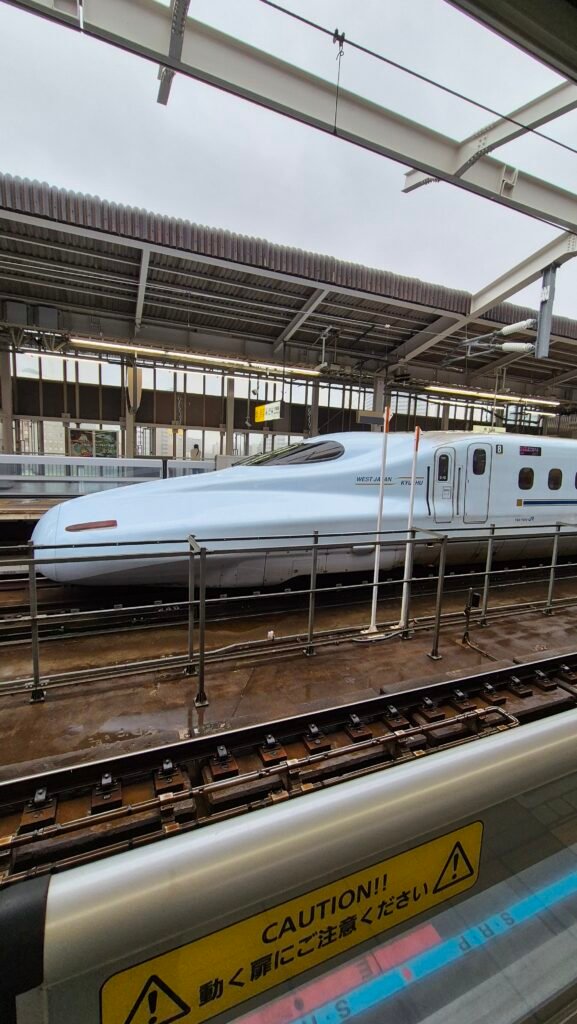
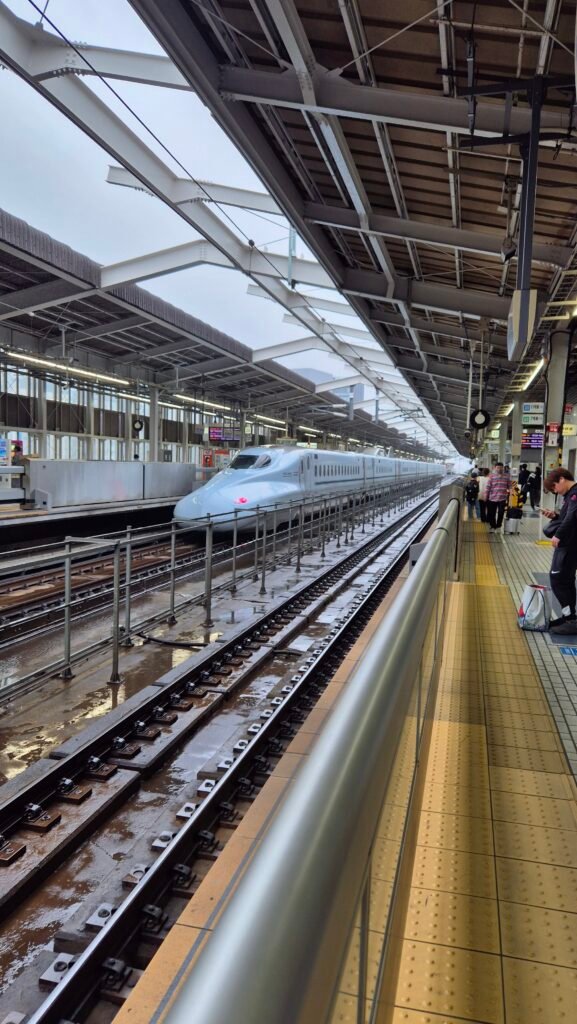
Shinkansen Bullet Train from Tokyo to Osaka
One thing we definitely could have planned better was our journey from Tokyo to Osaka. We assumed we could simply turn up at Tokyo Station, buy our Shinkansen tickets and jump on the next train. And technically, you can do exactly that. However, we found the whole process much more confusing than we expected!
Tokyo Station is huge, and once you find the Shinkansen area, there are lots of ticket machines. The machines we used didn’t have an English option, which made things much harder. Of course, we completely understand that we were travelling in another country and wouldn’t expect everything to be in English! But when you’re already trying to work out an unfamiliar train system, it did make buying the tickets quite stressful.
And this is where we went wrong.
You actually need two parts to the ticket
When buying a Shinkansen ticket at the station, there are two separate parts to the fare:
1. The Basic Fare Ticket
This is the ordinary train fare that covers your journey from Tokyo to Shin-Osaka. Think of it as the basic cost of getting from A to B.
2. The Shinkansen Limited Express Ticket
This is the additional fare for travelling on the Shinkansen. If you choose a reserved seat, this is also where your seat reservation comes into it.
We somehow managed to buy the Shinkansen/seat reservation part without the basic fare ticket. We thought we had bought our complete tickets to Osaka, but we hadn’t!
The Shinkansen fare and basic fare can be purchased separately at the station, which is exactly why it is important to check what you are actually buying. JR Central explains that the two tickets work together to make up the complete Shinkansen journey.
Our limited-express/seat portion was around ¥5,800 per person, which seemed about right for what we thought was the ticket from Tokyo to Osaka. We then couldn’t get through the ticket gates and realised we needed a second ticket.
Cue a trip to the customer service desk, a queue and us trying to explain what we’d managed to do! Thankfully, the staff were incredibly helpful and sorted everything out for us.
So how much should you expect to pay?
As a rough guide, a normal adult journey from Tokyo to Shin-Osaka in an ordinary reserved seat on a Nozomi is around ¥14,500–¥15,000 one way, depending on the season.
That total is made up of the basic fare + the Shinkansen limited-express fare.
There are cheaper options, including Hikari and Kodama services, and there are also discounts available when booking in advance. For example, Smart EX currently offers advance-purchase fares on certain services and routes.
The easiest way to avoid our mistake
If you don’t want to deal with the ticket machines, we’d recommend booking online before you travel.
The official Smart EX service allows you to search for your train, choose your seats and book your journey online. Importantly, its standard Shinkansen products combine the basic fare and limited-express ticket into one booking, so you don’t have to work out the two separate components yourself.
You can also select your actual seats from a seating map, and the service provides a QR code that can be used at the ticket gates.
Book your Shinkansen through the official Smart EX website
If you buy at Tokyo Station
If, like us, you prefer to buy your tickets at the station, give yourself plenty of time and look for the Tokaido Shinkansen signs.
For Osaka, your destination should be Shin-Osaka, rather than simply Osaka.
If you’re not completely sure what you’re buying, we’d recommend going to the staffed JR ticket office rather than trying to navigate the machines.
Kyoto Day Trip
For our day trip to Kyoto, we decided to hire a private minibus rather than use the trains. We arranged it through a company in Taiwan and paid around TWD 16,100 for the day.
For us, this was a really convenient option, particularly as we wanted to visit several different places around Kyoto rather than simply travelling into the city centre and staying in one area. Having our own driver meant we could be collected from our hotel in Osaka, travel directly between the sights and then return to Osaka at the end of the day.
It also took away the hassle of working out different trains and buses, and we didn’t have to worry about navigating with a larger group. Private vehicles and minibuses can be particularly useful for a full day of sightseeing, as they allow you to build your own itinerary and arrange pick-up and drop-off at your hotel.
For us, the convenience made it well worth considering, especially when travelling as a group.
Kiyomizu-Dera Temple
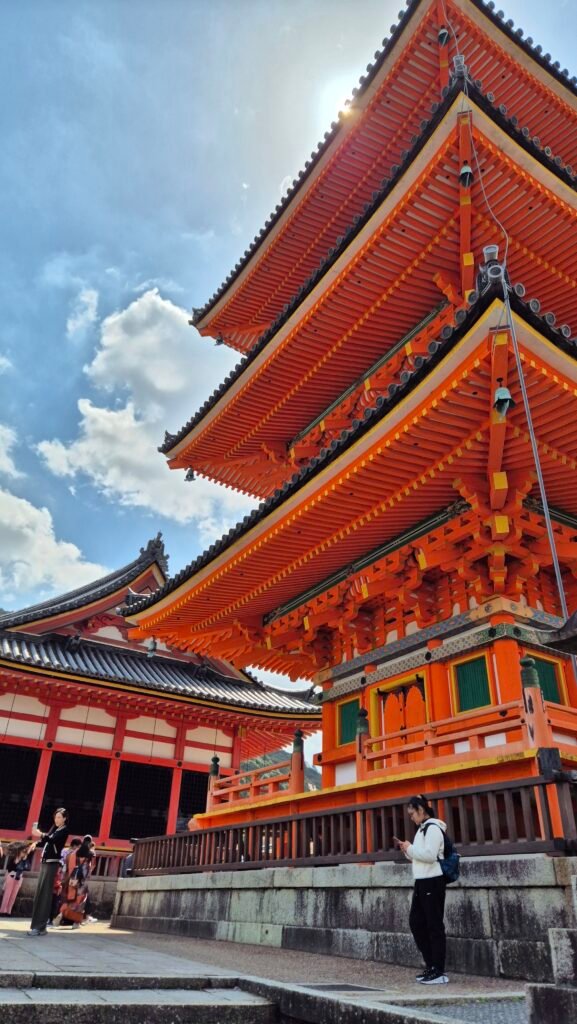
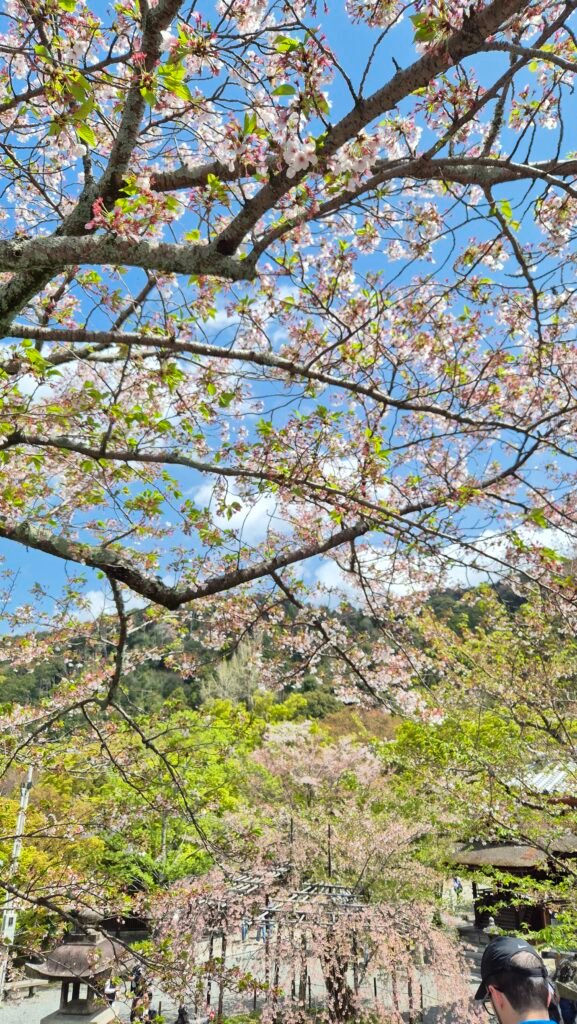
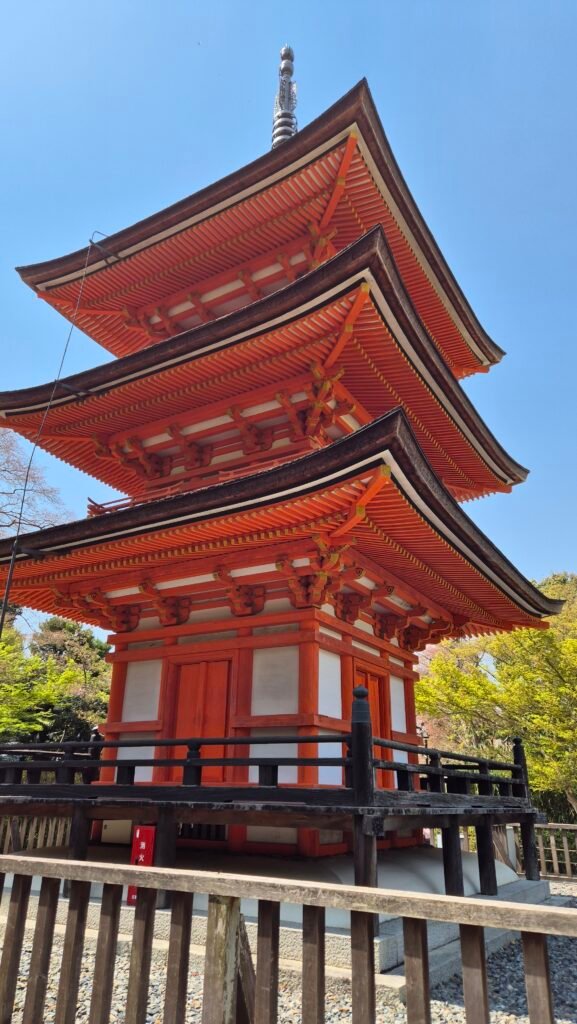
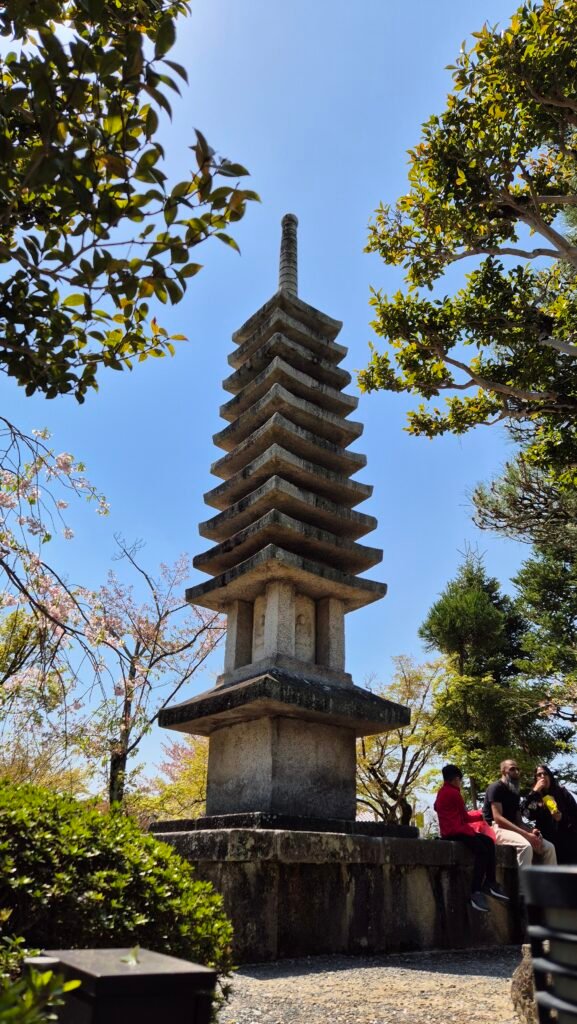
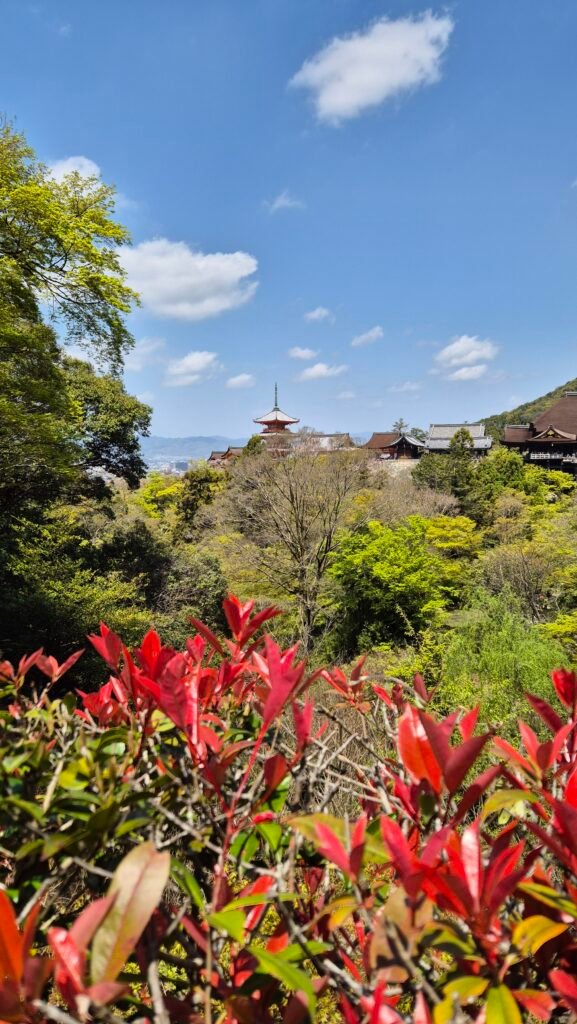
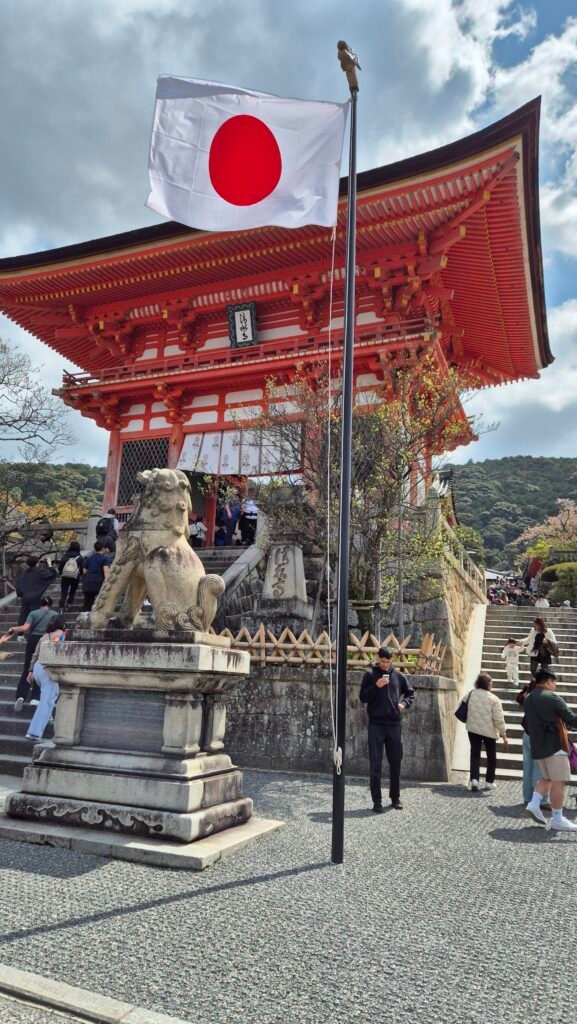
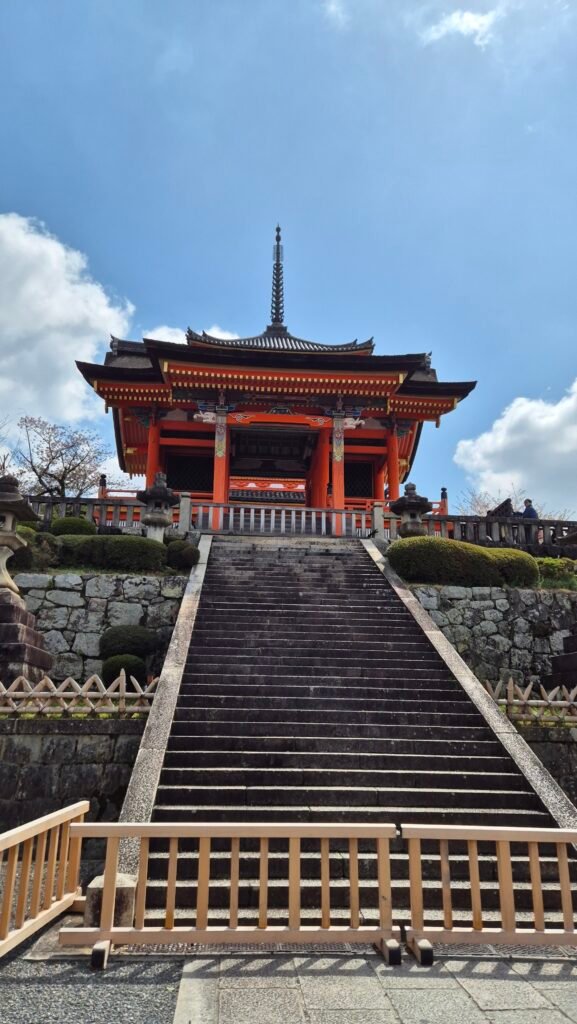
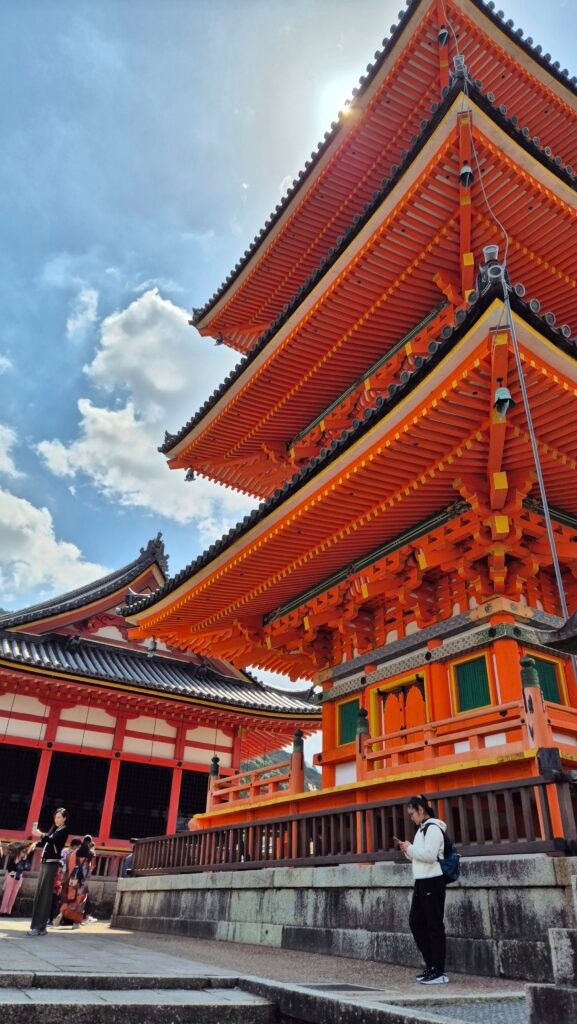
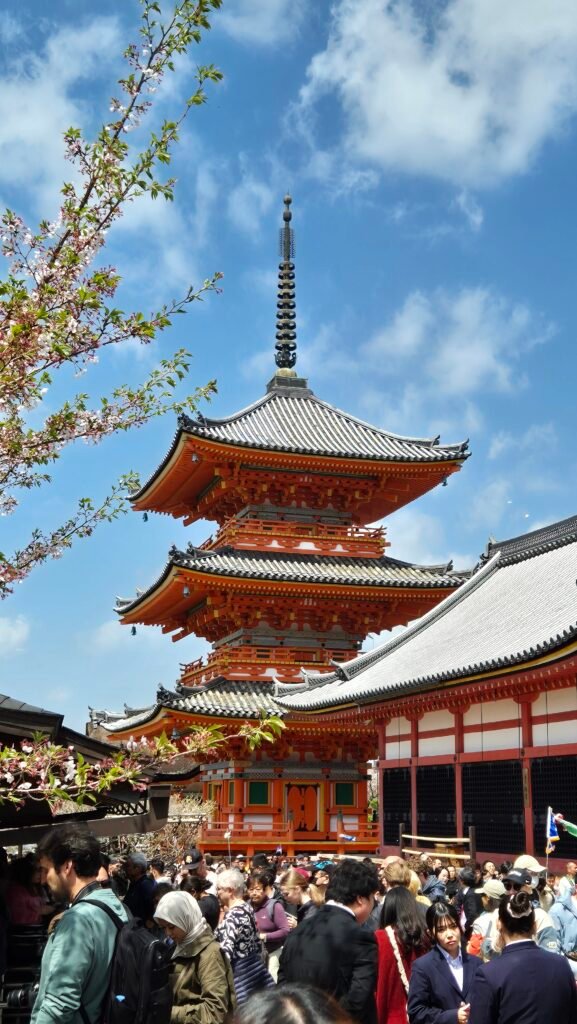
Kiyomizu-dera was one of those places in Kyoto that really lived up to the photographs. Set partway up Mt. Otowa in the Higashiyama mountains, the temple is surrounded by trees, gardens and views across Kyoto, making the whole setting feel just as impressive as the temple itself. The temple dates back to 778 and the grounds cover a huge area, with more than 30 buildings and structures spread across the hillside.
The first thing that really catches your eye is the famous wooden stage, which stretches out from the Main Hall high above the hillside. Standing there gives you fantastic views over the surrounding trees and across the city. It is an incredible piece of traditional construction too, supported by large wooden pillars without using nails. The present stage dates back to 1633.
But I think what makes Kiyomizu-dera so special is taking your time to explore beyond the main stage. There are smaller halls, gates, pathways and peaceful corners dotted around the grounds, with the landscape changing as you walk. Eventually you can make your way down towards Otowa Waterfall, where visitors traditionally drink from its three streams using long-handled cups.
We really enjoyed wandering around the grounds rather than simply visiting the main temple and leaving. There is something beautiful around almost every corner, and the combination of the traditional buildings, enormous trees and views over Kyoto makes Kiyomizu-dera feel much more like an experience than simply another sightseeing stop.
If you are visiting Kyoto, I would definitely put this one high on your list. It is popular for a reason, but once you are inside the grounds, it is easy to see why this has been such an important place of worship for more than 1,200 years.
The Beautiful Streets of Kyoto
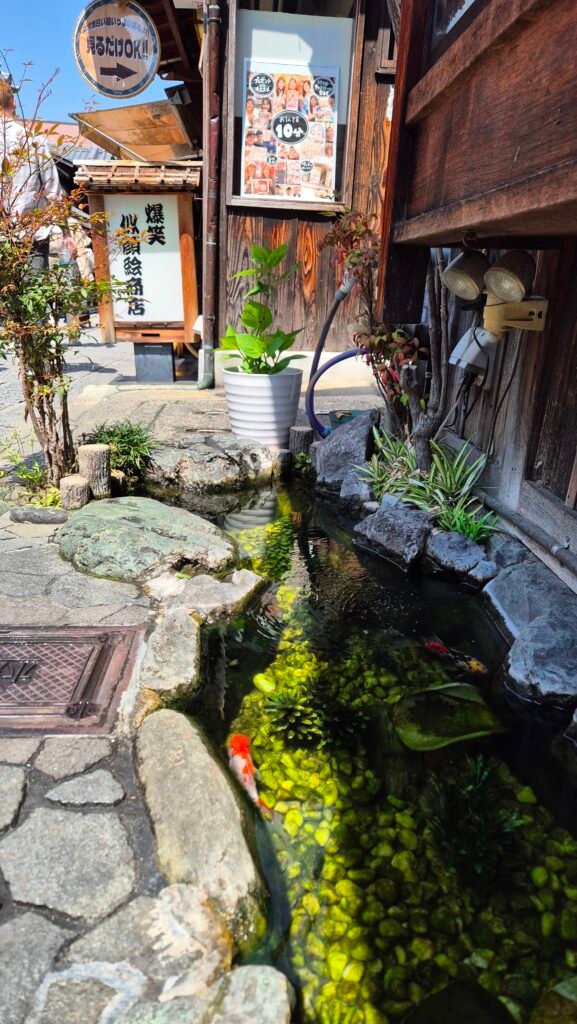
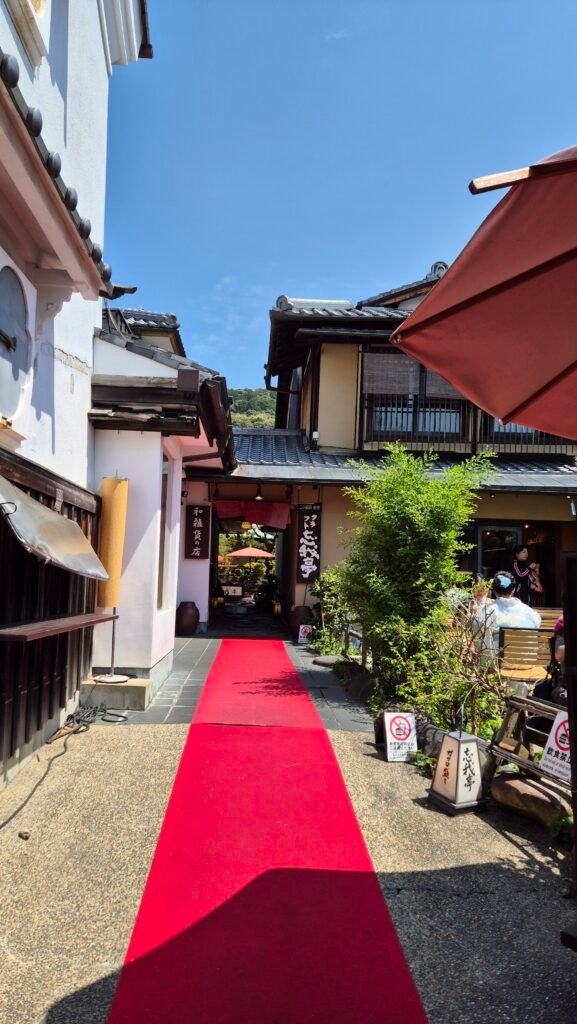
One of the things I loved most about Kyoto wasn’t necessarily a particular temple or attraction, but simply walking through the streets. There is something really special about wandering around and never quite knowing what you are going to find around the next corner.
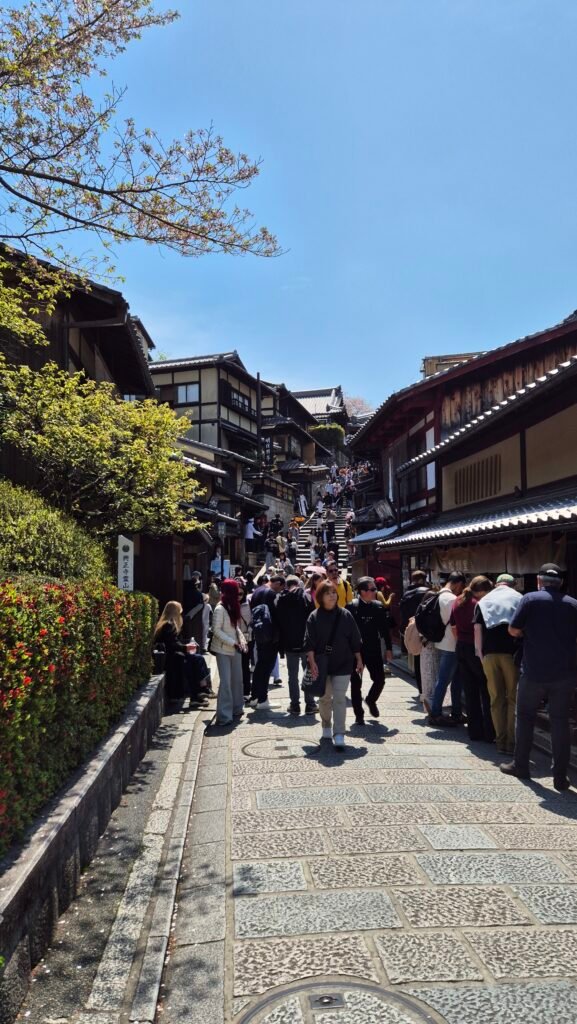
The streets around Higashiyama, Gion, Ninenzaka and Sannenzaka are particularly beautiful, with traditional wooden buildings, little shops, restaurants and tea houses lining the narrow lanes. The preserved streetscapes are a big part of what gives this part of Kyoto its traditional character.
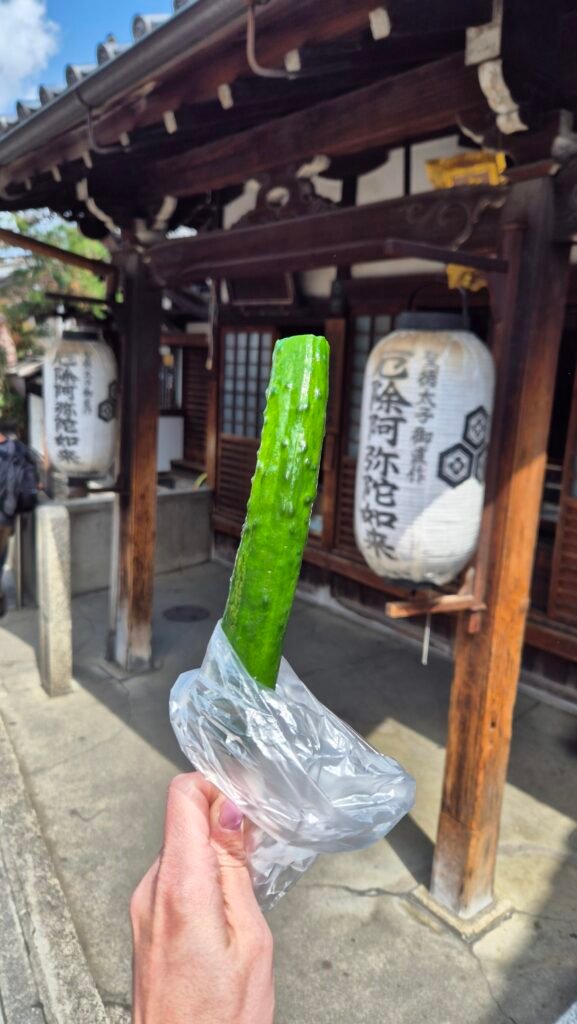
We found ourselves stopping constantly to look at things — little doorways, beautifully decorated shops, gardens tucked away behind walls and the occasional glimpse of a pagoda above the rooftops. It felt very different from walking around a modern city.
Ninenzaka and Sannenzaka were probably the streets that stood out most to me. They are quite steep in places, but that just adds to the experience, especially when you are surrounded by the old-style buildings and traditional shops.
Of course, these are popular areas and they can get very busy, particularly around the main tourist sights. But even with the crowds, I could understand why people are drawn here. There is something about Kyoto’s streets that makes you want to slow down, take your time and simply enjoy the surroundings.
For me, some of our best moments in Kyoto came from doing exactly that — putting the map away for a while and just wandering.
Ryozen Kannon
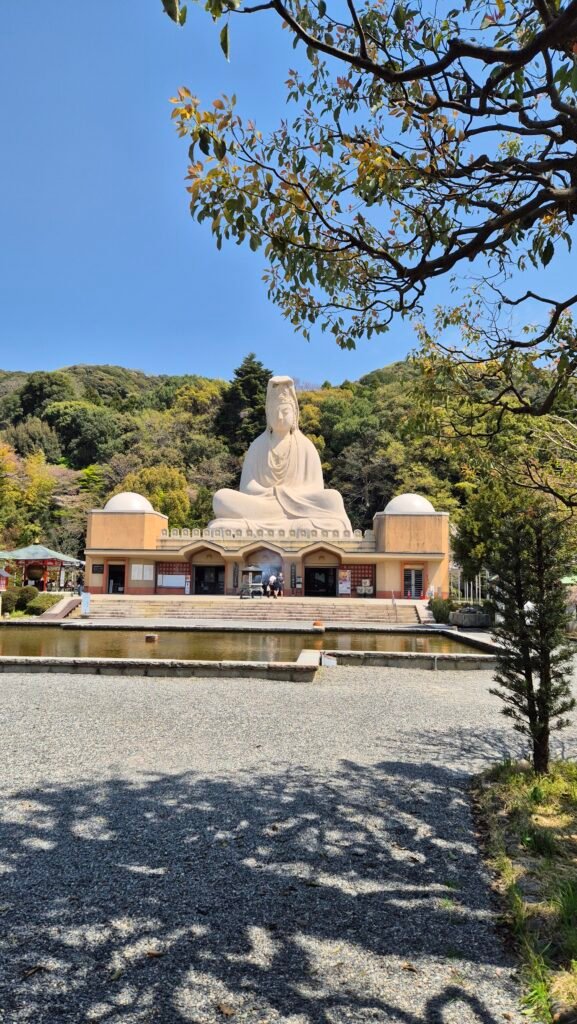
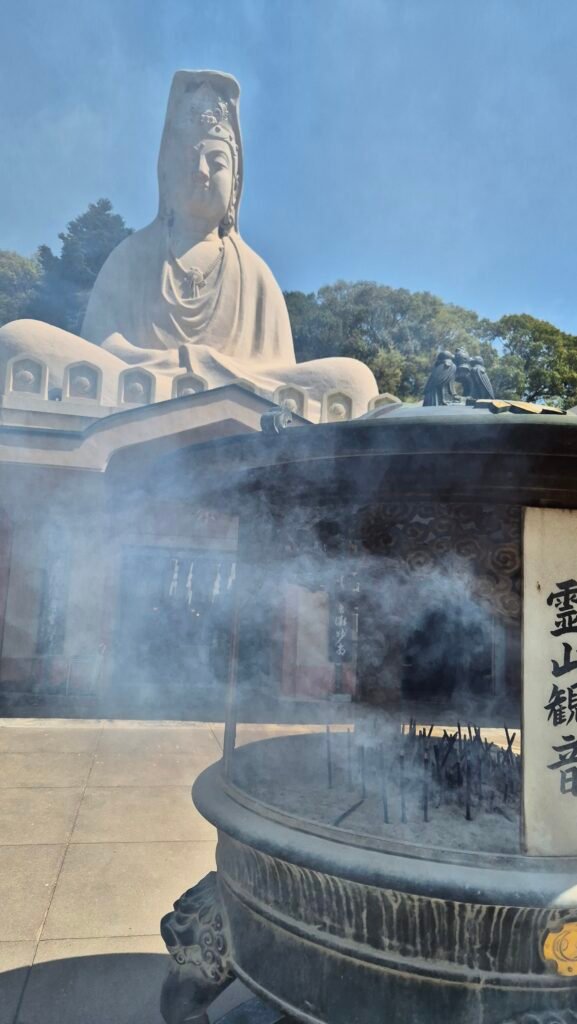
Ryozen Kannon was another interesting stop during our time in Kyoto. Tucked away in the Higashiyama area, the huge seated Buddha statue immediately catches your attention as you approach. Standing around 24 metres high, it is an impressive sight and quite different from some of Kyoto’s more traditional temple buildings.
The memorial was built in 1955 and is dedicated to those who died during the Pacific War. Inside the building beneath the statue is a museum with displays relating to the war and Japanese history.
We found it a quieter stop compared with some of Kyoto’s better-known attractions, and it gave us a chance to slow down and take in something a little different during our day exploring Higashiyama.
Torihisa Restaurant
One of the restaurants we enjoyed during our time in Kyoto was Torihisa, a traditional Kyoto restaurant with a history stretching back to 1896. That means it has been serving food for well over a century, which somehow makes sitting down for dinner there feel like being part of a little piece of Kyoto’s history.
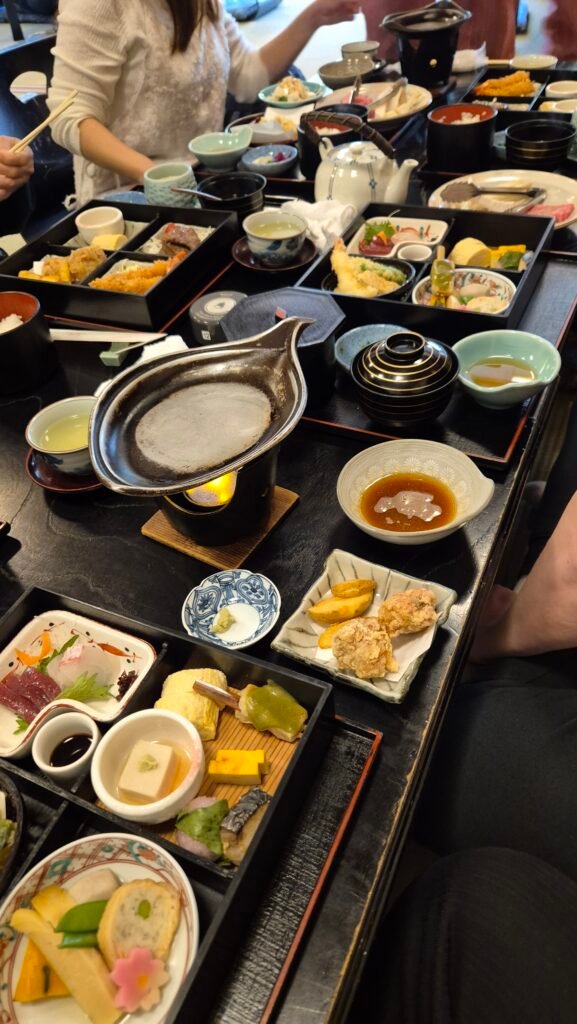
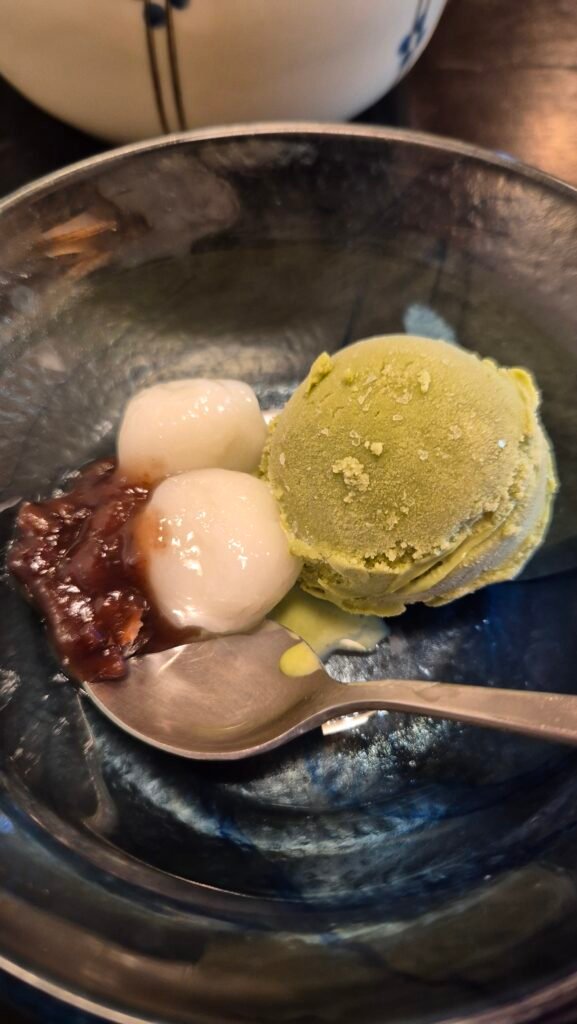
Torihisa specialises in traditional Kyoto-style cuisine, using fresh seasonal ingredients and a menu that changes with the seasons. One of its best-known dishes is mizutaki, a chicken hot pot made using Nagoya Cochin chicken, slowly cooked to create a rich, flavoursome broth. The restaurant also serves kaiseki-style dishes, shabu-shabu and other traditional Japanese dishes.
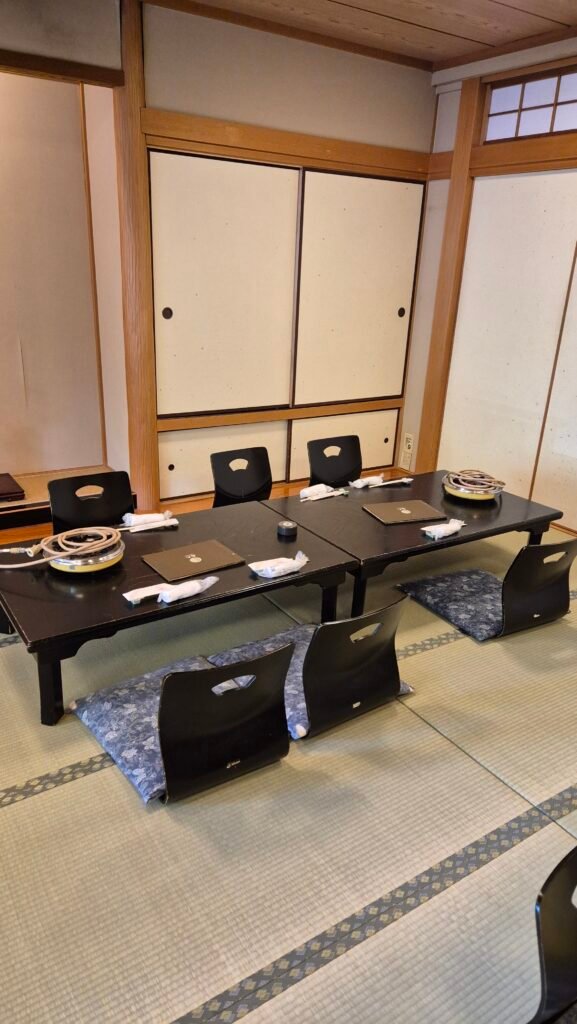
We particularly enjoyed the atmosphere, which felt very different from a modern restaurant. There are traditional tatami rooms and private dining spaces, making the whole experience feel very Japanese.
For us, it wasn’t just about the food; it was about experiencing a restaurant that has been part of Kyoto’s food culture for generations.
Nara Park – The Famous Bowing Deer
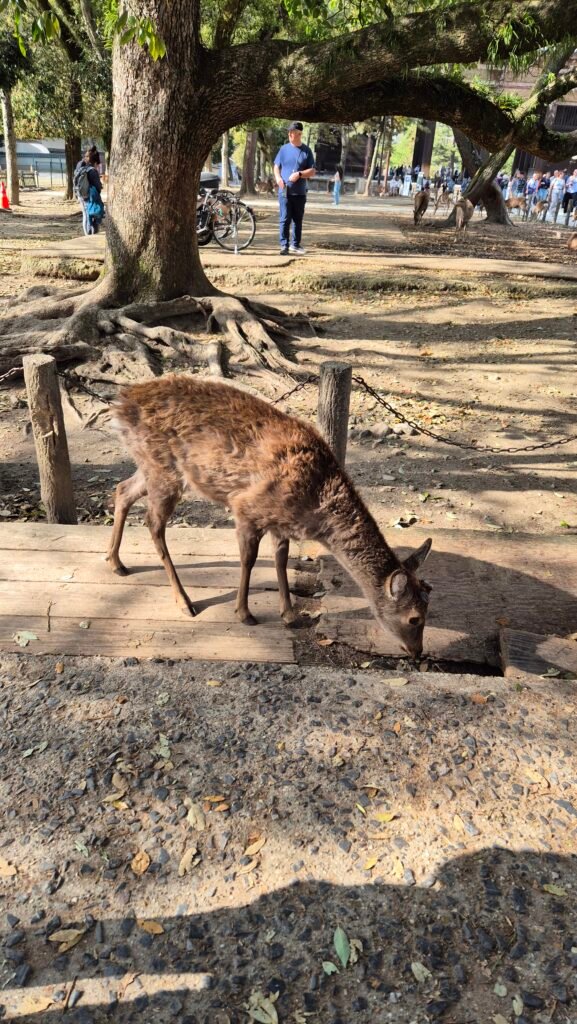
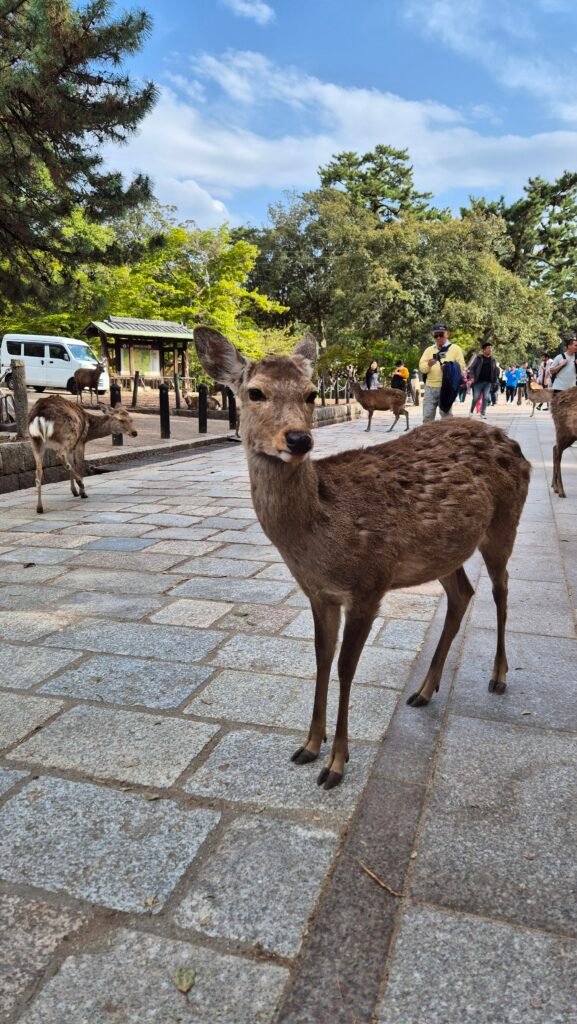
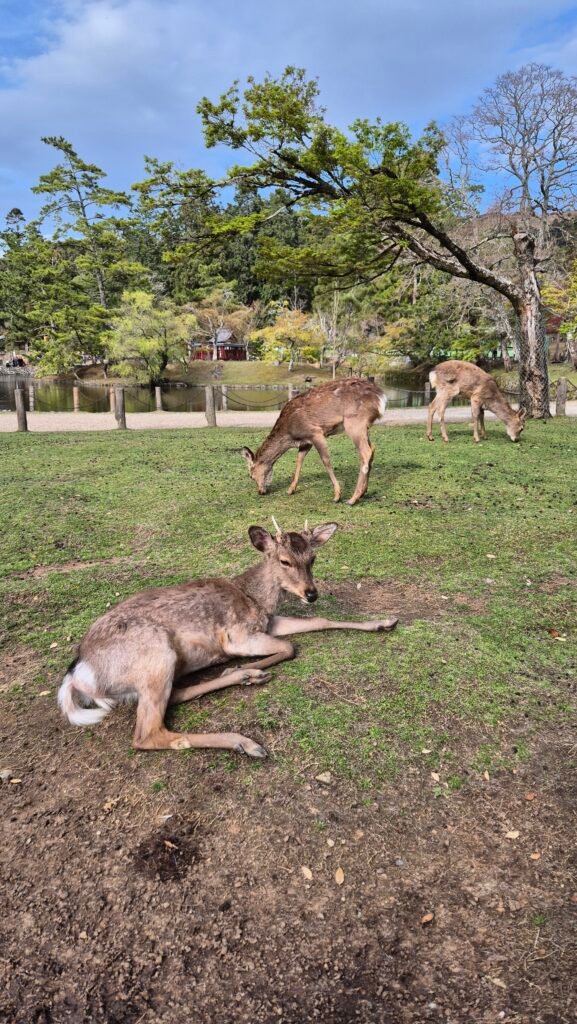
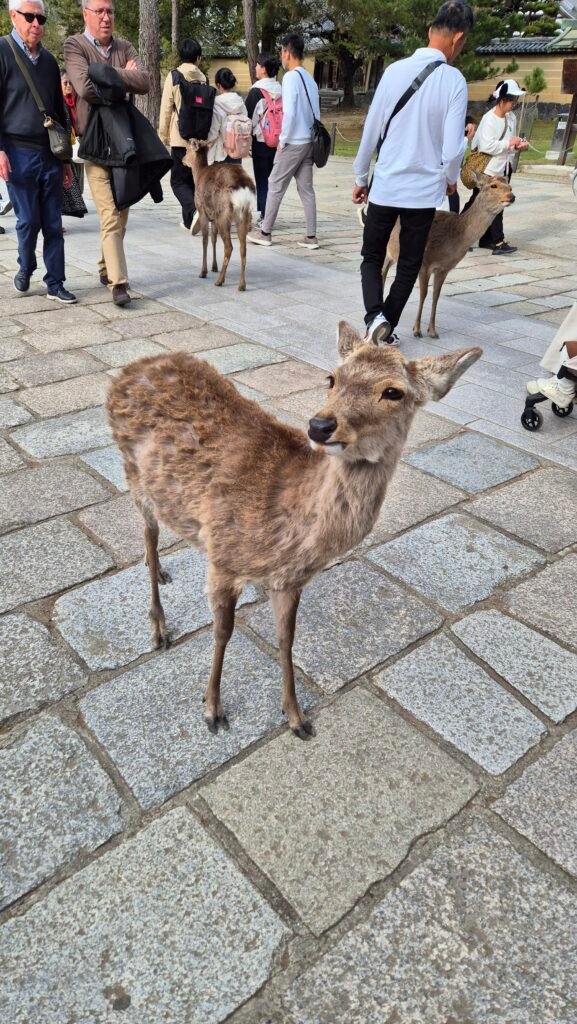
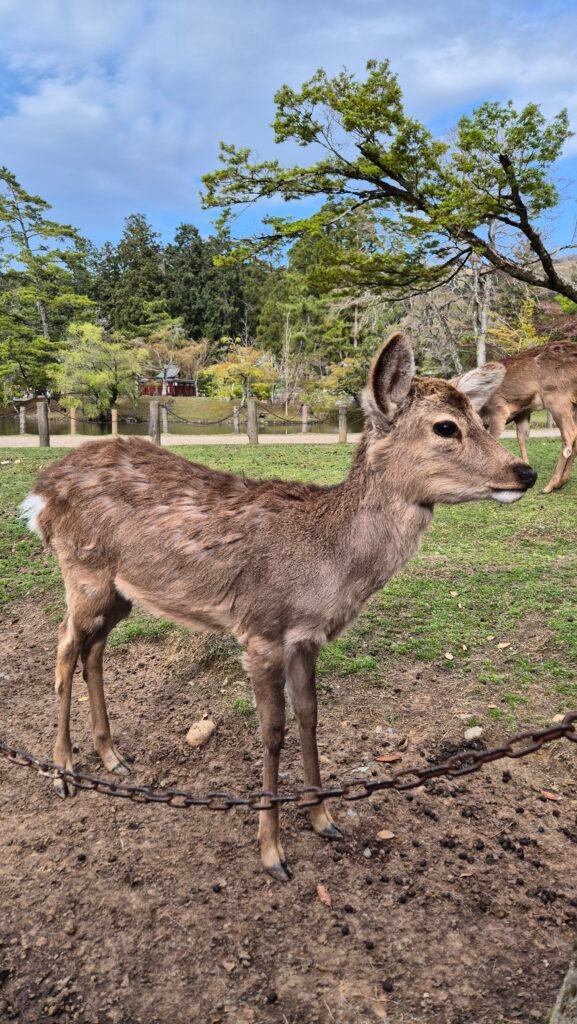
Nara Park was one of those places we had been looking forward to visiting, mainly because of its famous deer. And they certainly didn’t disappoint! As soon as we entered the park, we started seeing deer wandering freely between the trees, along the paths and even around the entrances to the temples. There are almost 1,200 deer living in the park, and they are considered wild animals, even though they are very used to people.
Of course, we had to buy some shika senbei, the special crackers sold around the park. This is where the fun really started. Hold up a cracker and the deer will happily come over, and some of them are surprisingly persistent if they think you have more!
One of the things we really wanted to see was the deer bowing. They have become famous for appearing to bow to visitors, particularly when they are expecting a cracker. It was such a lovely sight and made for some great photographs. However, it is worth remembering that they aren’t actually bowing out of politeness in the human sense – they have learned that bowing and approaching people can sometimes result in food.
We loved wandering around the park and watching them simply doing their own thing. With the ancient temples, huge trees and deer wandering everywhere, it felt like a completely unique experience and one of the highlights of our trip
Daibutsuden
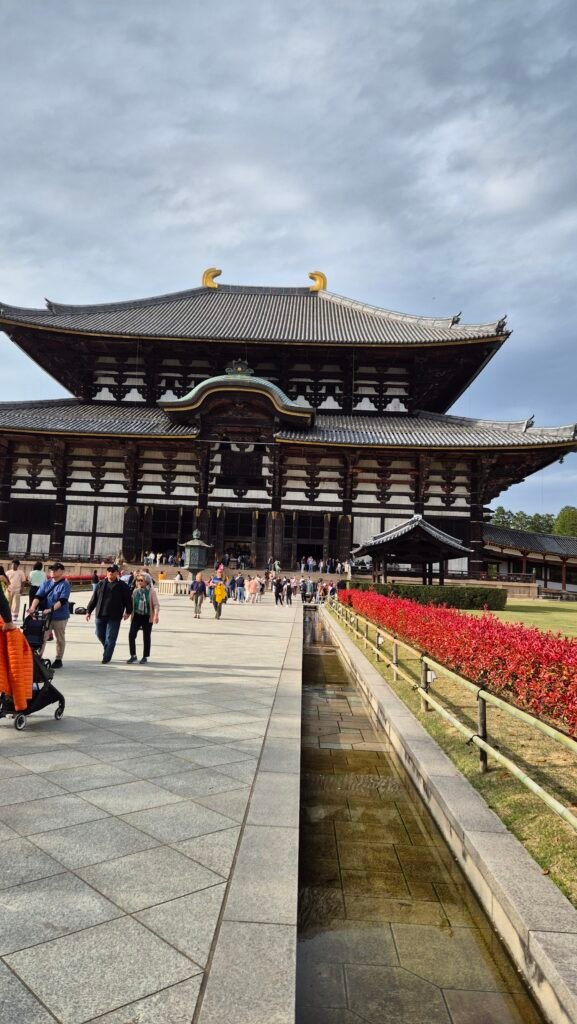
After spending time with the deer in Nara Park, we continued walking towards Todai-ji Temple and the famous Daibutsuden (Great Buddha Hall). The walk itself was part of the experience, with deer wandering freely along the paths as we made our way towards one of Nara’s most impressive sights. The approach to Todai-ji is lined with shops, cafés and plenty more deer, so there is always something to see along the way.
As we got closer, the enormous Nandaimon Gate came into view. This huge wooden gate, guarded by two imposing Nio statues, gives you a real sense that you are approaching somewhere very special.
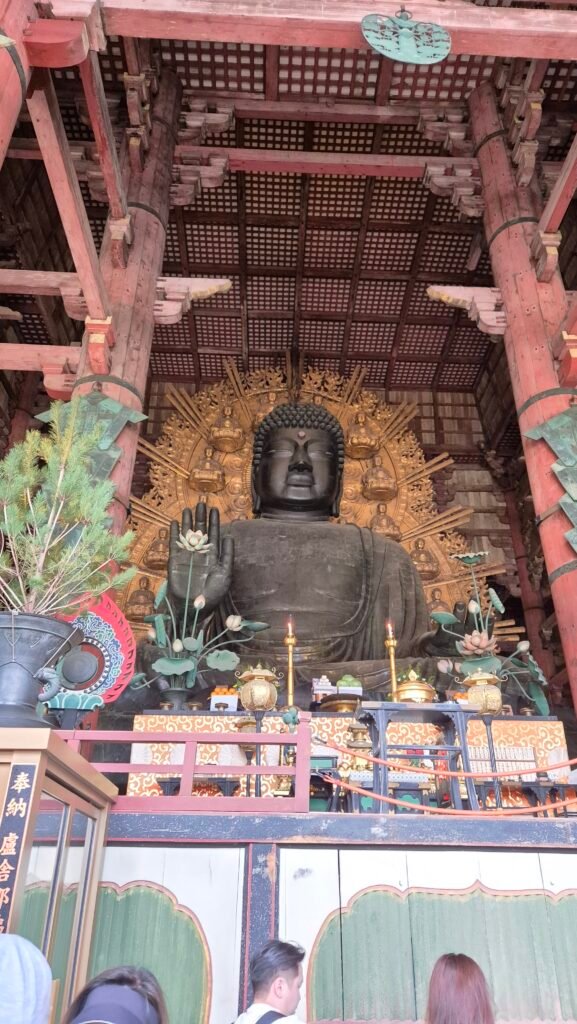
Then came the first glimpse of the Daibutsuden, and it really is enormous. The Great Buddha Hall is one of the most impressive wooden buildings we saw during our trip, and inside is the huge bronze Great Buddha, which stands around 15 metres tall.
After the fun and chaos of the deer, walking towards the temple felt like a natural change of pace. The further we went, the more impressive the surroundings became, and seeing the Great Buddha Hall appear ahead of us was definitely one of those moments that made us stop and take it all in.
Kinkaku-Ji (The Golden Pavillion)
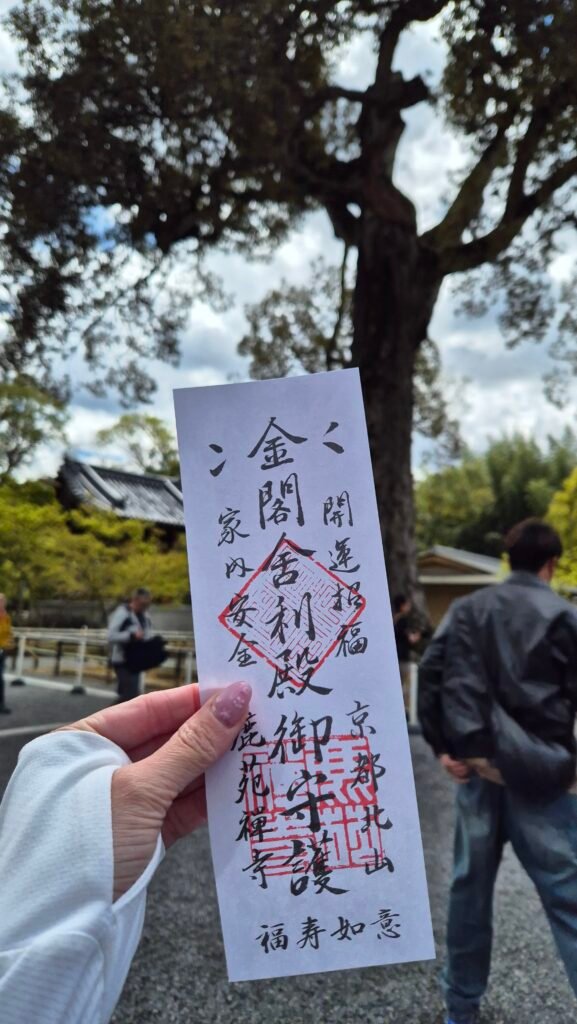
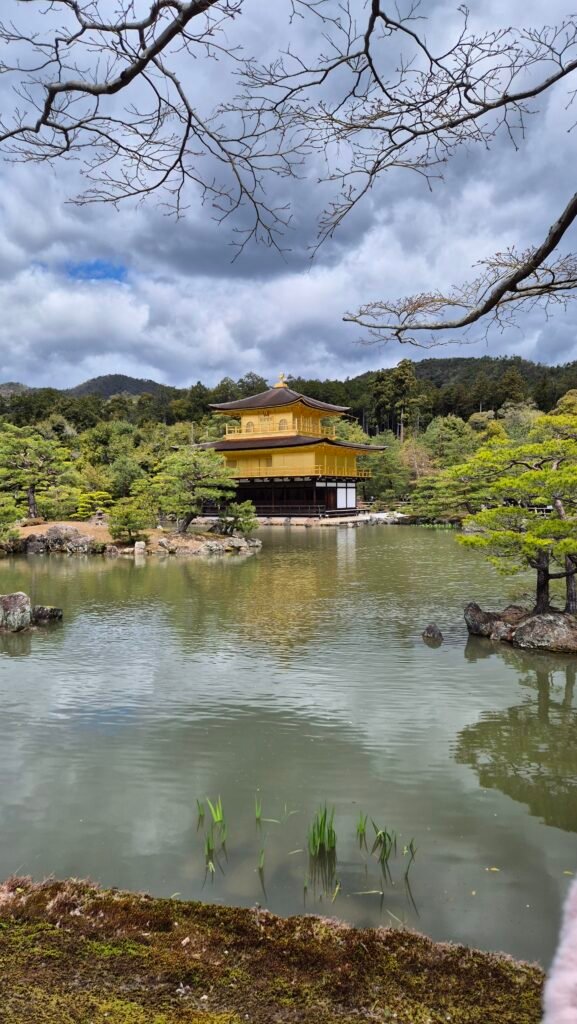
The first stop on our second Kyoto minibus day trip was Kinkaku-ji, better known as the Golden Pavilion. Having seen so many photographs before our trip, I wondered if it would actually live up to the hype but it really did.
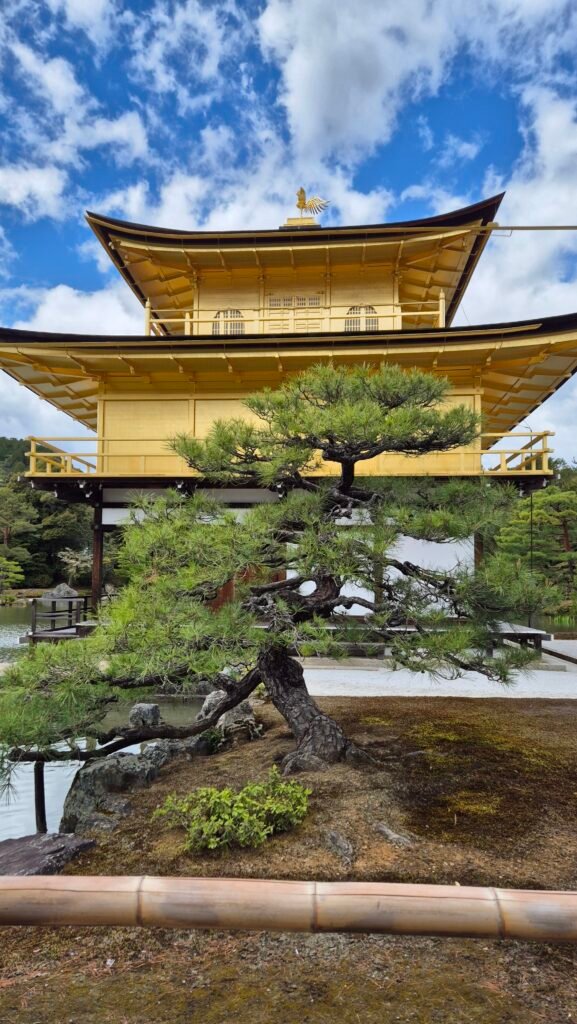
As soon as we reached the viewpoint, the pavilion looked stunning against the surrounding greenery, with its golden exterior reflected in the calm waters of the pond. It is one of those sights that looks almost unreal, especially when the sun catches the gold. The pond, small islands and carefully maintained gardens make the whole setting incredibly peaceful.
Kinkaku-ji was originally built as a retirement villa for the shogun Ashikaga Yoshimitsu in the late 14th century before being converted into a Zen temple after his death. The pavilion we see today was rebuilt in 1955 after the original was destroyed by fire in 1950.
We really enjoyed walking around the grounds after taking in the famous view. There are paths through the gardens, little details to discover and different viewpoints of the pavilion. It was a lovely start to our day in Kyoto and definitely one of those places where the photographs simply don’t quite capture how beautiful it is in person.
The Sagano Romantic Train
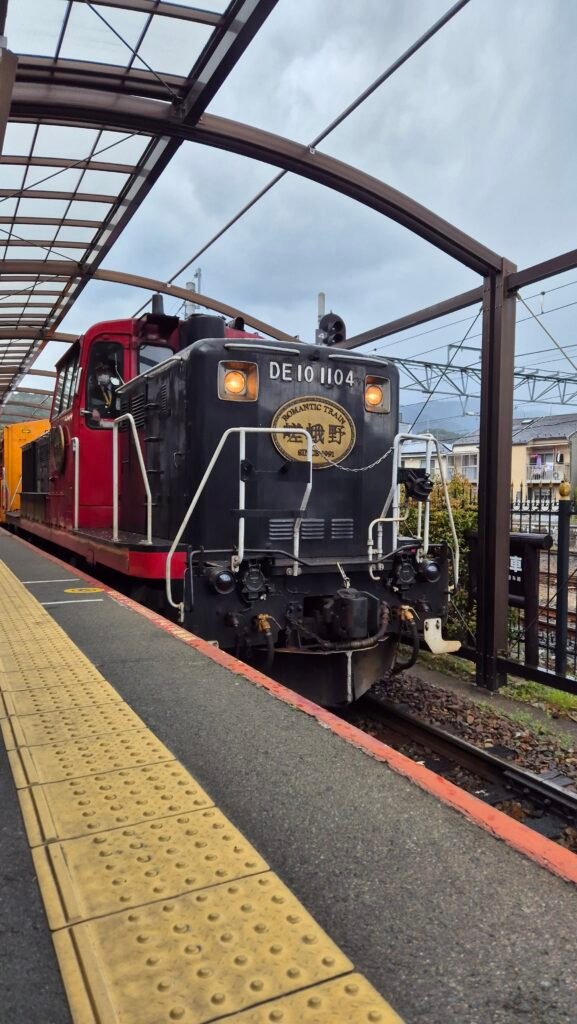
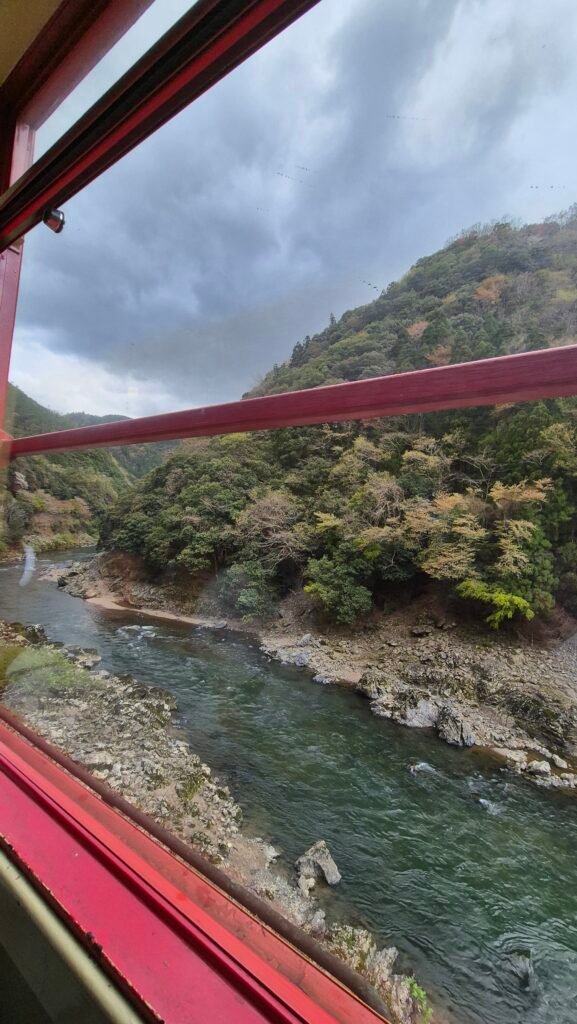
One of the highlights of our Kyoto trip was taking the Sagano Romantic Train, a lovely sightseeing railway that follows the Hozu River through the mountains. We decided to simply take the train there and back, rather than getting off at the other end, and it was a really relaxing way to spend some time taking in the scenery.
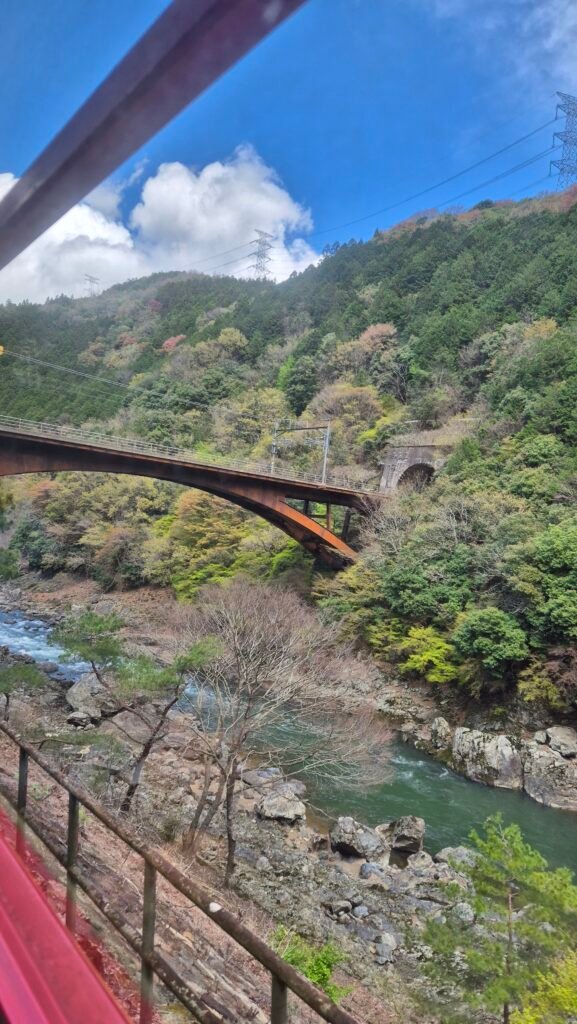
We boarded at Torokko Saga Station, which is right next to JR Saga-Arashiyama Station. The train travels through the beautiful Hozukyo Gorge towards Torokko Kameoka Station, with the journey taking around 25 minutes each way. Rather than being a normal train journey, it is all about the views, with the track winding alongside the Hozu River and through the wooded mountains.
The scenery was lovely, with the river below, steep green hillsides and rocky sections along the route. I can imagine it would be particularly beautiful during cherry blossom season or in autumn when the leaves change colour.
For us, the best thing was simply sitting back and enjoying the journey. We didn’t need to get off or plan anything complicated – we just enjoyed the train ride in both directions before continuing with our day in Kyoto. If you enjoy scenic train journeys, I’d definitely recommend adding this one to your Kyoto itinerary.
Arashiyama Bamboo Forest
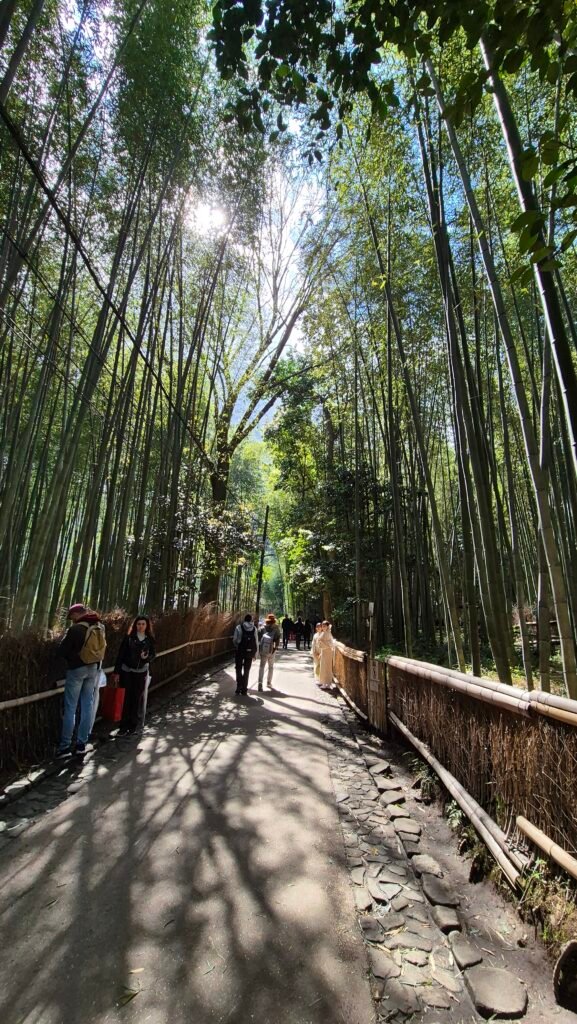
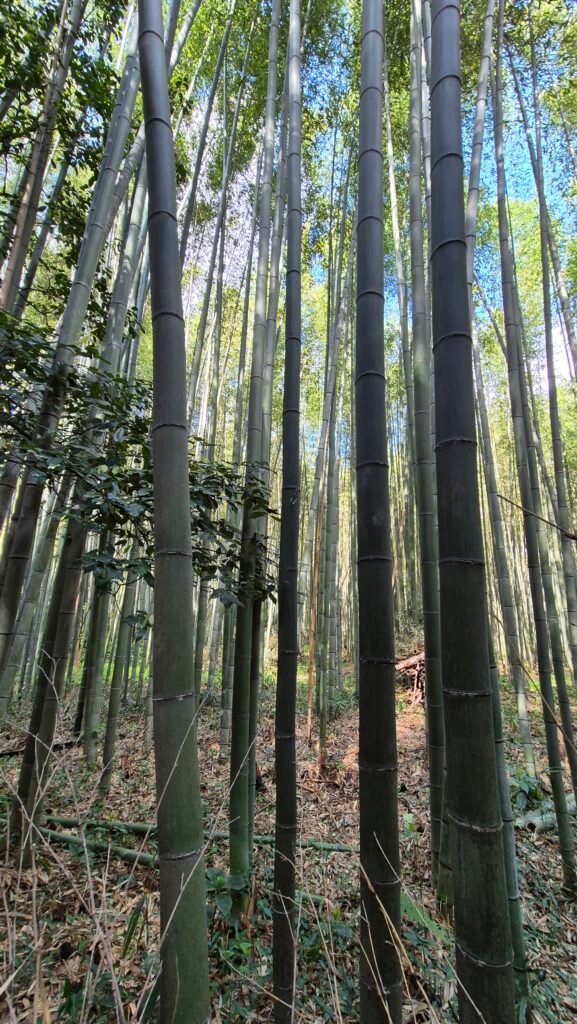
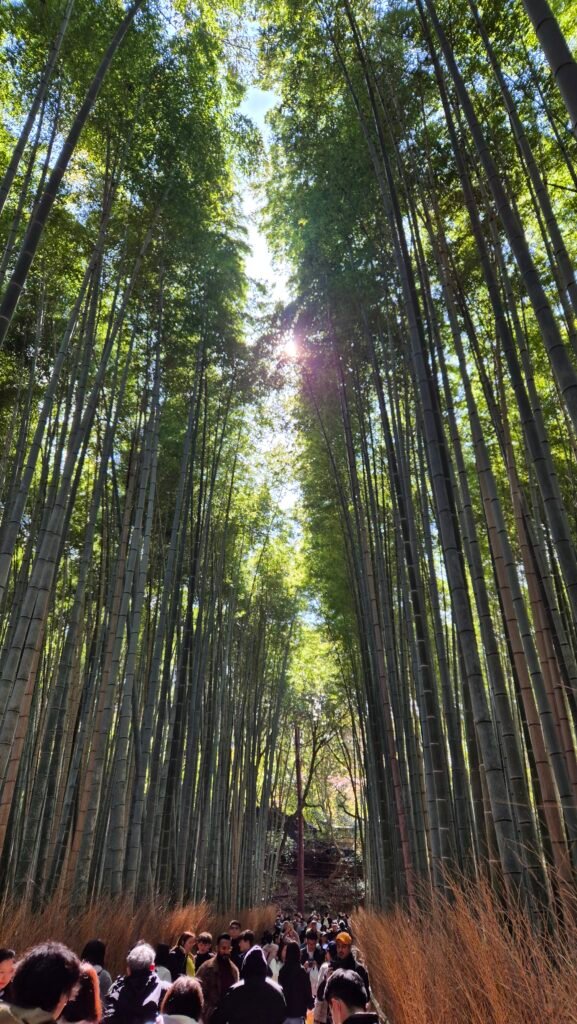
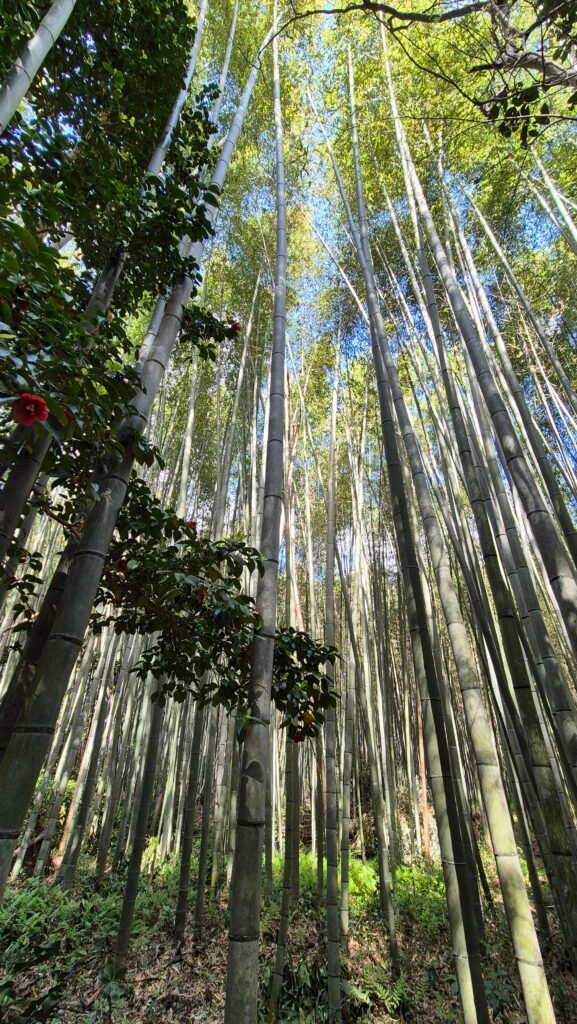
The Arashiyama Bamboo Forest was honestly one of the best experiences of our whole trip. I had seen photographs of the famous bamboo before visiting, but walking through it was completely different. There is something quite magical about being surrounded by these incredibly tall bamboo stalks, with the light filtering through the leaves above and the path winding its way through the greenery.
The main trail is relatively short, but that didn’t matter to us at all. We took our time, stopping to look around and take photographs. The bamboo seems to stretch upwards forever, creating a natural tunnel that feels completely different from anywhere else we visited in Japan. The combination of the height of the bamboo, the sound of the leaves moving in the breeze and the filtered light made it feel almost dreamlike.
The grove is in the Arashiyama area of western Kyoto and is easily reached from JR Saga-Arashiyama Station, which is around a 10-minute walk away. You can also approach it through the grounds of Tenryu-ji Temple, which is a lovely way to combine two attractions.
It can get busy, and there were plenty of other visitors when we went, but we didn’t let that spoil it. We simply slowed down and enjoyed the experience. For me, this was one of those places that really did live up to the photographs and it was definitely one of the highlights of our Kyoto trip.
Tenryu-ji Garden
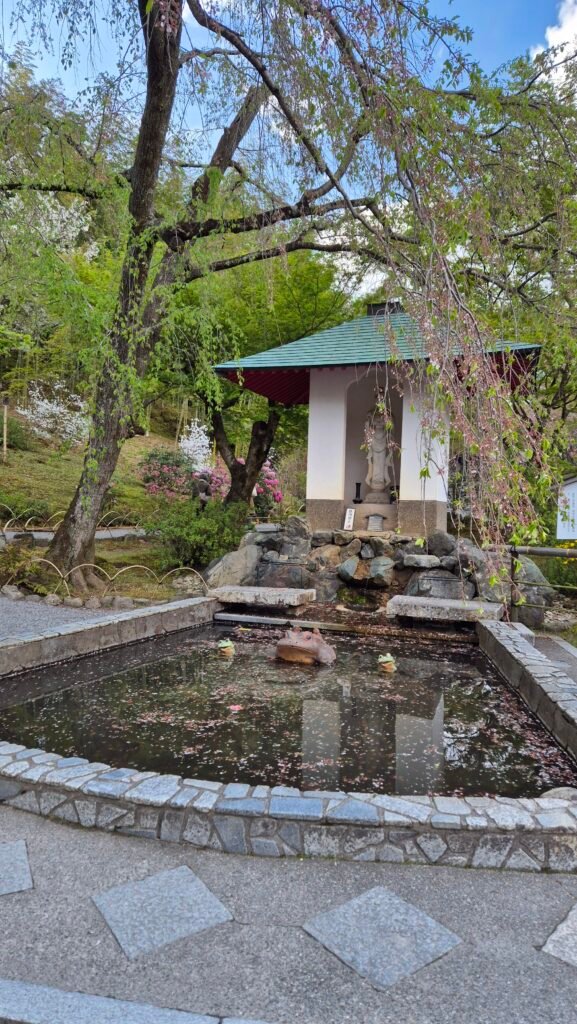
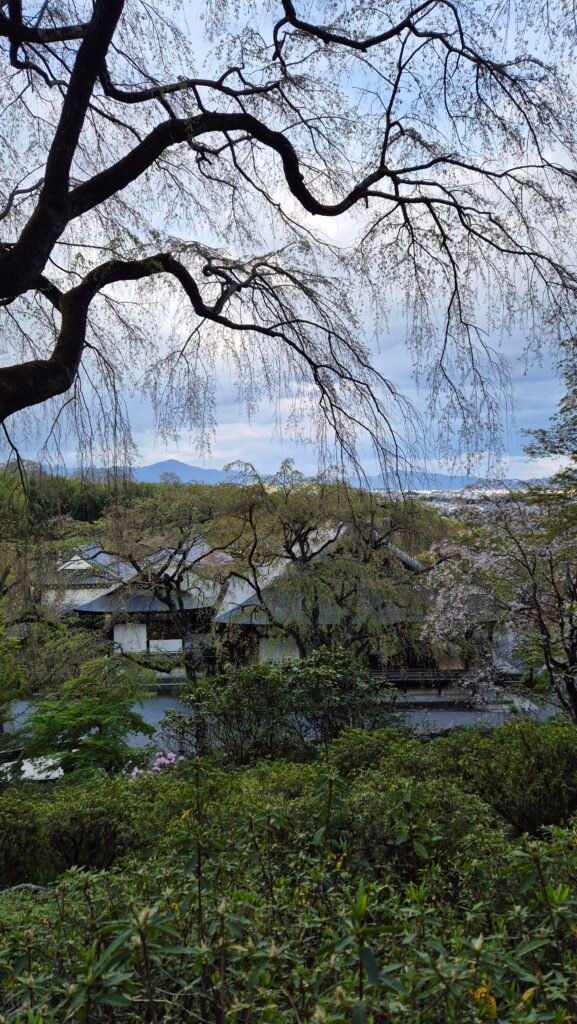
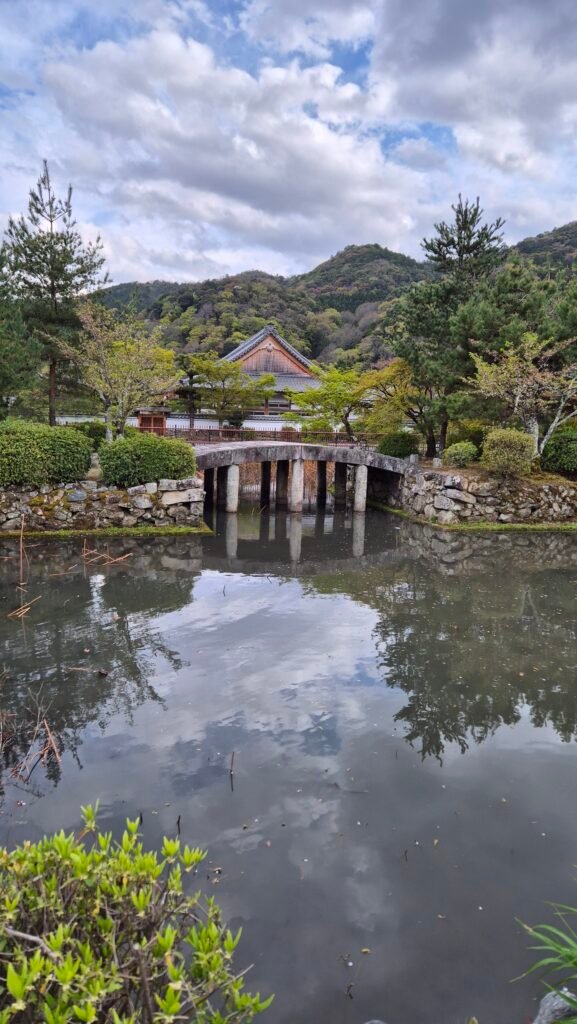
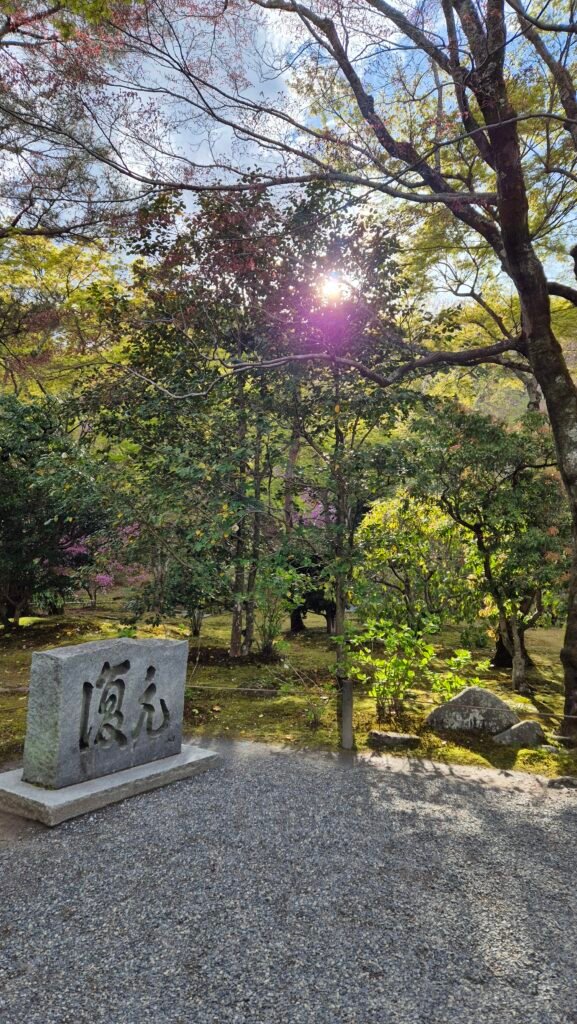
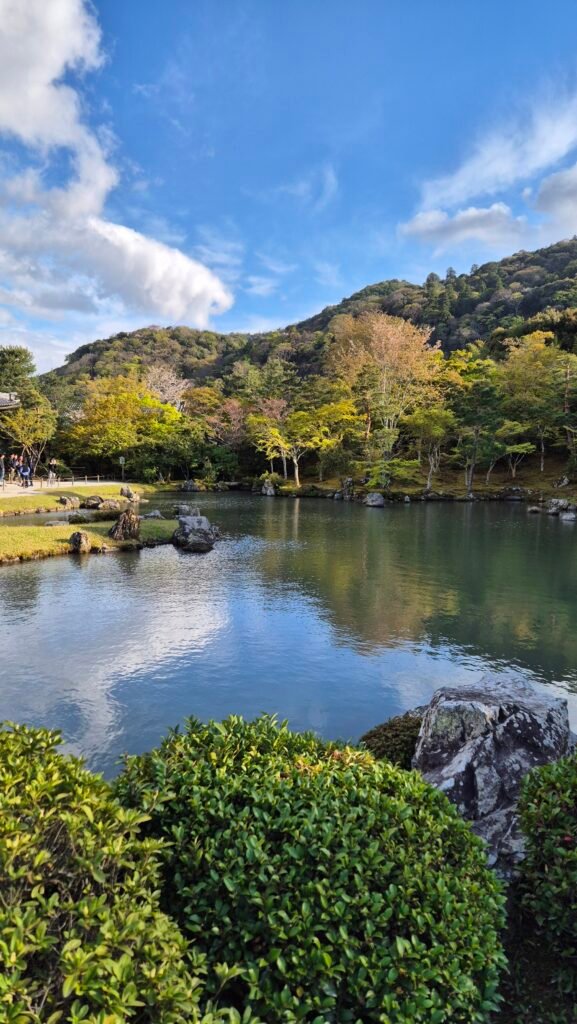
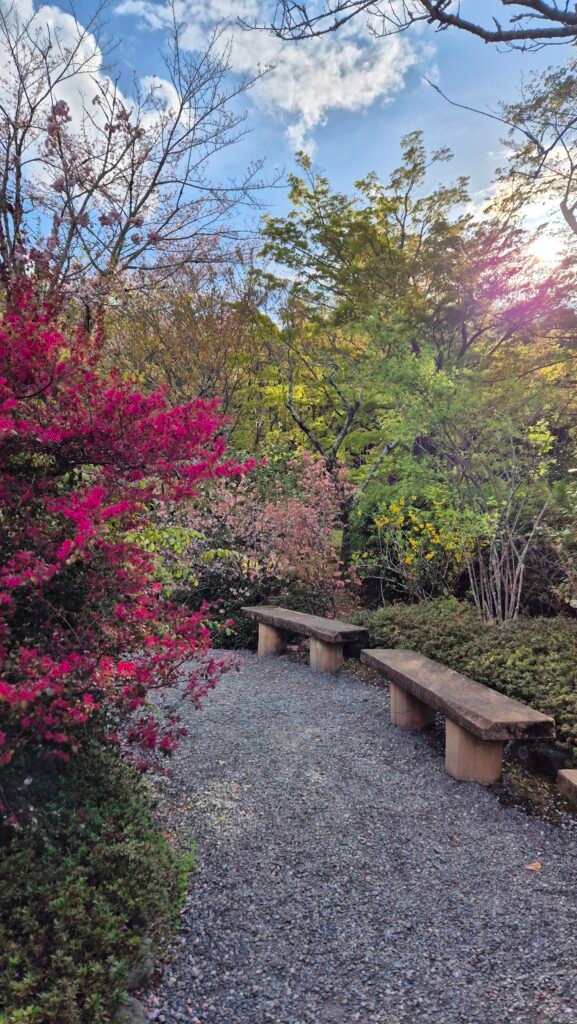
The garden at Tenryu-ji was another beautiful part of our day in Arashiyama. After visiting the temple, we spent some time wandering around the grounds and taking in the peaceful surroundings. The highlight is the Sogenchi Pond Garden, which was designed almost 700 years ago by Zen master Muso Soseki and has remarkably retained much of its original appearance.
The garden is beautifully laid out around the pond, with carefully positioned rocks, trees and plants creating a very natural-looking scene. What I particularly liked was the way the surrounding mountains become part of the view, giving the garden a wonderful sense of depth.
It was a lovely contrast to the busier areas of Arashiyama. We could slow down, take photographs and simply enjoy the scenery. There is also a path leading towards the north gate, which takes you towards the famous bamboo forest, making it very easy to combine the two during the same visit.
For me, Tenryu-ji Garden was one of those places where you don’t need to rush. Just take your time and enjoy how peaceful and beautifully balanced everything feels.
Kuroman Market – ‘Black Gate’ Market
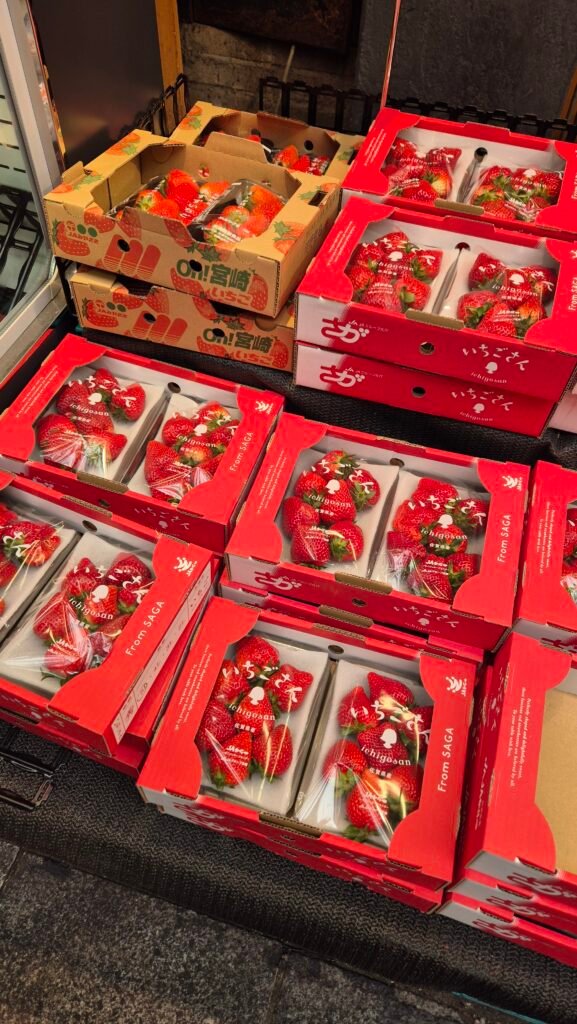
One of our favourite food experiences in Osaka was a visit to Kuromon Market, the covered market just a short walk from Dotonbori. It stretches for around 600 metres and is packed with food stalls, little shops and places selling an amazing variety of fresh produce.
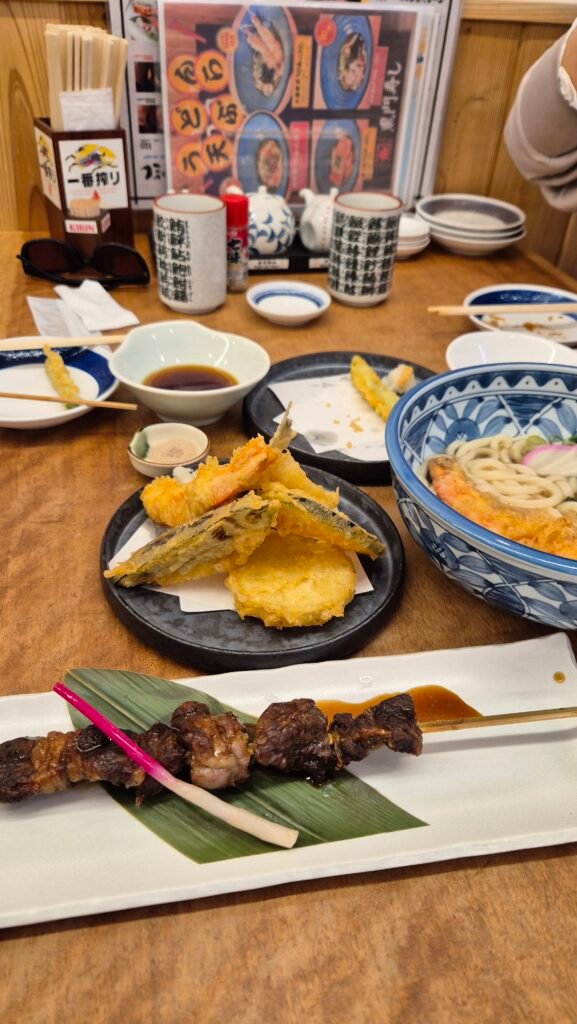
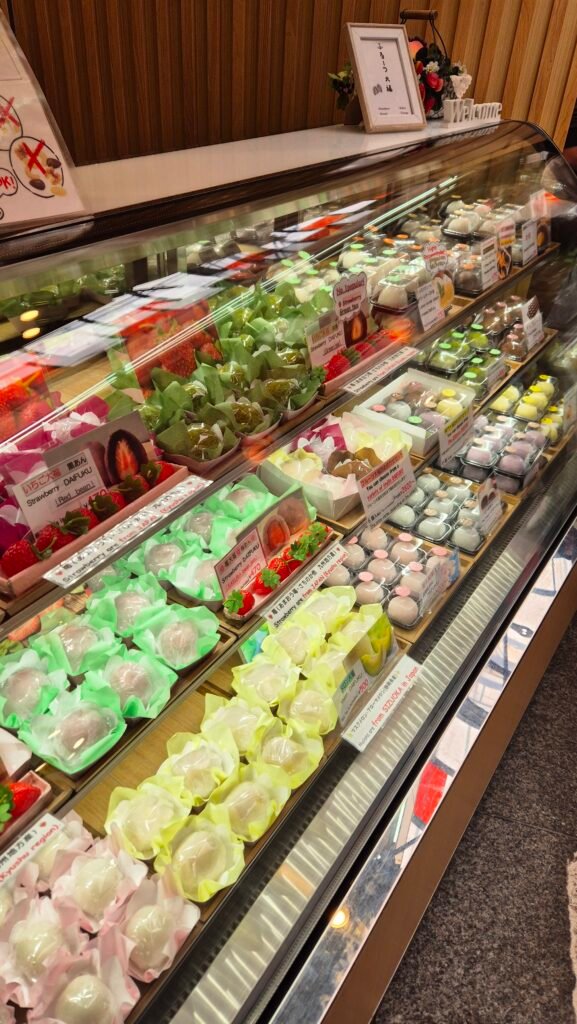
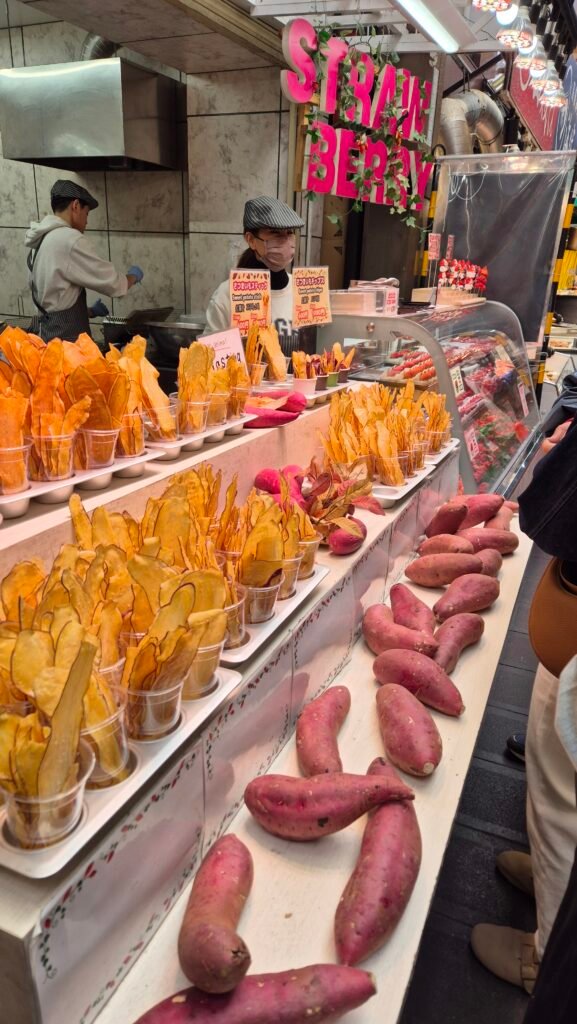
Walking through the market was an experience in itself. There was food everywhere we looked, from fresh seafood and sushi to grilled meats, fruit, sweets and plenty of things we hadn’t seen before. A lot of the stalls sell smaller portions that are designed to be eaten there and then, which makes it perfect for trying a few different things rather than committing to one big meal.
We saw grilled seafood, oysters, crab, sushi, yakitori and takoyaki, as well as some beautifully presented fresh fruit. It was difficult not to stop every few metres when something else caught our eye!
The market has a long history dating back to the Edo period, and it has traditionally been an important food market for Osaka. Today it is certainly popular with visitors, but it still gives you a great opportunity to see the huge variety of ingredients and food that are such an important part of Japanese culture.
We really enjoyed simply wandering through, choosing something that looked interesting and then moving on to the next stall. If you’re staying around Namba, it’s also really easy to walk there, making it an ideal place to combine with a visit to Dotonbori.
Rikuro Ojisan’s Famous Soufflé Cheesecake
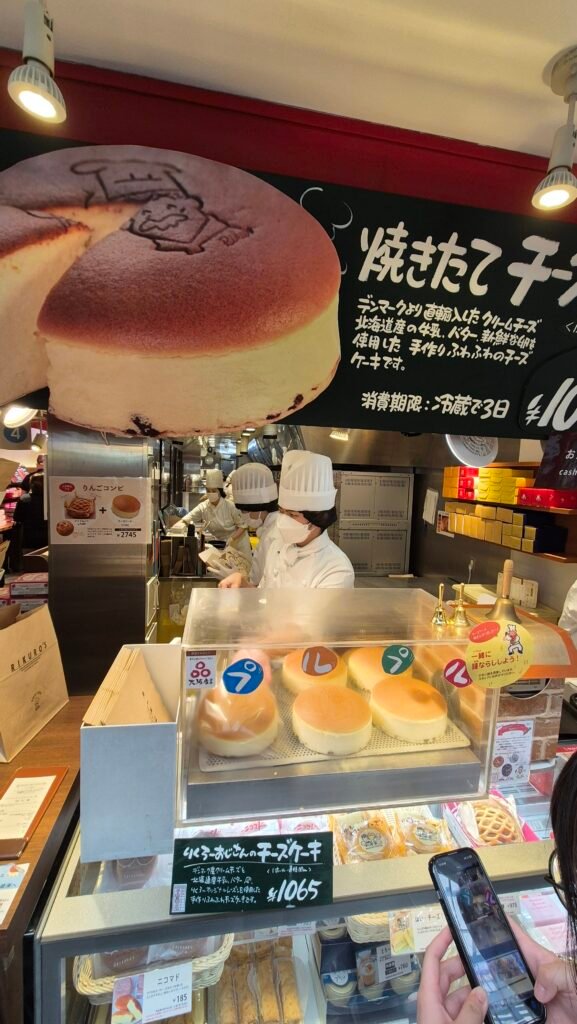
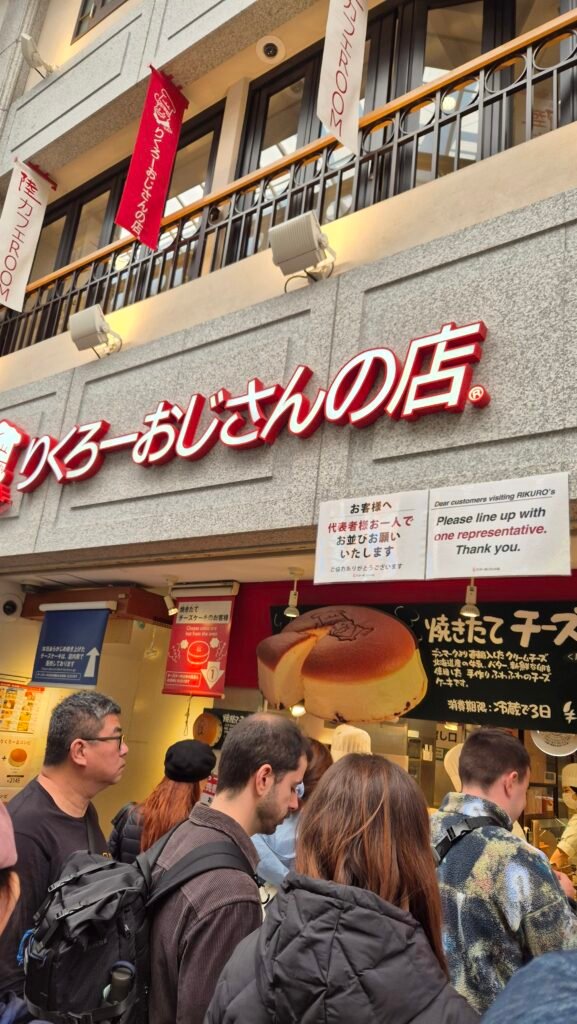
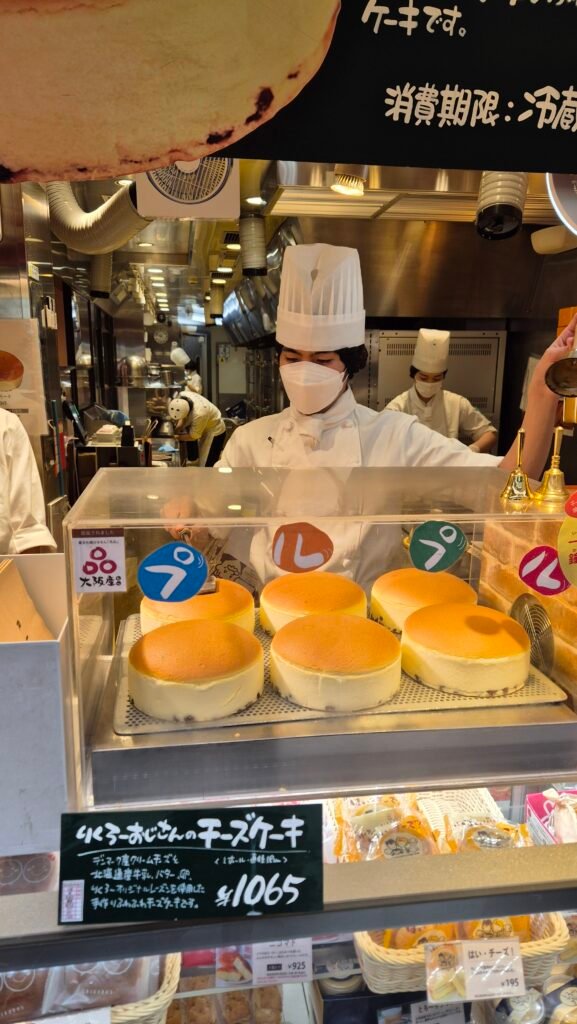
No trip to Osaka would be complete without trying the famous cheesecake from Rikuro Ojisan’s, and we couldn’t resist giving it a go. The freshly baked cheesecake is incredibly light, soft and wobbly, much more like a soufflé than the dense cheesecakes we are used to at home.
The Namba main store is right in the heart of the shopping area, just a couple of minutes from Namba Station, so it is really easy to find. You can actually watch the cheesecakes being baked in the shop, and the smell alone is enough to make you want one!
The cheesecake is made with cream cheese imported from Denmark and has little raisins baked into the bottom, which gives it a slightly different flavour. The whole 18cm cake is currently around ¥965, making it a pretty good-value treat.
It was light, fluffy and delicious and definitely worth trying while you’re in Osaka!
Our Osaka, Kyoto & Nara Adventure
Our trip to Osaka, Kyoto and Nara gave us such a fantastic introduction to Japan. From the bright lights and incredible food of Osaka to the beautiful temples, gardens and traditional streets of Kyoto, every day brought something completely different. Nara was another highlight, especially walking through Nara Park among the famous bowing deer before visiting the impressive Great Buddha Hall.
Looking back, we packed a lot into our Japan itinerary, but that variety is what made the trip so memorable. We experienced Japanese culture, history, food and some truly amazing scenery along the way. If you’re planning a Japan holiday or Osaka, Kyoto and Nara itinerary, we’d definitely recommend adding all three destinations to your trip. Each has its own character, and together they make an unforgettable Japan travel experience.